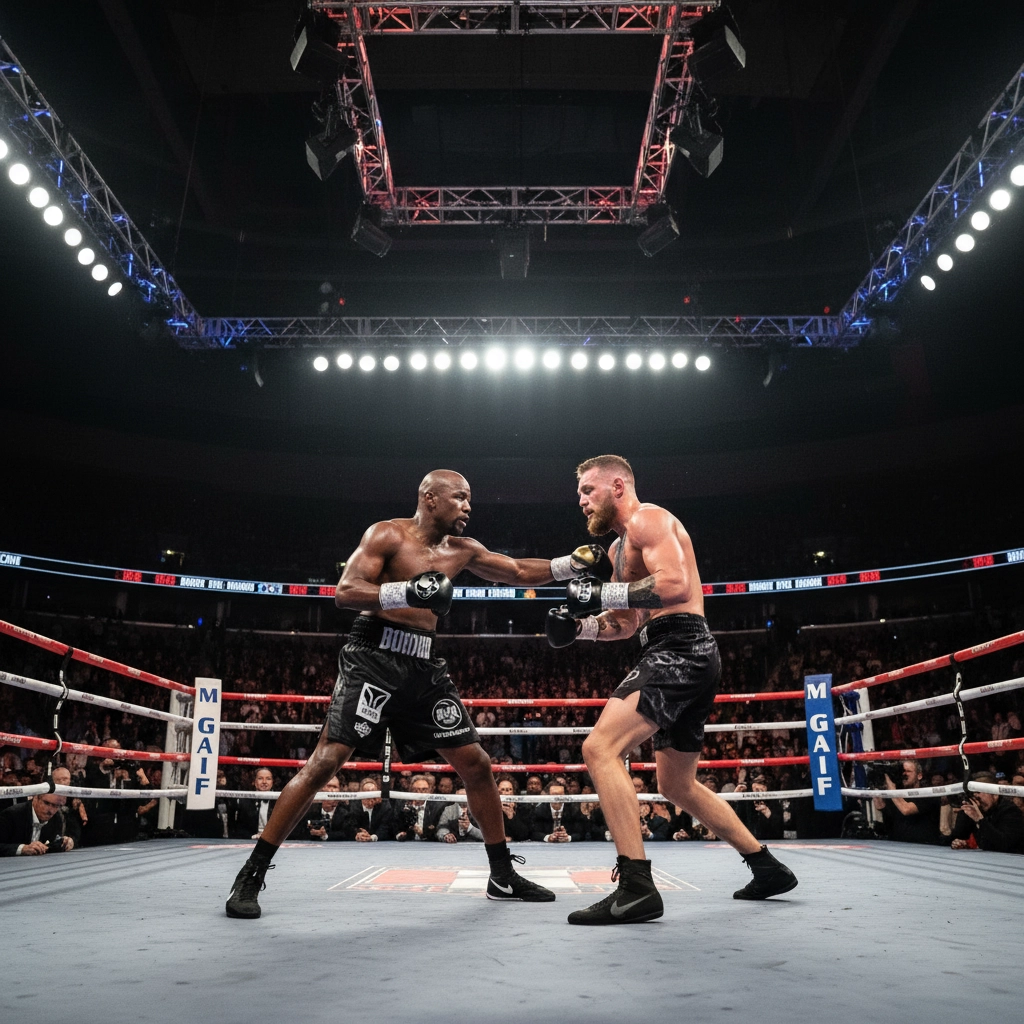
Mayweather vs McGregor: The Crossover Bout Analyzed
Why the Mayweather vs McGregor meeting mattered beyond a single fight
You remember the moment because it combined two narratives that rarely collide: an undefeated, strategically perfect boxer in Floyd Mayweather Jr., and an outspoken mixed martial arts champion in Conor McGregor who had never boxed professionally. To understand the bout, you need to see it as more than spectacle. It was a test of whether elite skills in one discipline can translate under another sport’s rules, and a cultural event about money, promotion, and the limits of cross-discipline competition.
When you study the crossover, consider three overlapping lenses:
- Sporting legitimacy — Could a decorated MMA striker beat a top-level professional boxer under boxing rules?
- Business and promotion — How did pay-per-view, global marketing, and fighter branding shape incentives and the event’s structure?
- Rule-set and risk management — How did weight limits, gloves, and round structure favor one athlete over the other?
These lenses guide the analysis because they explain why strategies, preparations, and outcomes were not merely about power or courage; they were shaped by incentives, constraints, and prior skill development. As you read on, keep in mind that what looks like a mismatch on paper can still produce instructive technical and tactical lessons when viewed through these frames.
How two different careers and skill sets set the stage for a unique ring encounter
Contrasting competitive histories and styles
To make sense of the fight, contrast the fighters’ backgrounds in specific terms you can measure:
- Floyd Mayweather Jr. — An undefeated professional boxer with decades in the sport; known for elite defensive reflexes, footwork, and a switch between offensive counters and ring control. His professional record before the fight emphasized precision, stamina across 12-round championship distance, and fight IQ.
- Conor McGregor — A two-division UFC champion whose skills included powerful left-hand striking, range control in MMA, and an ability to finish opponents with a single blow. However, his experience under boxing rules was limited to training and exhibition sparring, not professional bouts.
When you boil those differences down, you see that Mayweather carried experience-specific advantages (timing against gloved punches, defensive slips in close quarters, efficient energy use over rounds), while McGregor brought unpredictability, a heavy power-punching single-shot threat, and a psychological edge rooted in charisma and intimidation.
Rules, weight, and the negotiated playing field
The fight was governed by professional boxing rules, with fixed gloves, 12 two-minute rounds at a contracted weight and no kicks, elbows, or grappling. Those specifics matter to you as an analyst because small structural differences have outsized tactical effects:
- Glove size and padding change punch dynamics — boxing gloves encourage different defensive patterns and can blunt some power but also enable different counter-punching opportunities.
- Round length and count shape conditioning priorities — the 12-round pace favors fighters accustomed to consistent defensive output rather than bursts of anaerobic output followed by rest, which you see more in MMA.
- Weight agreements and weight-cutting affect endurance and chin — how each fighter arrived at the contracted weight and rehydrated afterward influenced durability over the later rounds.
Beyond those technicalities, promotional negotiations shaped the fight in ways you might overlook: ring card, glove selection, and media narrative were all tools used to frame expectations and influence public perception. The financial incentive—one of the richest in combat sports history—also affected both fighters’ risk calculus.
With the cultural stakes, stylistic contrast, and rule-set clarified, you’re ready to dive into the tactical battle itself: how early rounds played out, the specific adjustments each fighter made, and the moments that turned the fight toward its eventual outcome.

The tactical chess match: how the early rounds set the tone
If you rewind to the opening bell, what looks like two fighters trading punches is really a negotiation about tempo, distance, and risk. For the first handful of rounds the bout felt like a carefully staged experiment: McGregor hunting a single, fight-altering left hand and Mayweather refusing to give him the sustained exchanges he needed.
McGregor arrived with the obvious path to success: close the distance, cut off the ring, and land that heavy left through Mayweather’s guard. He did connect early — a sharp left in round one that drew a visible reaction — and that moment proved two things. First, McGregor’s power could travel in boxing gloves; second, landing one great shot wasn’t the same as maintaining pressure under boxing conditions.
Mayweather’s response was textbook veteran work. Rather than engage in toe-to-toe slugging, he used a combination of subtle positioning, shoulder-roll defence, and calibrated feints to blunt McGregor’s timing. A few of the specific tactical ploys worth noticing:
– Range management: Mayweather expanded and contracted the pocket so McGregor could’t comfortably set his feet. When Conor tried to step in to load his left, Floyd would pivot or sidestep, leaving McGregor out on a limb.
– Counter emphasis: Instead of throwing huge volume, Mayweather picked his moments to land crisp counters — a jab to interrupt McGregor’s rhythm, followed by a straight right when Conor overcommitted.
– Smothering and clinch work: Unlike in MMA, clinching under boxing rules is limited but still useful. Mayweather used short clinches and subtle forearm ties to interrupt McGregor’s combinations and let himself recover without taking prolonged damage.
From McGregor’s perspective, the challenges were structural as much as technical. MMA striking develops power for when an opponent is already engaged in chaotic, dynamic exchanges — the tempo is different, the distance transitions are more varied, and recovery windows are often built into the five-minute rounds of MMA. Boxing’s round-by-round, pace-controlled environment demands a different metabolic and cognitive approach: you must defend against clean counters, maintain a higher rate of positional resets, and sustain precise defensive habits round after round.
Those early rounds therefore read like a probe-and-respond sequence. McGregor tested; Mayweather adapted. The tactical question became whether Conor’s sporadic successes could snowball into sustained momentum — they didn’t.
Mid-to-late rounds: conditioning, adjustments, and the decisive sequence
As the fight moved past the halfway point the contest shifted from probing to exploitation. What began as separate strategies converged into an attritional phase where small advantages compounded. Two elements dominated this phase: Mayweather’s ability to adjust mid-fight, and McGregor’s diminishing capacity to maintain his initial game plan.
Mayweather’s adjustments were both subtle and surgical. He increased his jab frequency to disrupt McGregor’s setup, picked his counters with slightly higher volume, and targeted the body more consistently. Those body shots did two things: they lowered McGregor’s guard and they sapped explosive leg drive, which made it harder for Conor to spring his looping lefts with the same torque.
For McGregor, the decline was largely physiological and tactical. The bout forced him to operate at a sustained boxing tempo rather than in short, explosive MMA bursts. Over rounds his lateral movement slowed, his punch output dropped, and his defensive reflexes — trained for a different striking environment — became less reliable. As the rounds accumulated, those factors allowed Mayweather to turn a tactical edge into sustained offense.
The defining moment came in the tenth round. Mayweather ramped up pressure, landed a flurry of cleaner, unanswered punches, and forced a sequence that left McGregor visibly off balance and unable to defend himself effectively. The referee stepped in and stopped the fight — a technical knockout that reflected cumulative damage and an experienced fighter’s refusal to allow a degenerated exchange to continue.
That stoppage is a useful case-study in risk management under boxing rules: the referee’s job, corner responsibility, and the fighter’s own awareness all converge. Even the best single-shot power can be neutralized by consistent positioning, accurate counters, and time-tested conditioning. Mayweather didn’t win by sheer brutality; he won by controlling the variables that make boxing a points-driven, attritional contest.

Lessons for future crossovers: what this fight taught promoters and fighters
Beyond the spectacle, the fight handed you several practical lessons about crossing disciplines:
– Sport-specific conditioning is non-negotiable. Training for sustained, round-by-round boxing requires different energy systems and recovery pacing than MMA. Shortcuts show up in rounds six through twelve.
– Technical adaptation matters more than raw power. Landing one huge punch isn’t enough if you can’t create repeated opportunities against a defensive specialist.
– Rule-sets shape tactics profoundly. Glove size, allowed clinching, and round structure all favor different skill sets; successful crossovers either accept the disadvantage or negotiate rules that level the field.
– Experience in defensive patterning is crucial. Specialists who have spent years adapting reflexes to a single sport have an outsized advantage in managing risk and reading opponents.
– Matchmaking and athlete safety can’t be secondary to spectacle. When one fighter is used to a different rhythm or capacity for sustained exchange, the safety protocols — refereeing, medical checks, and corner responsibility — must be rigorous.
Taken together, these points don’t close the door on future crossover bouts; they simply reframe them. If you want to predict outcomes more accurately, measure preparation and rule-specific experience more heavily than charisma or marketability. The Mayweather–McGregor fight was a high-profile reminder that crossing over works as a spectacle, but converting that spectacle into competitive parity requires deeper technical and physiological concessions than a single training camp can usually deliver.
After the bell: how the bout changed the sporting conversation
The Mayweather–McGregor crossover did more than settle a novelty match-up; it reframed how fans, fighters and promoters think about sport as spectacle. It proved that crossover events can generate unprecedented commercial attention while exposing the sharp technical and physiological divides between disciplines. For fighters contemplating a similar path, the lesson is clear: spectacle without sufficient sport-specific preparation risks both competitive imbalance and increased safety concerns.
Promoters learned that mixing entertainment value with rigorous matchmaking requires balancing payday potential against responsibility to the athletes. Regulators and corners are now more likely to factor in ring experience, glove specifications, and medical oversight when approving similar bouts. For fans, the night offered a reminder that combat sports can be both theatre and technical exchange — sometimes simultaneously.
For a contemporaneous account of the fight and its reception, see the BBC fight report.
Frequently Asked Questions
Was Mayweather’s victory mainly due to technical boxing superiority?
Technical supremacy was a decisive factor: Mayweather’s range management, defensive patterning and mid-fight adjustments outmatched McGregor’s ability to create repeated opportunities. The article highlights that sustained boxing conditioning and sport-specific defensive instincts compounded into an advantage that one heavy punch alone could not overcome.
Could McGregor have beaten Mayweather under different rules or conditions?
Potentially. The article notes that rule-sets, glove size, and round structure heavily influence tactics. If rules or conditions were altered to favor MMA-style exchanges, or if McGregor had significantly more boxing-specific preparation and longer adaptation time, the competitive balance could shift. But under standard professional boxing rules, the structural advantages favored Mayweather.
What safety and regulatory lessons did the fight reveal for future crossovers?
The bout underscored the need for strict safety protocols: thorough medical screening, vigilant refereeing, clear corner responsibility, and careful matchmaking. Promoters and sanctioning bodies should demand sport-specific conditioning benchmarks and consider rule negotiations that protect fighters transitioning between disciplines.