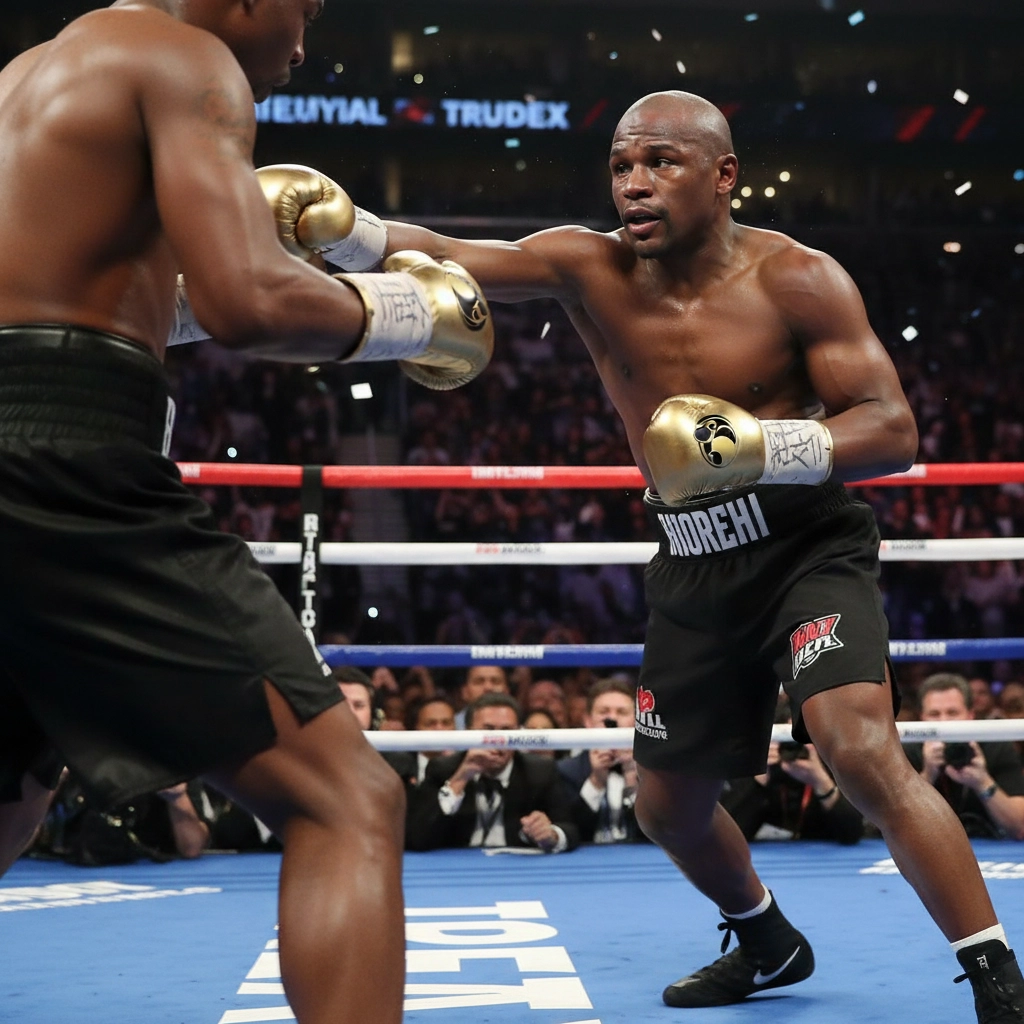
Analyzing Floyd Mayweather’s Defensive Mastery and Successes
How Floyd Mayweather’s Defense Changed What You Expect from an Elite Boxer
You may have watched highlight reels of Floyd Mayweather and wondered how he makes elite punchers look ordinary. His defense didn’t arise overnight; it is a synthesis of technique, instinct, and disciplined habits. By studying Mayweather, you can learn how defense can be an offensive engine: preventing shots forces opponents into bad positions, creates countering opportunities, and extends careers. This section gives you the foundational context for understanding why his defensive mastery became central to his success.
The philosophy behind his defensive approach and what it achieves
At its core, Mayweather’s defense is about control. You’ll notice that he rarely throws himself into exchanges he can’t manage; instead, he manipulates distance, timing, and angles so that opponents are always the ones taking risks. That control translates into several concrete advantages: fewer clean shots absorbed, more high-percentage counters landed, and the psychological edge of making an opponent hesitate. You’ll see these advantages repeated across weight classes and decades of his career.
Fundamental defensive tools you should recognize
- Shoulder roll (Philly shell): Mayweather mastered rolling off punches using his front shoulder to deflect blows while keeping his vision and preparing counters.
- Distance management: He uses footwork and subtle lateral movement to keep opponents at the range that favors his timing.
- Head and torso positioning: Small tilts and dips reduce the target area and make power punches glance off.
- Footwork and pivots: Quick, slight steps create angles for counters and prevent opponents from setting their feet for power shots.
- Timing and reflexes: Exceptional timing allows him to slip or roll and immediately reply with high-percentage punches.
- Ring IQ and pattern recognition: He reads tendencies quickly, punishing repeated habits with counters or by changing tempo.
Where those defensive skills came from and how you can trace their development
To appreciate why Mayweather’s defense is so refined, it helps to look at how it developed. He came through a rigorous amateur system, won a bronze medal at the 1996 Olympic Games, and learned from close family mentors—his father Floyd Sr. and later Roger Mayweather. Those environments emphasized not just offense, but avoidance, counterpunching, and sharpening reflexes against diverse styles. As you analyze his fights, notice how early experiences shaped durable habits rather than isolated tricks.
Early career patterns that reveal defensive evolution
In the amateurs you can see the seeds: compact guard, quick feet, and an awareness of angles. Moving into the pros, Mayweather reinforced those patterns against higher-caliber opponents. Early bouts focused on clean fundamentals—jab, pivot, reset—while later fights layered in more advanced devices like the shoulder roll and subtle feints. His bouts against technical, pressure, and brawling opponents all forced incremental adjustments that you can study to understand learning under live-fire conditions.
Coaching, sparring, and the habit of defensive repetition
Coaching played a central role in turning technique into instinct. Work with his father and trainers emphasized repetition—defending until reactions become reflexes. Sparring partners of varied styles trained him to read different rhythms: orthodox and southpaw, brawlers and boxers. That variety hardened his decision-making so you see him rarely guess; he usually knows what will happen next. Training also conditioned his physical tools—core strength for shoulder rolling, leg conditioning for constant pivots, and hand speed for immediate counters.
By this point you should have a clear sense of the strategic and developmental roots of Mayweather’s defense: it’s not a single trick but a reinforced system built from amateur fundamentals, targeted coaching, and career-long adaptation. Next, you’ll examine detailed technical mechanics—starting with an in-depth breakdown of the shoulder roll, how it neutralizes power shots, and the timing patterns Mayweather used to convert defense into scoring opportunities.
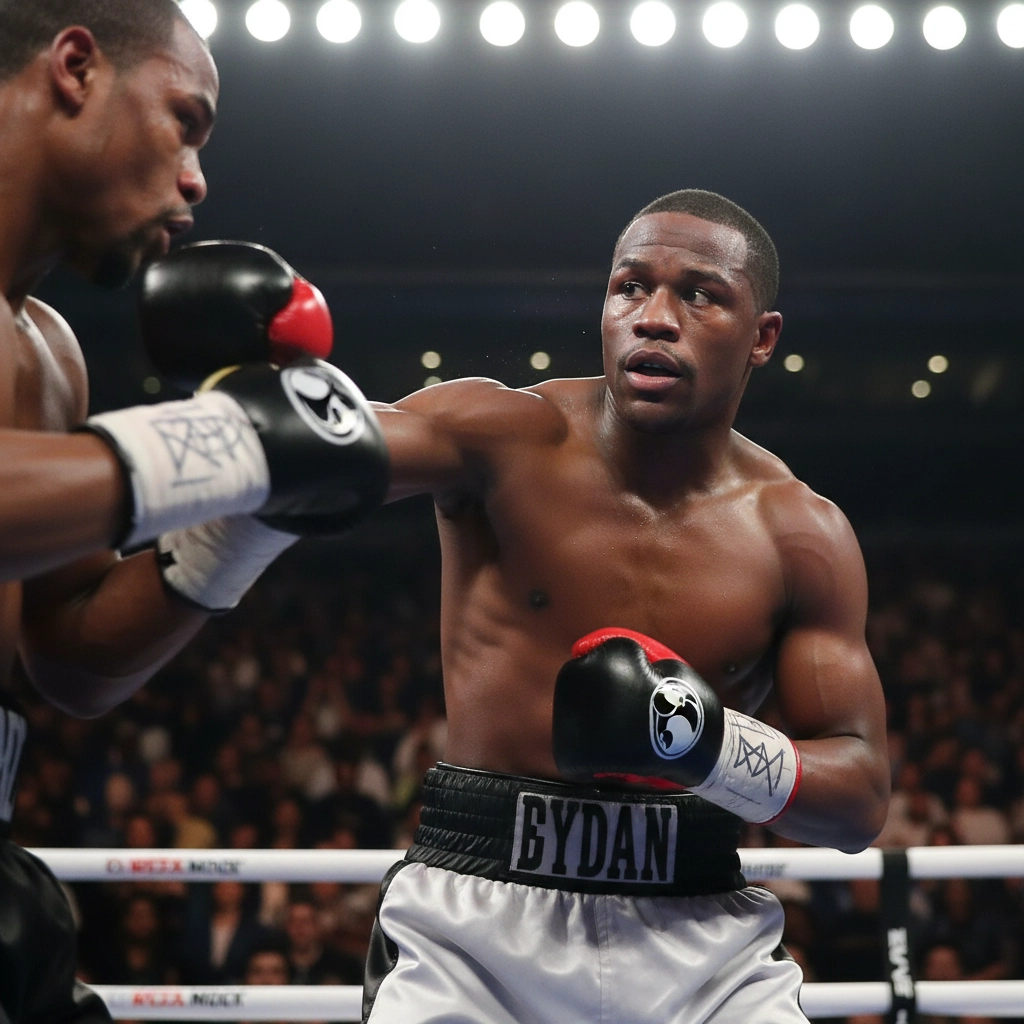
Dissecting the Shoulder Roll: Mechanics, Timing, and Counter Pathways
The shoulder roll is often described as a stylistic flourish, but for Mayweather it’s an engine of both defense and offense. At a mechanical level it’s deceptively simple: present the front shoulder as the primary deflecting surface, tuck the chin behind it, keep the rear hand high to protect the temple and jaw, and maintain a mobile lead foot that can pivot or retreat. Those small adjustments change incoming trajectories—power punches glance off, while vision and balance remain intact for immediate replies.
Timing is the invisible partner of the mechanics. Mayweather doesn’t wait for the punch to arrive; he anticipates based on rhythm and cues (hips turning, weight shifting, eye focus). That anticipation allows him to roll early enough to change the punch’s plane but late enough to preserve counter opportunity. The classic counter sequence you’ll see repeatedly: shoulder roll a jab or right hand, fire a quick left hook to the body or head to capitalize on a cleared lane, then follow with a straight right as the opponent over-commits. The roll also sets up double-duty counters—one shot to punish the exposed flank, another to exploit the opponent’s reset.
Practice drills that developed this habit are specific: slow-motion shoulder-roll shadowboxing to grok the weight transfer; mitt work where the coach alternates punches so the defender learns to time the roll; and partner feed where strikes come at varied intervals to develop anticipation, not just reaction. Footwork supports the roll—small pivots open angles for the right hand and make opponents miss while still allowing a quick return to center. Small technical points matter: relax the neck, keep the rear elbow tucked to block body shots when needed, and keep breathing controlled to preserve sharpness for counters.
Ring Craft: Manipulating Distance, Tempo, and Opponent Psychology
Mayweather’s defense isn’t isolated technique; it’s woven into his ringcraft. He uses distance not only to avoid punches but to make opponents punch badly. By altering tempo—speeding up for bursts, slowing to frustrate—he forces adversaries out of rhythm. Against pressure fighters he steps off, feints to reset their footwork, then explodes with counters when they overcommit. Against counterpunchers he keeps the jab active to blunt timing and uses short, compact bursts to score without inviting prolonged exchanges.
The psychological component is subtle but critical. Making a puncher feel ineffective feeds doubt; they hesitate, look for openings they used earlier, and Mayweather capitalizes. He also communicates with body language: a slight shoulder dip can look like vulnerability, baiting a lunging shot that becomes predictable. At other times he tightens his guard and refuses to engage, coaxing opponents to abandon their game plan. These little games are rehearsed—feints, tempo washes, and rhythmic changes practiced until they become a language he can speak instinctively in the ring.
Specific tactics vary by opponent. Against swarming pressure he’ll use lateral angles and early counters to sap aggression. Versus one-punch punchers he extends range and uses feigned vulnerability to draw single, committed shots he can roll and punish. Against volume boxers he picks his moments, stepping into exchanges long enough to land meaningful counters, then retreating to disrupt rhythm. The throughline is control: make the fight live in the range and tempo you favor.
Practical progressions: How fighters can build Mayweather-style defense
Replicating Mayweather’s system isn’t about copying a single move; it’s about layering habits. Start with fundamentals: tight hands, chin tucked, balanced stance. From there, a progressive training plan looks like this:
– Static drills: shadowbox with emphasis on shoulder-roll position and head tilt; mirror work to see posture and alignment.
– Partner timing: mitt rounds where the coach varies the tempo and target area, forcing the defender to roll, slip, and counter on cue.
– Reaction feeds: a partner randomly feeds jab/right-hand combinations; the defender practices rolling and throwing a prescribed counter sequence until it’s automatic.
– Angle and footwork: ladder and cone drills to simulate small pivots and lateral steps, then immediately apply those steps into counters on the mitts.
– Sparring with constraints: controlled rounds where only defense-to-counter transitions score; later remove constraints to test adaptability.
– Video breakdown: study clips not to mimic looks but to identify cues—how does an opponent telegraph a right hand? What hip rotation precedes power? Linking visual cues to practiced responses builds anticipation.
Finally, condition and recovery are part of the system. Core strength for shoulder rolls, neck work to absorb and redirect force, and leg conditioning for constant micro-movements keep the technical elements sustainable across rounds and careers. Defense becomes a force multiplier only when it’s practiced until it’s instinct, and when it’s supported by the physical and mental conditioning to use it relentlessly.
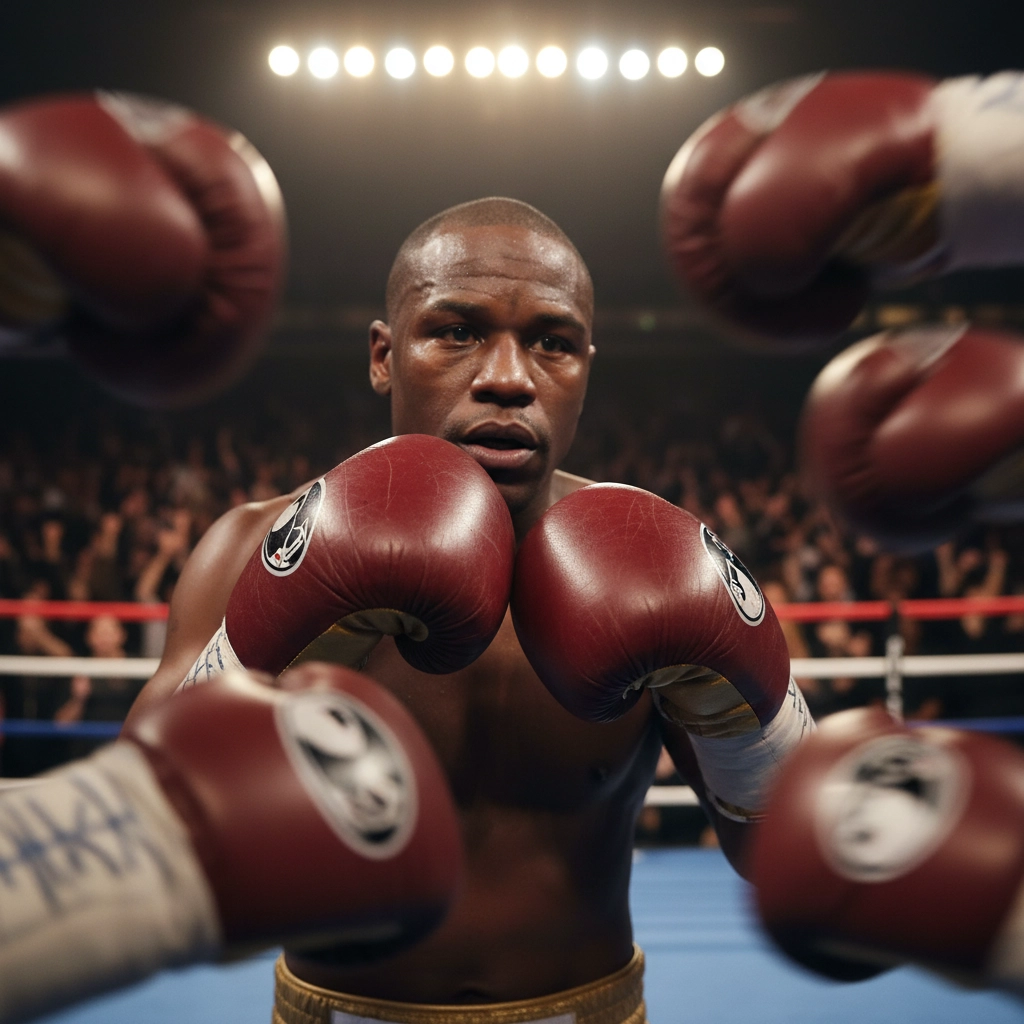
Legacy and influence
Mayweather’s defensive blueprint has rippled beyond his own fights into coaching methods and fighter identities. Trainers study his timing, rhythm control, and counter sequencing, adapting those elements to athletes with different physiques and temperaments. Rather than a template to copy wholesale, his approach serves as a menu of priorities—anticipation, weight management, compact counters—that can be selected and modified to fit a fighter’s toolkit.
At the gym level, the emphasis has shifted toward integrating defensive work into every drill: offense without defensive resets is incomplete, and conditioning programs now routinely include neck, core, and micro-movement endurance to make high-level defense sustainable across rounds. The result is a generation of boxers and coaches who value avoidance and efficiency as much as aggression, applying the lessons of Mayweather’s career to new tactical problems.
Putting defensive mastery into practice
Ultimately, defensive mastery is a long-term investment. Build habits deliberately, prioritize anticipation over pure reflex, and let conditioning underpin technique. Study the cues that precede attacks, practice the transitions from defense to counter until they’re automatic, and remember that effective defense reshapes an opponent’s behavior as much as it prevents damage. For deeper breakdowns of his notable fights and technical clips that illustrate these points, consult a curated analysis like Mayweather fight analyses.
Frequently Asked Questions
How does the shoulder roll actually reduce the impact of punches?
The shoulder roll changes the punch trajectory and presents the denser shoulder and upper arm as the primary contact surface, causing power shots to glance off while the chin stays tucked behind the shoulder. Combined with timing and slight weight shifts, it reduces force transfer and creates openings for counters.
Is Mayweather’s defensive style suitable for all body types and skill levels?
Not exactly. Core principles—tight guard, anticipation, short counters—are widely applicable, but the shoulder-roll-centric approach favors fighters with good timing, balance, and lateral mobility. Coaches should adapt the elements to a fighter’s strengths rather than force a direct copy.
What are the first drills a boxer should practice to develop Mayweather-style defense?
Begin with shadowboxing focused on shoulder-roll posture and head tilt, then progress to mitt work with variable tempos, reaction-feed partner drills, and constrained sparring that rewards defense-to-counter transitions. Reinforce with neck and core conditioning to sustain the technique across rounds.