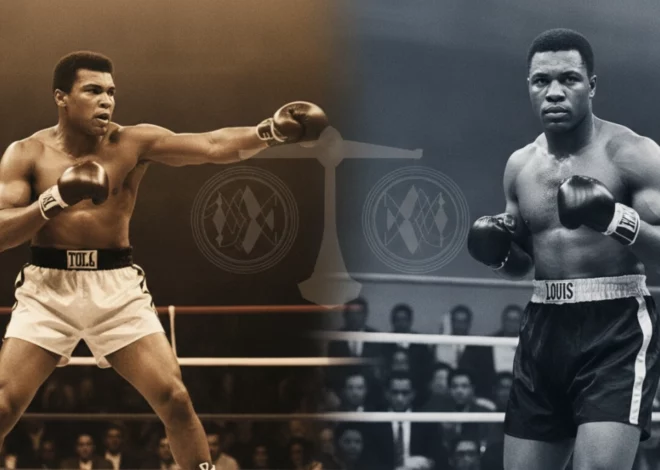
Muhammad Ali vs Joe Louis: Fan Debates, Expert Analysis, and Fight Highlights
Two champions, one question: Why you and fans still imagine Ali vs Louis
You’ve probably seen the hypothetical matchup debated on forums, podcasts, and sportsbars: Muhammad Ali, the flamboyant, mobile tactician of the 1960s and ’70s, versus Joe Louis, the methodical, devastating puncher who dominated in the 1930s and ’40s. The question persists because both men reshaped heavyweight boxing in distinct ways, and imagining them together forces you to consider more than records—you compare eras, rules interpretations, training, and intangible qualities like will and ring IQ.
How debates form and what you should watch for
Fan debates rarely pivot on a single metric. When you follow these discussions, they typically mix objective data (records, reach, knockout rates) with subjective judgments (prime timing, psychological tactics, impact on the sport). You’ll notice recurring themes:
- Era bias — fans often favor fighters from their own generation or the era they most admire.
- Style preference — whether you value speed and elusiveness or straight-line power affects your pick.
- Rule and equipment differences — gloves, ring size, medical standards, and round pacing have changed, affecting how you project outcomes across eras.
Early career milestones that shape how you assess each man
To judge a hypothetical Ali vs Louis bout coherently, you need to know what each champion accomplished in his prime. These milestones give you concrete talking points rather than relying on hype.
Joe Louis: the textbook conqueror
When you study Joe Louis’s rise, a few facts stand out: he turned pro in 1934, claimed the heavyweight title in 1937, and held it until 1949 with a record of decisive victories and a long title reign. Louis combined clinical defense with a jab and straight-right that ended many fights early. You’ll often hear analysts describe him as the consummate technician who could control range and tempo while delivering knockout finishes.
Muhammad Ali: the mobile genius and cultural force
Muhammad Ali burst onto the scene in the early 1960s, winning the world title in 1964 and creating some of boxing’s most memorable tactical shifts—most famously his use of speed, feints, and psychological warfare. Ali’s record and signature wins (including his strategic approach against Sonny Liston, George Foreman, and later opponents) show a fighter who reinvented how you think about ringcraft: movement, timing, and endurance could neutralize raw power.
- Louis: long title reign, methodical power, textbook fundamentals.
- Ali: superior footwork and reflexes, tactical adaptability, psychological edge.
Understanding these early details—how each man developed, who they beat, and how they won—frames the rest of the debate. In the next section, you’ll get into expert analysis that weighs punch stats, reach and height comparisons, and round-by-round scenarios that bring a hypothetical Ali vs Louis fight to life.
Expert breakdown: stats, style, and what the numbers don’t tell you
When analysts line up the hard data, they start with familiar axes: height, reach, knockout rate, and rounds endured. On paper Ali typically had a slight height and reach edge over Louis, and his recorded knockout percentage is lower but masked by a willingness to outpoint elite opponents rather than seek one-shot finishes. Louis’s ledger shows a higher stoppage rate and a history of methodically dismantling opponents with a signature straight-right and a compact, efficient jab.
But experts caution that these figures obscure crucial context. Knockout rates don’t account for the quality of opposition or how styles interact. Reach numbers help predict who can land first, yet they don’t capture footwork or the ability to convert range into meaningful offense. Conditioning metrics are era-dependent too: Louis fought and won in an era when ring generalship and body work were primary; Ali’s training emphasized speed, lateral mobility, and sustained output across championship-distance rounds.
So what should you weigh? Most commentators advise prioritizing style dynamics over raw numbers. Louis is the archetype of controlled pressure and single-shot power; Ali is the exemplar of rhythm disruption, angles, and psychological warfare. Those traits mean the contest becomes less about who’s bigger on paper and more about who imposes his preferred tempo and range early on.
Round-by-round scenarios that bring the matchup to life
Experts sketch several plausible arcs, each hinging on two variables: Louis’s ability to cut off the ring and land early, telling blows, and Ali’s success in converting distance and movement into long-range scoring.
Scenario A — Early Louis success: Louis stalks, plants a stiff jab, and times a handful of heavy rights in rounds 1–4. If he pins Ali against the ropes and starts to convert with body shots, the fight tilts toward a mid-round stoppage (6–8) because Louis’s accumulation and precision break down mobile opponents.
Scenario B — Ali controls distance: Ali uses jab-and-feint combinations, pivots off the line, and frustrates Louis with lateral motion. Rounds 1–6 become Ali’s to score and avoid damage. As Louis tires from constant chasing, Ali ramps up combinations and head movement, turning the fight into a late unanimous decision or late stoppage in Ali’s favor.
Scenario C — chess match with momentum swings: The first half is cautious—Ali landing quicker punches, Louis landing meaningful counters. Momentum swings with one or two flash knockdowns. This produces a dramatic mid-to-late fight where ring IQ, conditioning, and mental resilience determine the winner; pundits often split on whether an accumulation of power or sustained tactical superiority wins out.
No single round script is definitive. The most credible experts concede that the outcome likely hinges on a handful of moments—a clean Louis right early or a decisive Ali combination that saps his opponent’s legs. Those moments, more than any stat line, define the mythology that keeps this hypothetical fight alive in fan debates.
Modern tools and simulations that fuel the debate
Today’s fans and analysts have more ways than ever to test the Ali-vs-Louis question beyond armchair arguments. Film breakdowns, punch-tracking archives, era-adjusted statistical models, and even simulation software let you experiment with variables—stance, cardio, ring size, and officiating—so you can see how small changes tilt the balance.
- Film study: watching rounds at fight speed and frame-by-frame reveals patterns raw stats miss.
- Analytics: adjusting for opponent quality and era norms helps contextualize knockout rates and durability.
- Simulations: they’re useful for exploring “what-if” scenarios, but their outputs reflect the assumptions you feed them.
The debate that keeps boxing alive
Conversations about Muhammad Ali versus Joe Louis rarely end with a definitive answer—and that’s precisely the point. These matchups are thought experiments that keep history in motion, encourage cross-era appreciation, and sharpen how you evaluate style, strategy, and legacy. Whether you prefer technical dismantling or dynamic movement, the back-and-forth reveals as much about the person doing the arguing as it does about the fighters themselves. If you want a trustworthy starting point for deeper reading, consider Britannica’s coverage of Joe Louis to ground your views in primary facts: Joe Louis biography at Britannica.