
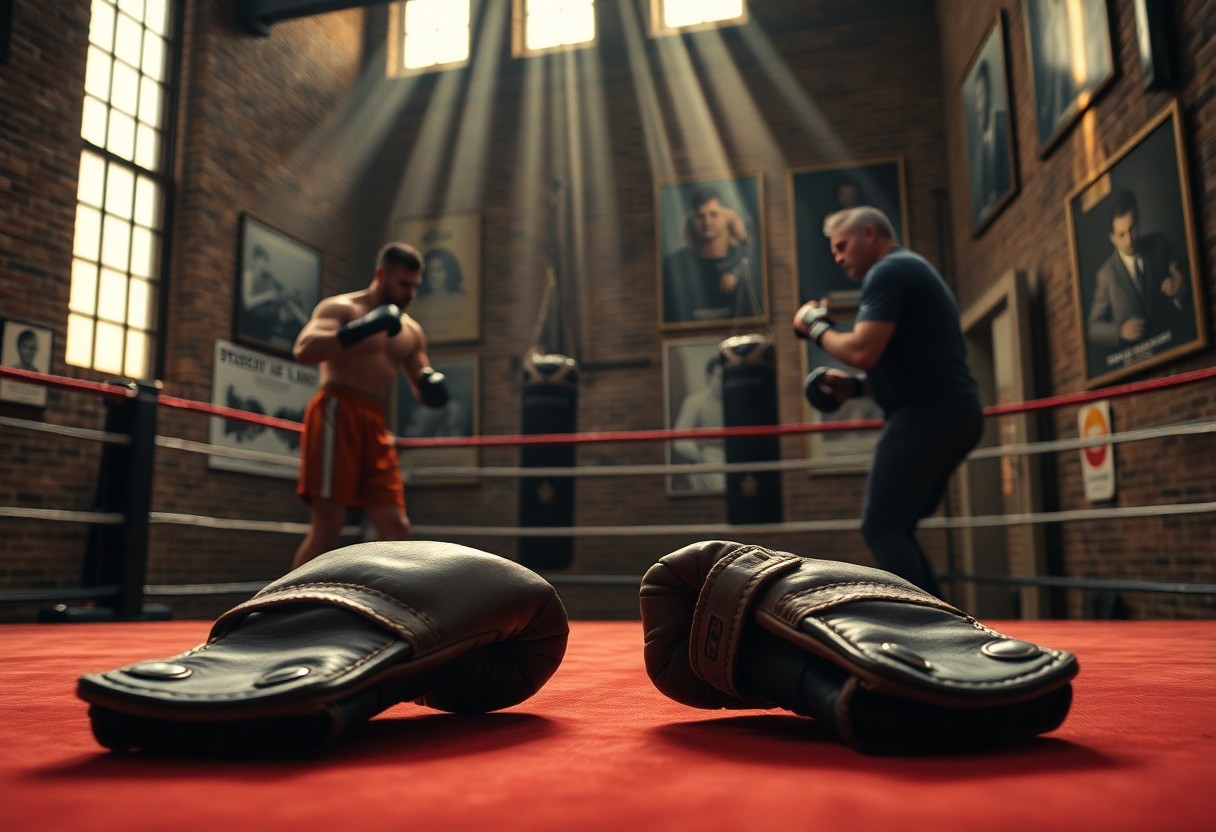
Why Traditional Boxing Still Reigns As The Foundation Of Modern Combat Sports?
Combat sports trace their lineage to traditional boxing, which remains the bedrock of striking arts; its emphasis on footwork, timing and head movement trains fighters to control distance, while its rigorous sparring exposes athletes to punch accuracy and defense under pressure, teaching survival in violent exchanges, and its focus on longevity, discipline and tactical adaptability ensures lasting relevance across modern combat disciplines.
The Historical Significance of Boxing
Across civilizations, boxing shaped how societies taught and tested striking: archaeological evidence, Olympic inclusion in 688 BCE, and later codifications made it a technical template for hand strikes, timing, and ringcraft. Its rules and training methods migrated into military drills and other fight sports, seeding the footwork, distance control and counter-punching that underpin modern kickboxing and MMA tactics.
Origins of Boxing as a Combat Sport
Archaeological records-from Sumerian reliefs to Minoan frescoes-and Greek competition show boxing as both ritual and combat training long before modern sport; the Olympic adoption in 688 BCE formalized bouts that were often brutal and minimally regulated. Those early contests emphasized stamina, discrete punching technique and conditioning that later teachers codified into repeatable drills and sparring practices.
Boxing’s Evolution Through the Ages
Formal rules transformed bare-knuckle brawling into a regulated sport: the Broughton Rules (1743) introduced basic protections and the Marquess of Queensberry Rules (1867) brought gloves and timed rounds, spawning the professional era with icons like Jack Johnson (1908), Jack Dempsey (1919) and Muhammad Ali (1960s). Gloves cut superficial injuries but shifted force inward, raising concerns about CTE and long-term brain trauma.
By the late 19th and 20th centuries, standardized rounds and an expanding set of weight divisions (now about 17 professional classes) professionalized training-interval work, mitts, and periodized conditioning-while promoters and media globalized the sport. Regulatory bodies gradually imposed medical suspensions, mandatory scans and safety protocols in response to mounting evidence of repeated head injury; nonetheless, boxing’s tactical innovations remain a primary reference for striking curricula across contemporary combat sports.
The Fundamentals of Boxing Technique
Mastering stance, balance and efficient striking ties every modern fighter back to boxing’s roots; small technical gains often decide rounds. Proper alignment reduces injury and amplifies score-making ability-a dropped rear hand or poor weight transfer makes you vulnerable to counters. Case studies like Muhammad Ali’s lateral mobility and Floyd Mayweather’s compact guard illustrate how disciplined basics translate into world-title success.
Stance and Footwork
Stand with feet roughly shoulder-width, lead foot angled about 30-45° and weight distributed slightly rearward (commonly ~60/40) to enable quick pushes or retreats. Short adjustments of 6-12 inches keep range control; pivoting on the lead foot by 30-90° creates new attack angles. Study Vasyl Lomachenko’s step patterns for elite positional control and note that poor footwork directly increases exposure to counter hooks.
Punching Methods and Defense
Four primary punches-jab, cross, hook, uppercut-form the vocabulary; combinations like the 1-2 and 1-2-3 are foundational. Defense is active: slip, parry, roll, block and clinch each neutralize different threats; Mayweather’s shoulder roll and Mike Tyson’s peek-a-boo defense are practical case studies. Emphasize timing, head movement and hand positioning to convert defensive actions into counter-scoring opportunities.
Power generation relies on the kinetic chain: feet plant, hips rotate, torso and shoulders follow, and fists finish-this sequence differentiates a scoring shot from a fight-ending strike. Train it with targeted drills: 5-10 minutes shadowboxing for mechanics, 3-minute mitt or bag rounds for timing, and 4-6 heavy bag rounds to build force. Coaches focus on hip snap and weight transfer because proper torque both increases impact and reduces strain on the shoulder.
Boxing’s Influence on Other Combat Sports
Across MMA, kickboxing and Muay Thai, boxing supplies the template for striking: distance control, timing and hand speed. Conor McGregor’s 13-second KO of José Aldo and Holly Holm’s dismantling of Ronda Rousey show how elite boxing skills convert to MMA outcomes. Camps like Jackson-Wink and American Top Team routinely hire boxing coaches to refine combinations, while rule sets in kickboxing mirror boxing’s emphasis on clean, scored punches. Power, timing and head movement remain the most transferable-and most dangerous-elements fighters train to exploit.
Incorporation of Boxing Techniques in MMA
Jabs, feints and angled footwork are now standard in MMA striking curricula. Fighters use the jab to set up takedown defenses and to control octagon geography, while slip-and-counter drills create openings for rear-hand power shots. Trainers emphasize mitt work and constrained sparring to transpose boxing timing into a three-dimensional MMA environment, producing faster setups and higher knockout rates from well-timed counters.
Boxing as a Prerequisite in Striking Arts
Many striking coaches require boxing basics before advancing to kicks or clinch entries, because foundational footwork and punching mechanics underpin timing and balance. Muay Thai gyms often start novices on boxing mitts for months to develop straight punches and head movement; kickboxers similarly prioritize hand combinations to complement leg attacks. This grounding shortens the learning curve and reduces exposure to avoidable strikes in competition.
Specific drills illustrate why boxing is treated as a prerequisite: 3-6 rounds of mitt work for precision, 4-6 heavy-bag rounds for power, and double-end bag sessions to hone timing. Shadowboxing enforces distance awareness while controlled sparring translates drills into live reaction. Coaches cite these practices as the fastest path to reliable striking, with mitt work building timing and the double-end bag improving accuracy.
The Role of Boxing in Athletic Conditioning
Conditioning in boxing fuses aerobic base work with anaerobic power: traditional camps combine 12 three-minute championship rounds simulation, roadwork (5-10 km), jump rope (10-15 minutes) and interval sprints to build both stamina and punch-specific explosiveness. Coaches schedule 60-90 minute daily sessions, 5-6 days a week, layering strength, plyometrics and technical drills so athletes maintain peak output across rounds while minimizing wasted movement.
Physical Fitness and Endurance
Endurance targets both oxygen delivery and repeat-sprint ability; fighters often run steady-state miles for aerobic base, then perform 200-400m sprints or bag rounds to tax the anaerobic system. Heavy-bag intervals (3-5 rounds of 3 minutes) and mitt work develop muscular endurance and recovery between bursts, producing athletes who can throw sustained combinations while preserving balance and power under fatigue.
Mental Toughness and Strategy
Mental conditioning trains decision-making under duress: visualization, situational sparring and tactical drills sharpen fight IQ and timing. Historic examples like Ali’s “rope-a-dope” vs. Foreman (1974) show psychological strategy can overturn physical mismatches. Regular exposure to pressured exchanges improves composure, while deliberate game-planning teaches when to press, reset or disengage.
Further mental work uses specific tools-focus mitts, double-end bag and scenario sparring-to hone pattern recognition and split-second reactions; coaches force choices by adding fatigue or limited-weapon rounds (only jabs, or only bodywork). Video study, opponent-specific film sessions and measurable sparring metrics (round duration, punch volume) convert intuition into repeatable tactics while exposing and mitigating concussion and decision-failure risks.
The Cultural Impact of Boxing
Beyond technique, boxing has permeated global culture through iconic fights, art and protest: Muhammad Ali’s public stance and three-time heavyweight reign (career record 56-5, 37 KOs) shifted politics and sport, while spectacles such as the 1974 Rumble in the Jungle and 1975 Thrilla in Manila became international touchstones. Film and media amplified those moments, and mega-events like Mayweather-Pacquiao (2015) generated over $600 million and 4.6 million North American PPV buys, keeping the sport’s visibility and physical risk in public debate.
Boxing in Popular Media
Film, television and documentaries have canonized boxing: Rocky’s eight-film franchise built the underdog myth; Scorsese’s Raging Bull reframed the fighter as tragic artist; When We Were Kings (1996) won an Academy Award for its telling of the Rumble in the Jungle. Premium networks like HBO and Showtime developed long-form storytelling around fighters, while streaming and social platforms now turn single rounds or viral knockouts into global cultural moments, expanding audience demographics and commercial opportunities.
Notable Boxers and Their Legacy
Icons shaped the sport’s modern meaning: Muhammad Ali combined athletic dominance with activism, Floyd Mayweather retired 50-0 and redefined fight economics, Manny Pacquiao remains the only eight-division world champion, and Mike Tyson became the youngest undisputed heavyweight at age 20 (1986). Women like Katie Taylor and Claressa Shields (Olympic golds, 2012; Shields also 2016) have rewritten access and recognition, leaving an enduring legacy on participation and public perception.
Ali’s 1967 conviction over draft refusal and its 1971 Supreme Court reversal (Clay v. United States) illustrates how boxers can shift legal and social conversations, while Mayweather’s control of promotion and PPV revenue demonstrated a new commercial model that returned unprecedented purses to fighters. Practical outcomes include wider media rights deals, the Olympic inclusion of women’s boxing in 2012, and tightened medical oversight-ringside physicians and stricter concussion protocols-to address the sport’s long-term brain injury concerns while preserving its cultural resonance.
Current Trends in Boxing
Recent developments push boxing into a data-driven era: elite camps blend traditional sparring with wearable analytics, high-speed video, and individualized recovery plans. Coaches now use devices like Hykso punch trackers, WHOOP HRV monitors and ForceDecks force plates to quantify power, volume and fatigue. Several pro gyms report faster skill retention and fewer missed sessions when training loads are adjusted by metrics rather than solely by feel.
The Rise of Women in Boxing
Participation and visibility have surged since women’s boxing debuted at the 2012 Olympics: Claressa Shields (two-time Olympic champion turned unified pro titleholder), Katie Taylor (2012 Olympic gold, undisputed lightweight in 2019) and Amanda Serrano (world titles across seven weight classes) exemplify the depth. Promoters now place female fights on main cards and streaming audiences have grown, yet pay gap and access to gyms persist even as visibility grows.
Technological Advancements in Training
Gyms increasingly deploy smart equipment-FightCamp smart bags, Hykso and StrikeTec sensors-alongside high-speed cameras (500-1,000 fps), 3D motion capture and force plates to measure punch velocity, impulse and ground reaction forces. Strength staffs combine this with WHOOP or Polar HRV to individualize intensity. The outcome is objective performance data that shortens feedback loops and enables impact monitoring to better manage head-contact exposure.
Coaches now set weekly punch-count caps and intensity redlines using accelerometer data, enabling personalized periodization that reduces overtraining. Video-synced analytics let trainers isolate a defensive lapse to the millisecond and prescribe targeted drills, while medical teams review impact logs so accelerometer and gyro spikes can trigger concussion evaluations-an operational safety layer that augments clinical judgment.
FAQ
Q: Why is traditional boxing still regarded as the foundation of modern combat sports?
A: Boxing established a compact, repeatable system for striking, footwork, defense, and ringcraft that other disciplines build on. Its rule-driven emphasis on clean, efficient punches produced training methods that optimize timing, distance management, and balance-skills that transfer directly to MMA, kickboxing, and self-defense. Historical factors matter too: boxing was formalized earlier than most modern combat sports, so its coaching hierarchies, gyms, and competitive structures seeded talent and methodology across adjacent disciplines. Finally, boxing’s focus on one-on-one tactical exchanges fosters decision-making under pressure-reading opponents’ cues, setting traps, and adjusting strategy mid-fight-which remains central to success in any striking-based combat sport.
Q: Which specific boxing techniques and habits translate best to MMA and other striking arts?
A: Core boxing elements that consistently translate are the jab for range control and setup, the straight cross for power, hooks and uppercuts for close-range finishing, and layered combinations that change level and rhythm. Equally important are footwork patterns-pivoting, lateral movement, angle creation-and defensive skills like head movement, parrying, framing, and controlled clinch exits. Boxing’s emphasis on effective guard positioning and weight distribution improves takedown defense and balance in clinch situations. Conditioning and tactical pacing from boxing (interval-style rounds, tempo control) also improve an athlete’s ability to sustain high-intensity exchanges while managing respiration and recovery between bursts.
Q: How have boxing training methods and coaching philosophies influenced modern fight preparation and athlete development?
A: Boxing contributed practical training templates-shadowboxing for technique and visualization, pad and mitt work for precision and timing, heavy-bag sessions for power and endurance, and structured sparring to simulate fight conditions. Coaches developed progressive learning cycles: skill acquisition, scenario drilling, intensity ramping, and tactical sparring-now standard in mixed disciplines. Sports science integration (periodization, metabolic testing, targeted recovery) was often first organized in boxing gyms and then adopted broadly, improving peak planning and weight management. Corner protocols, scouting, and in-fight adjustments refined in boxing camps are routinely used in modern teams to prepare game plans, exploit opponents’ patterns, and optimize performance on fight night.
