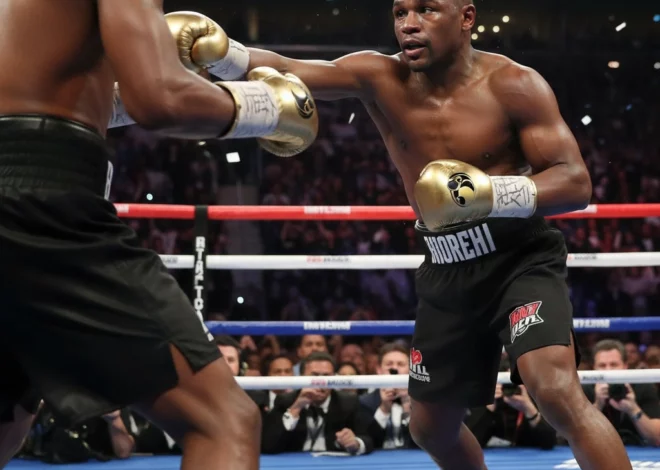
Floyd Mayweather Boxing Record: Title Wins, Knockouts, Milestones
Why Floyd Mayweather’s unbeaten 50-0 record still matters to how you view modern boxing
You’ve likely seen the headline numbers—50 wins, 0 losses—and felt the gravity of that achievement. Floyd Mayweather Jr.’s professional record is more than an undefeated ledger; it’s a narrative about defensive mastery, strategic career planning, and title accumulation across multiple weight classes. Understanding those numbers helps you see why Mayweather is often cited in debates about the greatest fighters of the modern era.
When you read Mayweather’s record, a few facts jump out immediately: he finished his professional career at 50-0 with 27 knockouts, was a five-division world champion, and claimed numerous major and lineal titles. But to appreciate what those figures mean, you need context: how he built his resume, what kinds of opponents he faced at various stages, and how his boxing style produced wins that were frequently dominant yet rarely brutal stoppages.
- Record snapshot: 50 wins, 0 losses, 27 wins by knockout (official pro record).
- Weight-class success: titles in five different divisions, signaling adaptability and careful career management.
- Style and outcomes: a defensive, counter-punching approach that led to many unanimous decisions and fewer one-sided knockout finishes than power punchers of similar fame.
Tracing Mayweather’s early climb: how your view of his foundation explains later title wins
If you want to follow the arcs that produced those championship belts, start with the beginning. Mayweather’s amateur pedigree and quick rise through the professional ranks set the tone for a career built on technical excellence and smart matchmaking. Those early years give you the blueprint for how he translated amateur success into consistent professional supremacy.
From amateur success to turning pro
You should know that Mayweather arrived in the professional ranks with an accomplished amateur background. He represented the United States at the 1996 Olympics and returned home with a bronze medal—a credential that signaled his elite level before he entered the pro scene. His extensive amateur bouts honed the defensive reflexes and ring IQ that would later define his style.
- Olympic experience: a podium finish at the Atlanta Games, which boosted his visibility and legitimacy.
- Amateur record: a strong record that demonstrated early power and technique, giving promoters and fans confidence in his pro potential.
- Early professional development: immediately managed to translate amateur fundamentals into a professional approach focused on defense, footwork, and accurate counter-punching.
Your guide to his first world title and what it revealed about his approach
Within a relatively short time after turning professional, Mayweather captured his first world title. That early belt was an important milestone because it validated his skill set at the paid level and set up opportunities for higher-profile fights. Rather than relying purely on knockout power, he used precision, timing, and tactical discipline to outpoint opponents and accumulate titles.
- First world title: secured in the late 1990s, signaling the transition from promising prospect to established contender.
- Technique over brute force: early title fights highlighted Mayweather’s skill in neutralizing opponents’ strengths rather than pursuing high-risk exchanges.
- Building momentum: once he held a world title, Mayweather’s team mapped out moves across divisions to maximize both legacy and opportunity.
These formative victories and his strategic rise through weight classes explain why many of Mayweather’s later bouts were measured, high-stakes affairs rather than reckless slugfests. As you move from the early chapters of his career into his prime, you’ll see how those initial title wins and tactical choices laid the groundwork for major paydays, marquee opponents, and the specific milestones that defined his middle and late career. In the next section, you’ll examine his biggest title defenses, signature knockout moments, and the milestones that cemented his status in boxing history.

Big title defenses that tell you how Mayweather controlled risk and reputation
As you move into Mayweather’s prime, the pattern you should notice is how he defended titles on his terms. Rather than brawling to prove toughness, Mayweather often used defenses to consolidate status, pick favorable timing, and increase negotiating leverage. The result: a string of headline-winning defenses against credible challengers that preserved his unbeaten mark while boosting commercial and legacy value.
Think of these defenses less as one-off heroic nights and more as career-management moves executed in the ring. A few characteristics stand out:
- Selective matchmaking: opponents were frequently top-ranked or marketable names whose styles suited Mayweather’s strengths—slick, offensive-minded fighters he could neutralize with footwork and counters.
- Tactical consistency: the same defensive gameplan—sharp lateral movement, quick pivots, timed counters—worked across weight classes, meaning many defenses looked like variations on a theme rather than radical strategy shifts.
- High-profile stepping stones: certain defenses doubled as career milestones because they were against crossover stars or longtime rivals, elevating both the prize money and the public perception of his skill.
Examples you’d recognize include his wins over Oscar De La Hoya and Ricky Hatton—fights that did more than retain belts. Beating De La Hoya in 2007 gave Mayweather mainstream legitimacy beyond the hardcore boxing audience; the Hatton stoppage later that year underscored that, when needed, he could turn a decision-oriented style into a late stoppage. His two fights with Marcos Maidana in 2014 also illustrate how Mayweather used defenses to both test and silence critics—one gritty contest followed by a more controlled rematch, showing adaptability and risk management in real time.
Signature knockouts and what they reveal about his power versus precision
When you look at Mayweather’s 27 knockouts, don’t expect the sort of highlight reel produced by pure punchers. His stoppages were often the byproduct of perfect placement, accumulated damage, or opportunistic finishing rather than single-punch brutality. That nuance matters if you’re trying to reconcile his undefeated record with the relatively modest KO ratio for an all-time great.
- Opportunistic KOs: many stoppages came when an opponent overcommitted or left an opening—Mayweather’s reflexes turned those moments into decisive blows rather than prolonged slugging matches.
- Strategic stoppages: some KOs were a means to an end—shutting down an opponent late to prevent a close decision or to make a statement to future challengers.
- Memorable finishes: a few stand out because they broke a narrative about Mayweather’s lack of fight-ending power. The technical KO of Ricky Hatton and the emphatic fourth-round finish of Victor Ortiz are two examples where timing and accuracy produced dramatic, memorable conclusions.
Put another way: his knockout count isn’t an indictment of his power so much as a reflection of a style that prized long-term control over short-term fireworks. When knockouts did happen, they were often career-defining moments precisely because they were unusual in the context of his overall approach.

Milestones beyond the ring: how you should interpret Mayweather’s commercial and legacy landmarks
When you study Mayweather’s record, don’t confine your analysis to punches landed and rounds won. Some of the most consequential milestones were commercial and strategic, and they changed what modern boxing looks like.
- PPV and revenue milestones: a string of megafights—against De La Hoya, Pacquiao, and later Conor McGregor—redefined how much a single boxing event could generate. Those bouts raised purses, broadened boxing’s audience, and set new standards for negotiation leverage between fighters and promoters.
- Cross-genre impact: his fight with a mixed‑martial-arts star in the late 2010s helped normalize crossover events as huge commercial drivers, influencing matchmaking choices by other elite fighters.
- Legacy markers in numbers: the 50-0 final ledger and the distribution of decisions versus stoppages shape two competing narratives you’ll hear: one emphasizing invulnerability and ring IQ, the other questioning entertainment value and susceptibility to stylistic matchups.
Finally, keep in mind how these milestones affected the sport’s incentives. Mayweather’s blending of elite skill, careful opponent selection, and business savvy has encouraged other fighters to manage careers similarly—prioritizing legacy and payday alongside the competitive act. If you want to understand modern boxing, you’ll need to look at the record and at the ripple effects it caused in matchmaking, promotion, and how champions define success today.
Putting the record in perspective
Floyd Mayweather’s ledger is more than a collection of outcomes; it’s a case study in how elite skill, calculated risk-taking, and commercial savvy can combine to shape a modern sporting legacy. Whether you focus on the technical artistry in the ring, the selective use of stoppages, or the seismic business shifts his biggest fights produced, the record invites a broader conversation about what matters most in evaluating greatness. For a detailed fight-by-fight listing, see Floyd Mayweather on BoxRec.
Frequently Asked Questions
How many professional wins and knockouts did Mayweather record?
Mayweather finished his professional career with a 50-0 record, including 27 wins by knockout.
Why were many of Mayweather’s wins decisions rather than knockouts?
Mayweather prioritized defense, ring generalship, and timing. His style emphasized control and minimizing risk, so many fights were won on points. When knockouts occurred, they were often the result of precision, accumulated damage, or opportunistic finishing rather than raw one-punch power.
In what ways did Mayweather influence boxing beyond his in-ring achievements?
He transformed the sport’s commercial landscape through record-breaking pay-per-view revenues, crossover events, and a negotiation-first approach to matchmaking. Those moves raised purses, altered promotional strategies, and encouraged other fighters to manage careers with legacy and revenue in mind as much as competitive ambition.