Mayweather Boxing Matches That Cemented His Legend
Why the first defining fights matter when you study Mayweather’s legacy
When you look at Floyd Mayweather’s career, the spotlight often goes to the mega-pay-per-view events near his retirement. But the foundation of his legend was laid much earlier, in a sequence of matches that tested his skills, discipline, and ring IQ. These early contests reveal how Mayweather’s style — an obsessive attention to defense, timing, and ring generalship — evolved from talented prospect into the kind of fighter who could frustrate elite opponents and remain unbeaten.
As you read about these pivotal fights, notice patterns that reappear throughout his career: subtle footwork that controls distance, economy of movement that saves energy for decisive rounds, and a psychological command that turns pressure into advantage. Understanding those elements will help you appreciate why certain matches are viewed as milestones rather than merely another win on a record sheet.
Breakthrough championship moments that signaled something different
Two bouts stand out as the early proof that Mayweather was more than a promising boxer: his first world title victory and his encounters with a gritty lightweight champion who pushed him to the limit. Each fight taught you different lessons about his approach and why critics began to take him seriously as a generational talent.
Genaro Hernández — the first world title and a showcase of poise
When you study Mayweather’s rise, his 1998 fight against Genaro Hernández is a logical starting point. This was the moment he stepped from prospect status into a recognized world champion. Hernández was an experienced, battle-tested competitor — he was supposed to be the measuring stick. Instead, the match highlighted a young fighter already comfortable with pacing, ring control, and late-round composure.
- What you should note: Mayweather’s ability to adjust as the fight progressed — he maintained distance and gradually took over the center of the ring rather than forcing a reckless early brawl.
- Technical takeaway: His defensive rhythm — shoulder rolls, precise counterpunching, and selective aggression — began to define the blueprint he would follow for years.
- Legacy impact: The win announced him as a serious titleholder, not just a name to watch.
Jose Luis Castillo — the tests that refine a champion
Next, focus on Mayweather’s trilogy of important showings against Jose Luis Castillo (the most contentious of these occurring in 2002). Castillo was emblematic of the rugged, come-forward fighters who can turn technical boxing into a war of attrition. The first fight was frequently debated by fans and analysts alike, but the rematch provided clearer evidence of Mayweather’s capacity to adapt under fire.
- Why you should care: These bouts forced Mayweather to solve problems in real time — dealing with pressure, body work, and sustained aggression — areas where he had to prove his defensive system would hold up.
- What changed: In the rematch, you could see him refine distance management and counterpunch selection, turning what some observers called a narrow decision into a more authoritative performance.
- Broader effect: Those fights gave him credibility among purists and critics who questioned whether his style could beat tenacious, hard-hitting opponents.
By the time you reach these matches, the pattern is clear: Mayweather’s early championship victories weren’t just wins — they were practical experiments in how to survive, control, and eventually dominate fights against both skilled boxers and relentless pressure fighters. The techniques and psychological edges he developed in this period were later amplified on much bigger stages.
In the next section, you’ll examine the high-visibility bouts that turned those technical accomplishments into mainstream legend — fights that pushed Mayweather into the public eye and tested whether his methods would hold up against star opponents on the biggest cards of his era.
The Oscar De La Hoya moment — proving style could headline
When you trace the shift from respected champion to mainstream superstar, the Mayweather–De La Hoya showdown is the clearest pivot point. This was more than another title defense; it was a clash of personalities and fan bases, and the first time Mayweather had to demonstrate that his cerebral, defense-first approach could sell on the biggest pay-per-view stage.
What you should note: De La Hoya was widely regarded as a boxing celebrity capable of dragging even skeptical viewers into a card. Against him, Mayweather didn’t simply rely on his usual avoidance — he controlled the tempo. He forced exchanges on his terms, used feints to open De La Hoya’s guard, and rotated the ring to deny prolonged pressure.
Technical takeaway: Watch the way Mayweather turned defense into offense. The shoulder roll and lateral movement weren’t passive maneuvers; they created precise countering windows. Rather than trading volume, he picked moments to puncture De La Hoya’s rhythm with clean, scoring shots — a demonstration of ring IQ rather than brute force.
Legacy impact: Winning that fight didn’t only elevate Mayweather’s purse; it transformed him into a headline act. Critics could no longer dismiss his style as unmarketable. He’d shown that tactical dominance could be packaged and sold to a mainstream audience, and that was crucial for the megafights that came after.
Ricky Hatton — the left hook that altered perceptions
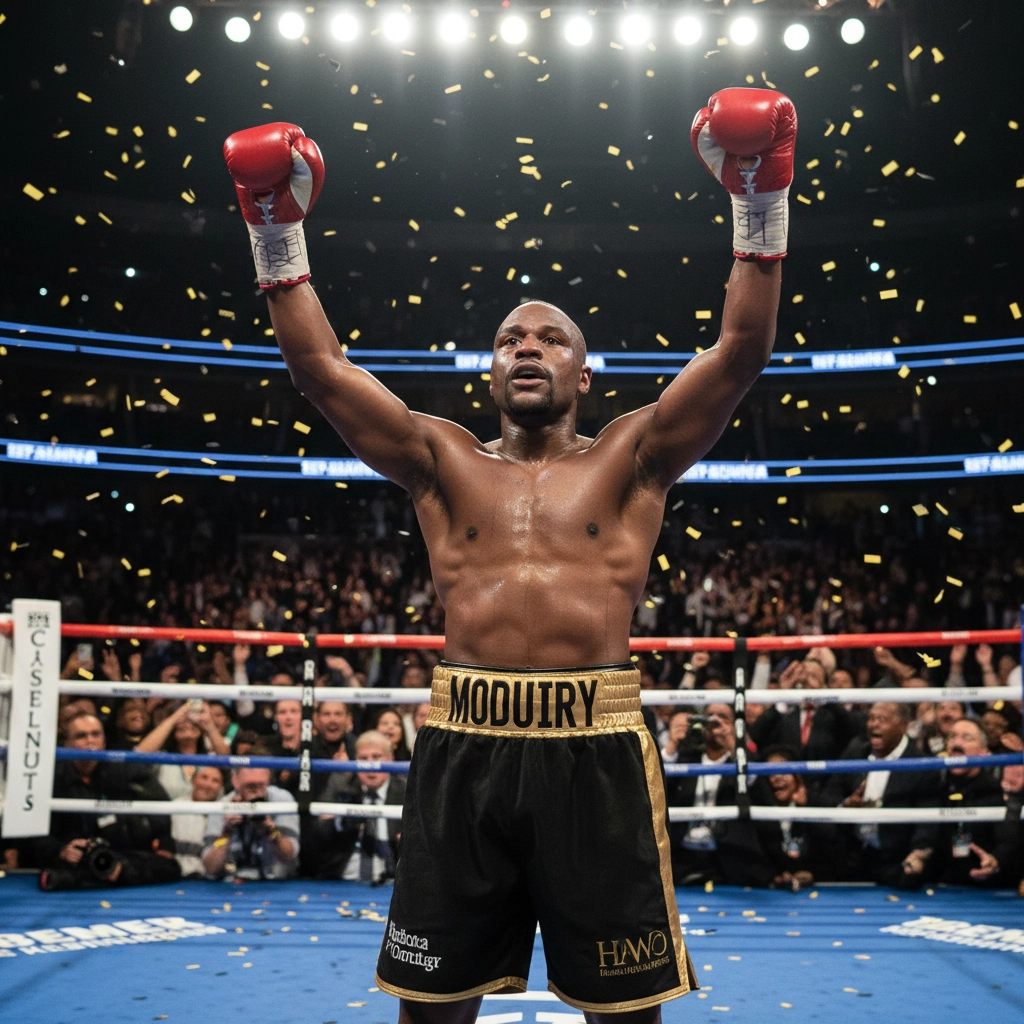
By the time Mayweather traveled to Manchester to face Ricky Hatton, the narrative around his career had already shifted. But Hatton’s image — the relentless body-attacking slugger with a fervent home crowd — posed a different challenge: could Mayweather stop a fight when necessary and withstand a furnace-like atmosphere?
What you should note: Hatton’s value lay in his pressure and his crowd; he wanted to make it a physical fight early. Mayweather absorbed and deflected that energy, slowly breaking down Hatton’s timing with counters and sharp pivots. The final sequence was not an accident — it was the product of accumulated control.
Technical takeaway: This fight reinforced something many observers underestimated: Mayweather’s finishing instincts. He didn’t need to try for a highlight knockout every bout, but when the pattern of rounds indicated its opportune moment, he had the timing and single-shot power to end it decisively. He mixed changes of angle with well-timed counters to create the opening for the stoppage.
Legacy impact: The stoppage in hostile territory did more than add a knockout to his résumé — it shifted the public’s perception. Opponents and fans realized Mayweather was not merely untouchable; he could be aggressive and ruthless when the moment demanded. That versatility widened his appeal and tightened his control over matchmaking narratives going forward.
High-profile defenses that underscored adaptability and staying power
After those headline-making encounters, Mayweather’s matches against other top names further fleshed out the picture: he wasn’t a one-note defensive wunderkind, nor was he just a star of a single era. Look at his performances against tactically gifted veterans and rising power punchers — the throughline is adaptability.
What you should note: Against savvy technicians and hard-hitters alike, Mayweather shifted emphasis depending on the threat. He used range and counters against boxers who wanted to trade, applied feints and shifting footwork against pressure fighters, and controlled distance with a variety of jab setups when facing opponents who could hurt him with a single mistake.
Technical takeaway: These fights showed that Mayweather’s toolbox was deep. It included subtle timing changes, selective body work, and the ability to impose a fight’s geography so effectively that opponents were often forced into making mistakes. Watching these contests, you see pattern recognition at a level where he anticipates sequences rather than reacts to them.
Legacy impact: Sustaining dominance against high-profile challengers across different styles and over many years is what separates great careers from legendary ones. These defenses validated the early technical experiments of his career and proved they were repeatable at the sport’s highest levels. For fans and historians, that consistency — combined with the ability to give the public what it wanted on the biggest nights — is what ultimately cemented the Floyd Mayweather legend.

Lasting Lessons from the Ring
Mayweather’s headline bouts did more than pad an undefeated ledger — they rewrote expectations about how tactical brilliance can translate into mainstream appeal. For coaches and fighters, those matches remain a primer in timing, positional control, and strategic restraint; for promoters and broadcasters, they are case studies in packaging nuance for mass consumption. They also keep conversation alive about the balance between entertainment and artistry in boxing, a debate that will follow the sport as long as experts dissect great nights in the ring. For a concise career overview and fight list, see Floyd Mayweather Jr. — career overview.
Frequently Asked Questions
Why is the Mayweather–De La Hoya fight often seen as a turning point?
That fight showed Mayweather could headline a mainstream pay-per-view without changing the core of his defensive, counter-punching style. It proved tactical, boxing-first performances could attract huge audiences and lucrative matchups.
How did the Ricky Hatton match affect public perception of Mayweather?
The stoppage in Hatton’s backyard demonstrated Mayweather’s capacity to finish a fight decisively when the pattern allowed. It shifted the narrative from “purely defensive” to a more complete, opportunistic fighter capable of imposing outcomes.
What practical techniques from these fights are most valuable for boxers to study?
Key takeaways include mastery of distance and timing, turning defensive shapes (like the shoulder roll) into offensive counters, selective aggression to end rounds, and adaptability—shifting tactics based on an opponent’s strengths rather than forcing a single gameplan.
How coaches and fighters use these lessons today
Coaches and students of the sport routinely return to Mayweather’s early defining fights as practical blueprints. When you break those bouts apart, they offer repeatable sequences rather than merely isolated highlights: cue-feint-counter chains, controlled pivots that shrink an opponent’s target area, and the moments when defense converts directly into scoring offense. In contemporary training rooms, these moments are used to teach situational decision-making — not just how to throw punches, but when refusing a trade is the higher-percentage move.
Translating ring IQ into daily practice requires drilling context as much as technique. That means framing sparring rounds around specific scenarios (e.g., defending sustained body attacks, neutralizing pressure through lateral movement, or forcing exchanges on a counterpuncher’s terms) and emphasizing repetition under fatigue so pattern recognition survives late-round stress. Psychological components are rehearsed too: staying composed under hostile crowds, imposing tempo when an opponent wants to accelerate, and identifying the exact round when selective aggression becomes profitable.
Practical drills and focus areas
- Distance-control ladders: structured footwork progressions that train the micro-steps used to open and close range without telegraphing.
- Shoulder-roll counter sequences: partner drills that punish overcommitted jabs with immediate, single-shot replies to the head and body.
- Scenario sparring: rounds where one fighter must pressure for three minutes and the other must survive and counter, rotating roles.
- Timing under fatigue: metabolic circuits followed by accuracy-only mitt work to preserve sharpness when tired.
- Ring geography exercises: drills that force the boxer to herd an opponent to the center or cut off escape angles with minimal energy.
- Finish recognition: video study plus live reps to identify cumulative damage patterns that justify switching from defense to a decisive offense.
Ultimately, the lasting value of Mayweather’s formative fights isn’t the statistics they produced but the decision-making model they represent. For modern fighters, the takeaway is clear: technical mastery plus disciplined situational practice builds not just winners, but adaptable champions who can translate subtlety into results on the biggest stages.