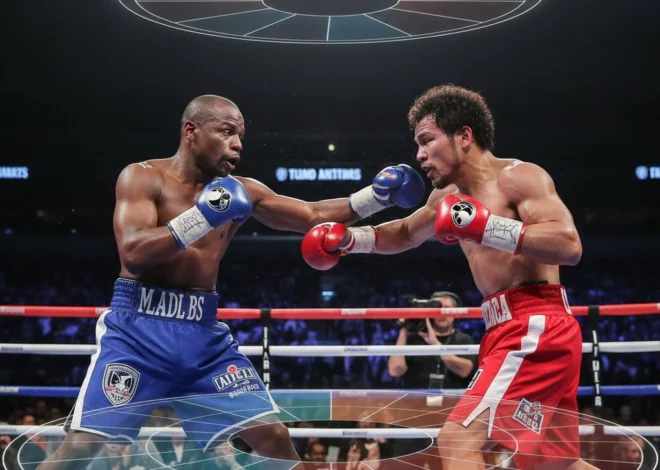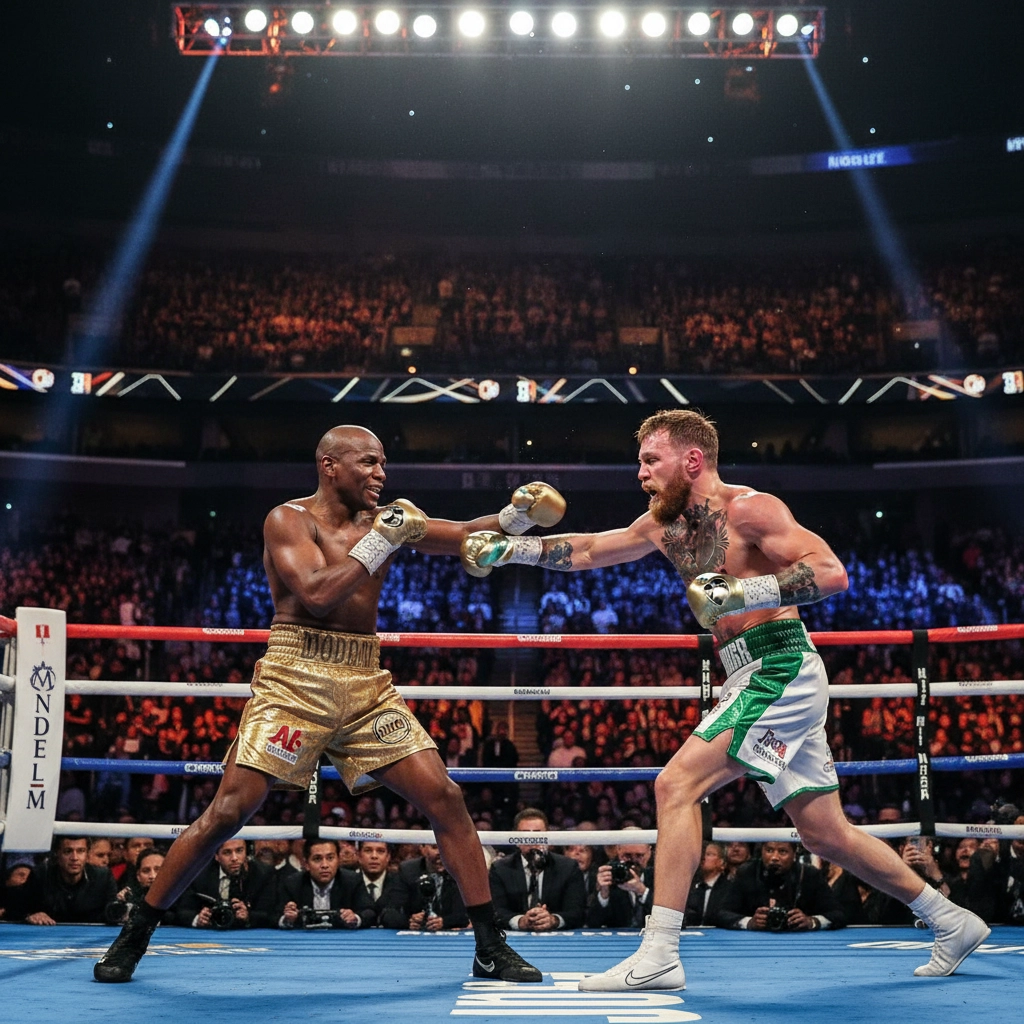
Mayweather vs McGregor: What the Fight Taught Modern Boxing
When a boxing GOAT faced an MMA superstar: why this matchup mattered to you
When Floyd Mayweather Jr. stepped into the ring with Conor McGregor on August 26, 2017, you watched more than a novelty fight — you witnessed a mirror for modern boxing. At first glance it was a celebrity-driven spectacle: a retired champion against a dominant MMA champion testing the limits of cross-sport competition. But beneath the hype were durable lessons about how boxing operates today: how rules, promotion, and stylistic matchup realities interact to shape outcomes and audience expectations.
Understanding what happened that night requires you to separate three overlapping layers: the sporting contest itself, the business and promotional machine that produced it, and the narrative frame that influenced how millions perceived the sport afterward. Each layer influenced the other: promotional choices dictated the rules, the rules magnified Mayweather’s advantages, and the narrative shaped how casual viewers interpreted technical boxing lessons.
What you needed to know before the bell: styles, experience, and rule tweaks
The fighters’ profiles and why they mattered to the matchup
To read the fight as a meaningful event for modern boxing, you have to look at the fighters’ resumes. Mayweather arrived as an undefeated, tactically disciplined boxer with nearly two decades of elite ring experience. His defensive mastery, ring IQ, and ability to control tempo were the foundation of his dominance. McGregor came from mixed martial arts, where striking is delivered differently — stance, footwork, and clinch work follow other rules. You should note that McGregor’s power and timing in the octagon did not automatically translate to the squared circle.
From a technical standpoint, Mayweather had advantages you could predict would be decisive: better head movement, refined counterpunching, and a pacing strategy built for twelve rounds of boxing. McGregor brought unpredictability, reach and power for his weight, and an aggressive mentality unfamiliar to many professional boxers. That contrast created a narrative of David vs. Goliath — but in boxing, style matchups and rule sets often decide whether that mythic framing holds true.
Rule adaptations, equipment, and how they shaped the contest
The fight did not occur under MMA conditions; it was governed by boxing rules, British Boxing Board of Control oversight, and slightly adjusted operational details to account for a crossover event. Those seemingly small choices mattered a lot to you as an observer because they amplified Mayweather’s strengths. For example:
- Rounds and duration: Twelve 3-minute rounds favor a boxer who paces himself and relies on accumulated scoring rather than a shorter, more explosive MMA-style finish.
- Glove size and padding: The gloves used in boxing blunt some types of impact and change the nature of power punching compared with MMA gloves, affecting McGregor’s ability to score a knockout in the way he did in the UFC.
- Clinching rules and fouls: Boxing separates clinch breaking from MMA grappling, removing some of McGregor’s go-to strategies for controlling an opponent’s head and clinch stream.
By the time the first bell rang, you should have expected that the rule framework and equipment would be a decisive variable — not merely an administrative detail. That reality is a key takeaway for anyone studying modern boxing: victories are rarely decided by talent alone; the regulatory and equipment context can tilt the playing field before the first exchange.
How the business machine and media spectacle reframed your expectations
Promotion, pay-per-view economics, and audience composition
One of the largest lessons you can draw is about boxing’s commercial evolution. The event generated enormous revenue through pay-per-view buys, endorsements, and international media rights. That commercial success showed how cross-sport matchups can broaden boxing’s audience beyond core fans, drawing casual viewers who followed McGregor from MMA or who tuned in for the cultural moment. For promoters and networks, the lesson was clear: spectacle sells, and the sport can leverage crossover stars to tap non-traditional markets.
However, the economics also reveal tensions. When spectacle becomes the primary driver, it can pressure matchmaking and negotiations in ways that prioritize short-term revenue over competitive integrity. You could see this tension reflected in how the fight was marketed — as both a sporting contest and a pop-culture event — which affected opinions about its legitimacy among purist boxing fans.
Those early sections set the groundwork for analyzing what actually happened in the ring: the tactical exchanges, round-by-round adjustments, and the specific technical lessons modern boxers and coaches extracted from the matchup. In the next section you will examine the in-ring tactics and what the fight taught you about defensive systems, counterpunching, and preparing crossover athletes for boxing rules.

Round-by-round mechanics: how Mayweather turned strategy into a stoppage
What happened between the ropes was less a dramatic swing in momentum than a steady, chess-like conversion of advantages into a finish. From round one you could see Mayweather impose a tempo that favored scoring and attrition rather than reckless exchanges. He opened with measured jabs and lateral movement, inviting McGregor to overreach — and when McGregor obliged, Floyd converted those errors into clean counters. That pattern repeated until the balance of power shifted unmistakably.
The key mechanics were simple and cumulative. Mayweather used the shoulder roll and subtle head positioning to deflect McGregor’s power shots, then exploited the openings those defensive actions created. Instead of hunting a single, fight-ending punch, he stacked rounds by landing sharp, scoring blows (jabs, straights, and short counters) and controlling ring geography so McGregor spent energy trying to close distance. The referee’s stoppage in the tenth was not the result of one explosive sequence; it was the logical outcome of accumulated, well-placed punches and McGregor’s declining output and mobility.
Two tactical impressions stand out for you as a viewer. First, pace management: in twelve-round championship boxing the tempo is a weapon. Mayweather’s early rounds were defensive and selective, his mid rounds more active, and his later rounds more aggressive — a deliberate ramp rather than random bursts. Second, psychological attrition: every time McGregor missed or overcommitted, Mayweather answered in a way that discouraged the same attempt later. You learn that in modern boxing, winning rounds consistently and eroding an opponent’s confidence can be as decisive as searching for a single knockout blow.
Defensive mastery and counterpunching decoded: the small mechanics that made the difference
When you break down the footage at slow speed, the difference comes down to micro-adjustments that are often invisible to casual viewers but define elite boxing. Mayweather’s defense was not mere blocking; it was a system of angle creation, weight distribution, and timing that turned defense into offense. The shoulder roll, for example, did more than absorb punches: it rotated Mayweather’s torso to create instant counters down the middle and over the top. His footwork was rarely about big pivots — it was about incremental repositioning that left McGregor reaching.
Counterpunching here was predicated on three elements you can train for: anticipation, compact mechanics, and release timing. Anticipation came from reading McGregor’s rhythm and baiting with feints. Compact mechanics meant short, crisp punches released from defensive positions so recovery times were minimal. Release timing — not raw speed alone — let Mayweather land when McGregor was committed and off-balance.
For students of the sport, the lesson is clear: elite defense reduces variance. It doesn’t just prevent power shots; it creates openings and forces the opponent to fight on unfavorable terms. In modern boxing, mastery of these small mechanics multiplies advantage over fighters who rely primarily on power or aggression.

Preparing crossovers and the modern boxer: training prescriptions you can use
What should trainers and crossover athletes take away? The transition from MMA striking to professional boxing is a specificity problem — and specificity wins. If you’re coaching an MMA striker moving to boxing you need a training plan that addresses three domains.
– Technical specificity: Replace wide, circular MMA strikes with compact boxing punches and re-teach stance and weight distribution. Drill the shoulder roll, straight-line counters, and high-volume mitt work that mirrors three-minute rounds. Use controlled sparring with boxing gloves to teach the timing of narrower punches and the consequences of overcommitting.
– Rule adaptation: Simulate boxing rules in sparring: no grappling, separate clinch breaks, and referee enforcement. This changes decision-making under pressure. Practice clinch-break scenarios and re-train takedown-avoidance instincts that in MMA might have been advantageous but are penalized or ineffective in boxing.
– Conditioning and pacing: Structure conditioning around repeated three-minute work intervals with one-minute recovery to mimic rounds. Emphasize anaerobic-to-aerobic transition fitness so a fighter can maintain crisp output late into a bout. Teach psychological pacing — how to manage adrenaline in round one so you still have power and clarity in round ten.
For modern boxers, the takeaway is shorter: protect your fundamentals and game-plan for sustained rounds. Whether you’re preparing a veteran or a crossover star, prioritize ring IQ, defensive nuance, and pacing. Those elements — more than flash or single-shot power — determine how the fight unfolds and, often, how it ends.
The match as a mirror: what to watch next in boxing
Mayweather vs McGregor wasn’t just an event; it functioned as a diagnostic tool for modern boxing. It exposed where crossover hype meets technical reality, highlighted how elite defense can neutralize raw power, and underscored the value of round-by-round thinking in a sport that rewards consistency. Going forward, watch how trainers adjust crossover preparations, how rule differences are simulated in camps, and whether more fighters prioritize ring IQ over single-shot theatrics.
- Watch for sharper technical camps around crossover fights, not just conditioning or showmanship.
- Expect defensive systems — shoulder roll variants, compact counters — to be emphasized in mainstream coaching curriculums.
- Look at judging and stoppage criteria debates when stylistic mismatches occur; these conversations will shape match-making and officiating.
For a contemporary recap of the fight and its official outcome, read the ESPN fight recap: Mayweather vs. McGregor — ESPN recap.
Frequently Asked Questions
How did Mayweather’s shoulder roll specifically limit McGregor’s power?
The shoulder roll absorbed and deflected incoming shots by rotating Mayweather’s torso and aligning his guard so punches glanced off or missed the chin. That rotation simultaneously created central counters — short, efficient punches down the middle — and forced McGregor to overcommit, reducing the effectiveness of his power attempts.
Could an MMA striker realistically convert to boxing at elite level with the right camp?
Yes, but conversion requires focused, long-term technical work: narrowing striking mechanics, reworking stance and weight distribution, and conditioning for three-minute rounds with boxing-specific sparring. Rule adaptation and mental pacing are as important as physical drills; without them, raw power rarely translates into elite boxing success.
Why did the referee stop the fight in the tenth rather than earlier or later?
The stoppage reflected accumulated damage, a clear decline in McGregor’s output and mobility, and Mayweather’s increasing control of exchanges. It wasn’t a single knockout blow but the product of sustained, clean counters and reduced resistance — the kind of situation referees stop to protect a fighter who can no longer defend effectively.