Undefeated Boxing Champions Explained with Floyd Mayweather Examples
Why an “undefeated” label carries so much weight in boxing
You probably know that an undefeated record is impressive on its face, but you may not realize how many different things that label can imply. In boxing, “undefeated” isn’t just a tally of wins and losses — it functions as a reputation asset, a promotional hook, and a shorthand for dominance. When you see a fighter with a long string of victories, you instinctively assign them skills, legacy value, and box-office drawing power.
That perception drives matchmaking, purses, and the way sanctioning bodies and media treat a fighter. Undefeated champions often get marquee fights, lucrative deals, and enhanced bargaining power. At the same time, not all undefeated records are created equal: the route to staying unbeaten involves technical skill, strategic career management, and sometimes controversy about the level of opposition.
How undefeated status affects what you expect from a champion
- You expect consistency in performance and an ability to adjust tactically against different styles.
- You assume victories came against credible contenders and not just padded records built from overmatched opponents.
- You view the fighter as marketable: undefeated fighters often headline major events and command higher pay-per-view buys.
What “undefeated” actually means in practice: records, decisions, and titles
When you read a boxer’s record — for example 50-0 — you should first decode the notation. The number before the dash is wins, the number after is losses; a third number can denote draws. “Undefeated” usually means zero losses, but nuances matter.
Consider these factors that shape how you should interpret an undefeated claim:
- Wins vs. quality of opposition: An unbeaten record built against tough, credentialed opponents carries more weight than one amassed against journeymen or fighters on the decline.
- Decisions and controversies: Split decisions, majority decisions, and controversial rulings can make an undefeated mark feel fragile — you want to look at how convincing the wins were, not just the column of zeros in the loss column.
- Title lineage: Holding and defending recognized world titles (WBA, WBC, IBF, WBO) elevates an undefeated record. Multiple-division champions who remain unbeaten are particularly rare and notable.
- Draws and no-contests: Draws don’t count as losses, but they interrupt a streak of wins. No-contests and overturned results can further complicate a fighter’s official standing.
Beyond the raw record, boxing politics can influence perceptions. Mandatories, promotional relationships, and sanctioning fees sometimes determine who a champion faces. For you as a fan or analyst, looking past the scoreboard to the context of each fight gives you a clearer sense of whether an “undefeated champion” truly belongs among the sport’s best.
How Floyd Mayweather built his early undefeated foundation
You can learn a lot by studying Floyd Mayweather Jr.’s path to becoming the most prominent modern example of an undefeated champion. He turned professional in 1996 after a distinguished amateur career, and over the next decade he combined elite defensive skill with careful career management to climb divisions and collect titles.
Key elements you should note from Mayweather’s early run:
- Technical mastery: Mayweather’s defensive instincts — shoulder rolls, footwork, and ring IQ — let him neutralize power punchers and outpoint opponents rather than always seeking a knockout. That made it harder for opponents to score decisive victories against him.
- Smart matchmaking: Early and mid-career matchmaking paired Mayweather with opponents who fit a measured growth curve — credible names that advanced his résumé without exposing him to unnecessary risk before he was ready for elite-level bouts.
- Title accumulation across weight classes: You saw him win recognized world titles at multiple weights, which not only added to his legacy but also ensured that many of his wins were against legitimate contenders in those divisions.
- Business control: Mayweather’s promotional and media choices later in his career — including pay-per-view strategy and selective return fights — influenced how his undefeated status was presented and monetized.
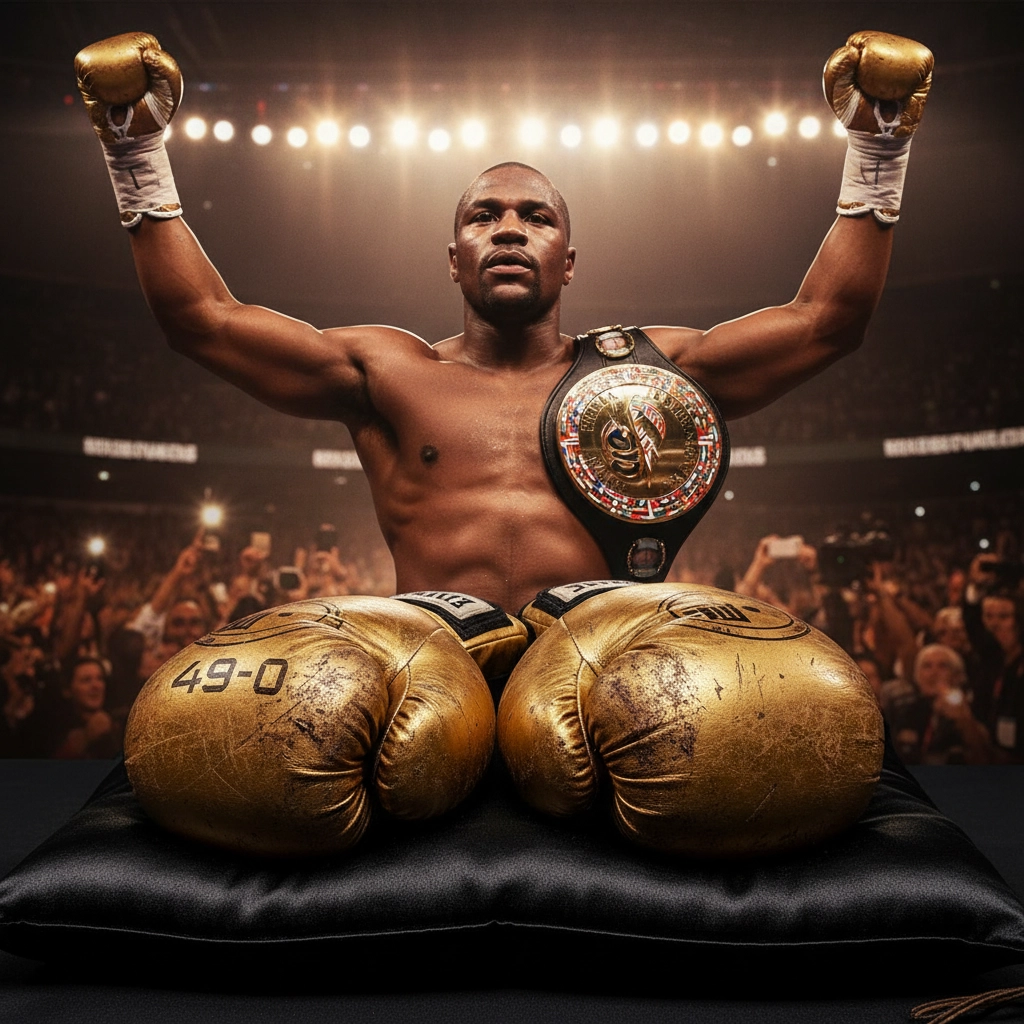
By the time he first retired with a 49-0 record and later returned to finish 50-0, you could see the cumulative effect of those elements: skill, selective rivalries, and savvy business decisions. That combination made his undefeated label both a sporting achievement and a commercial brand.
Next, you’ll examine specific fights, statistical markers, and controversies that shaped Mayweather’s unbeaten legacy and how those examples illuminate the broader concept of what it means to be an undefeated boxing champion.
Fights that defined Mayweather’s unbeaten narrative
To understand what an undefeated record communicates, you have to look at the fights that shaped how people remembered Mayweather — not just the wins, but the narratives and controversies that followed them. A few patterns stand out.
First, there are the razor-thin or disputed victories that tested the “unbeatable” label. Matches where scorecards were close or public opinion leaned toward the opponent complicate the notion of invincibility. Those bouts force observers to ask whether the record reflects unquestioned dominance or a string of results that could have gone the other way with a different referee, judge, or night.
Second, there are the high-profile, career-defining wins that turned undefeated status into commercial gold. When Mayweather beat marquee names in big-money events, the undefeated line became part of the marketing — a simple, sellable story that helped justify massive purses and pay-per-view buys. Those heavyweight-name victories did more for perception than dozens of early-career tune-ups ever could.
Finally, there are the controversial stoppages and late-career matchmaking choices that invite criticism. A technical knockout after a heated exchange, or a carefully scheduled return fight against a faded star, can keep the undefeated column intact while prompting questions about the competitiveness of the matchup. Taken together, these types of bouts show how an unbeaten record can be both a sporting accomplishment and a crafted narrative.
Statistical markers that tell the real story behind “0 losses”
When evaluating any undefeated champion, don’t stop at the W-L column — dig into the numbers that reveal how those wins were achieved. The most informative markers aren’t glamorous headlines but measurable indicators of control in the ring.
- Punch differential and accuracy: CompuBox-style stats show who landed more and who landed cleaner. A champion who consistently outlands opponents — even if by decision — demonstrates control. With Mayweather, a recurring pattern was beating opponents on accuracy and defense rather than sheer knockout power.
- Knockout ratio relative to opponents’ durability: A high KO percentage can signal dominance, but context matters: knocking out journeymen is different from stopping top contenders. Conversely, a moderate KO rate paired with overwhelming decision margins can indicate technical superiority.
- Rounds won vs. rounds fought: Look at how many rounds a fighter convincingly won. Close, split-score victories suggest vulnerability; wide unanimous scores across multiple fights imply consistent superiority.
- Quality of opposition metrics: Opponents’ records at the time of the fight, their peak achievements, and whether they were coming off layoffs or down-slides all affect how you weight a win. Repeated defenses against legitimate contenders carry far more credibility than an unbeaten streak padded with opponents past their primes.
For Mayweather, analysts point to recurring trends — efficient offense, a low work-rate but high-impact output, and the ability to neutralize punchers — as statistical signatures of why he remained unbeaten. Those metrics help explain outcomes beyond the simple tally of wins.
Controversies, politics, and the limits of an undefeated label
An undefeated record is powerful, but it’s not absolute; boxing’s structure and surrounding controversies expose its limits. Matchmaking, promotional alignments, sanctioning-belt maneuvering, and retirement timing can all preserve a record without proving the fighter indisputably best in the division.
Promotional clout allows some boxers to avoid certain opponents or delay risky matchups. Sanctioning bodies’ mandatory schedules sometimes get negotiated or ignored, creating a pathway where a champion can pick favorable big-money fights instead of risky mandatories. Likewise, strategic retirements or returns against mismatched opponents can extend a perfect ledger while raising eyebrows among purists.
Controversial refereeing and judging decisions also chip away at the myth of an unassailable champion. Close scorecards, contentious stoppages, and overturned or disputed results all remind fans that records are shaped as much by officiating and context as by pure skill. In Mayweather’s case, some of his most debated moments — narrow decisions, controversial stoppages, and carefully chosen opponents late in his career — illustrate how undefeated status can be as much an outcome of boxing’s ecosystem as of a fighter’s superiority.
As you judge any unbeaten champion, the smart approach is to weigh the record alongside these structural and situational factors. The zero in the loss column is meaningful, but it’s the who, how, and why behind each win that determines whether that undefeated label truly signifies greatness.
Legacy beyond the ledger
An unbeaten record is a headline—compact, marketable, and persistent—but its real impact plays out in legacy, business, and the ongoing conversation about what greatness means. Fighters like Floyd Mayweather turn that zero in the loss column into leverage: negotiating power, headline draws, and a narrative that endures. At the same time, that same record invites scrutiny, reinterpretation, and endless debate about quality of opposition, moment-to-moment ring control, and the role of boxing’s institutions.
For fans and historians, the task is less about defending or demolishing the number and more about understanding the forces that shape it: style, strategy, statistics, promotion, and timing. If you want to explore Mayweather’s career data and fight history in detail, his public profile offers a starting point: Floyd Mayweather Jr. profile.
Ultimately, undefeated champions leave behind stories as much as results. Those stories drive fandom, revenue, and the sport’s evolution. They also ensure that every future unbeaten run will be measured not just by wins, but by the questions it raises and the conversations it sparks.
Frequently Asked Questions
Does an undefeated record mean a boxer is definitively the best of their era?
No. An unblemished record is significant, but it doesn’t automatically prove indisputable superiority. Context matters: level of opposition, timing of fights, judging controversies, and promotional decisions all influence how a record should be interpreted.
How did Floyd Mayweather preserve his unbeaten status throughout his career?
Mayweather combined elite defensive skill and fight IQ with careful matchmaking and business savvy. He frequently relied on strategy and precision to win decisions, chose high-reward fights at key moments, and managed retirement and comebacks in ways that protected his record while maximizing financial return.
What metrics should fans look at beyond the win-loss column to evaluate an unbeaten champion?
Focus on punch accuracy and differential, rounds convincingly won, quality and form of opponents at fight time, knockout context relative to opponent durability, and whether disputed decisions or stoppages influenced outcomes. These metrics give a fuller picture than the raw W-L number alone.