Mayweather vs McGregor: Business, Hype, and the Ring Outcome
When sport meets spectacle: why this fight mattered beyond the ropes
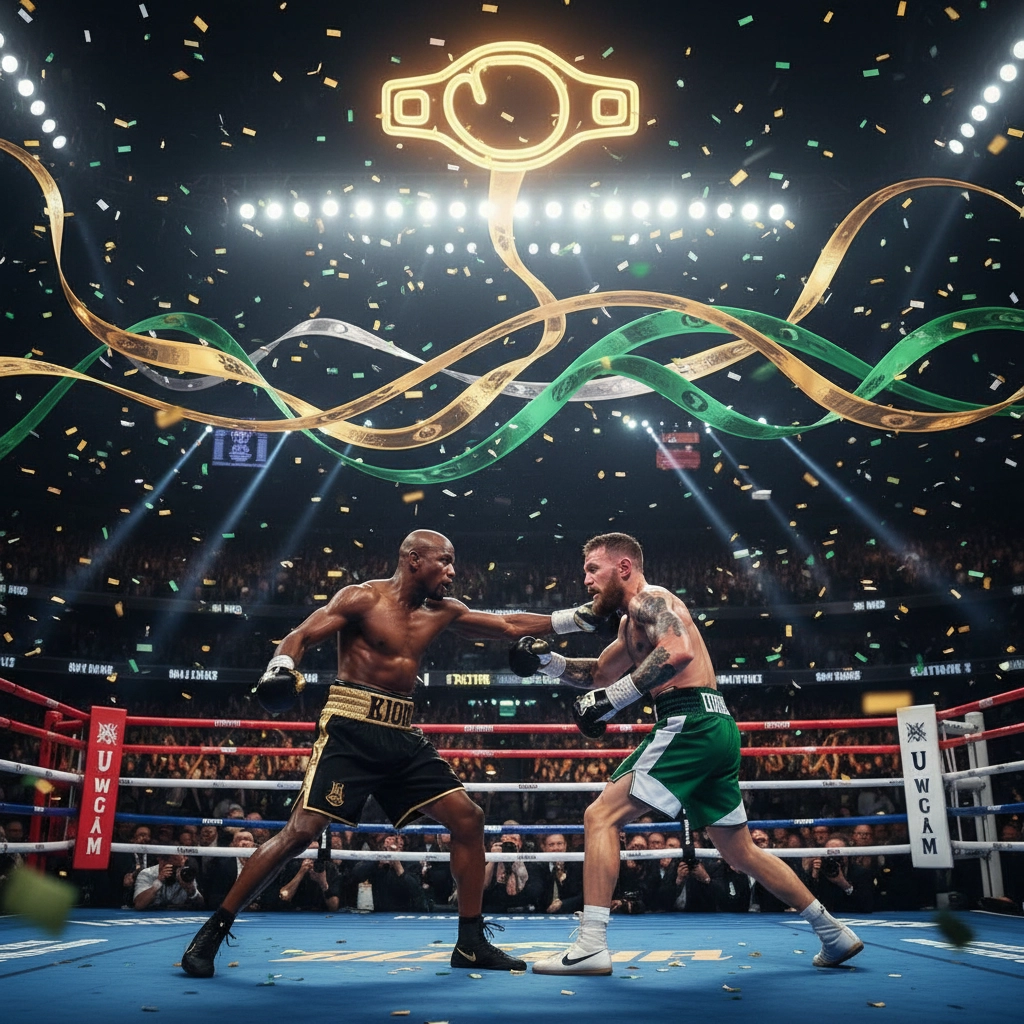
You witnessed more than a boxing match on August 26, 2017; you watched a business experiment and a cultural collision. On one side was Floyd Mayweather, a boxer whose unbeaten record and meticulous career management turned wins into brand equity. On the other was Conor McGregor, an MMA superstar whose brash persona and social-media savvy made him a mainstream draw. The clash promised something rare: two elite athletes from different combat sports competing under boxing rules, backed by a promotional campaign designed to monetize attention at every turn.
Understanding this event requires you to look past the ring and track how media, negotiation, and audience psychology combined to create value. The fight functioned as a product with many revenue streams — pay-per-view buys, gate receipts, sponsorships, international broadcast rights, and ancillary merchandising — each influenced by how you, as a consumer, were invited to participate through hype and storytelling.
How the deal was structured and why the numbers mattered
Behind the flash of press conferences and sold-out arenas, the economics depended on a few negotiable pillars. You should consider the revenue model first: promoters and broadcasters projected income from PPV, then structured guarantees and splits around those projections. Reported figures varied, but the event was widely described as one of the most lucrative in combat sports history because it combined an unusually high global interest with effective distribution.
Key contractual elements shaped incentives for both fighters and stakeholders:
- Purse guarantees and revenue sharing: Each fighter negotiated guaranteed pay and potential upside from PPV and gate receipts. You benefit from understanding that guarantees lower financial risk for high-profile athletes while profit-sharing aligns interests in maximizing buys.
- Media and broadcast deals: International rights and domestic PPV windows were sold in multiple markets. As a viewer, you might have experienced blackout rules or exclusive streaming partners — symptoms of how distributors squeezed value from access.
- Sponsorship and branding: Corporate partners paid to associate with the spectacle. Those logos, branded ringside banners, and sponsored weigh-ins reflected the event’s advertising appeal beyond pure sporting merit.
For you as an observer, the financial architecture signaled something important: the fight was engineered to extract maximum value from attention. Promoters treated narrative — the undefeated champion vs. the brash outsider — as a sales funnel that converted hype into dollars.
Hype mechanics: promotion, narrative, and the rules that framed the contest
Promotion worked like a marketing campaign with a clear target: turn casual attention into a purchase decision. You can trace that process through several visible tactics.
- Persona marketing: Both fighters cultivated distinct identities. Mayweather’s aura of invincibility and business acumen contrasted with McGregor’s outsider swagger and trash-talk. You were encouraged to pick a side emotionally, which increased personal investment in the outcome.
- Media staging: Global press tours, televised face-offs, and viral moments amplified reach. These events produced shareable clips that drove earned media and social buzz, lowering acquisition costs for pay-per-view buyers.
- Rule negotiations and spectacle design: The bout used standard boxing rules, but the build-up emphasized the novelty of an MMA champion entering a boxing ring. Contractual details — glove size, round length, and weight arrangements — were negotiated to balance fairness with spectacle. You should note that these technical choices influenced both strategy and viewer expectations.
The promotional apparatus also managed risk: contingency language in contracts, insurance coverage, and public relations planning prepared stakeholders for injury, underperformance, or controversy. For you, this meant the production looked seamless even when complex legal and logistical contingencies ran in the background.
At the weigh-ins and final press events, you could see how narrative became tangible. Every stare-down, every sideline quip, and every social-media post was currency that increased perceived value. That perception ultimately drove the PPV purchases and ticket sales that made the event profitable.
With this context in mind — the negotiated economics, the promotional levers, and the rule-set that framed the contest — you’re ready to examine how those factors translated into what actually happened in the ring, and how the outcome shaped both fighters’ brands and the business of crossover matchups.
Inside the ring: tactics, momentum, and the stoppage
What happened in the twelve-foot square was less a demolition and more a study in contrasting skill sets and in-ring management. In the early rounds, McGregor’s offensive willingness and unconventional angles created a narrative moment: his left hand landed clean more than once, and for the first few rounds he looked as if the shock value might translate into competitive parity. That start mattered for the spectacle — it validated the premise that an elite mixed-martial-artist could land meaningful blows in a boxing match, which in turn justified a lot of the pre-fight hype.
But over the course of the bout the technical differences reasserted themselves. Mayweather’s advantages were the textbook elements of elite boxing: superior footwork to control distance, shoulder-roll defense that absorbed and deflected shots, and an economy of motion that conserved energy while landing precise counters. You could see the fight shift where stamina, rhythm, and ring generalship mattered most. As rounds accumulated, McGregor’s cardio — taxed by a high-output early strategy and the expense of competing in a higher-paced boxing environment — declined. His punches lost snap; his head movement and footwork became less fluid. Mayweather, meanwhile, adjusted tempo and increased pressure selectively, turning counters into opportunities to target the body and open McGregor’s guard.
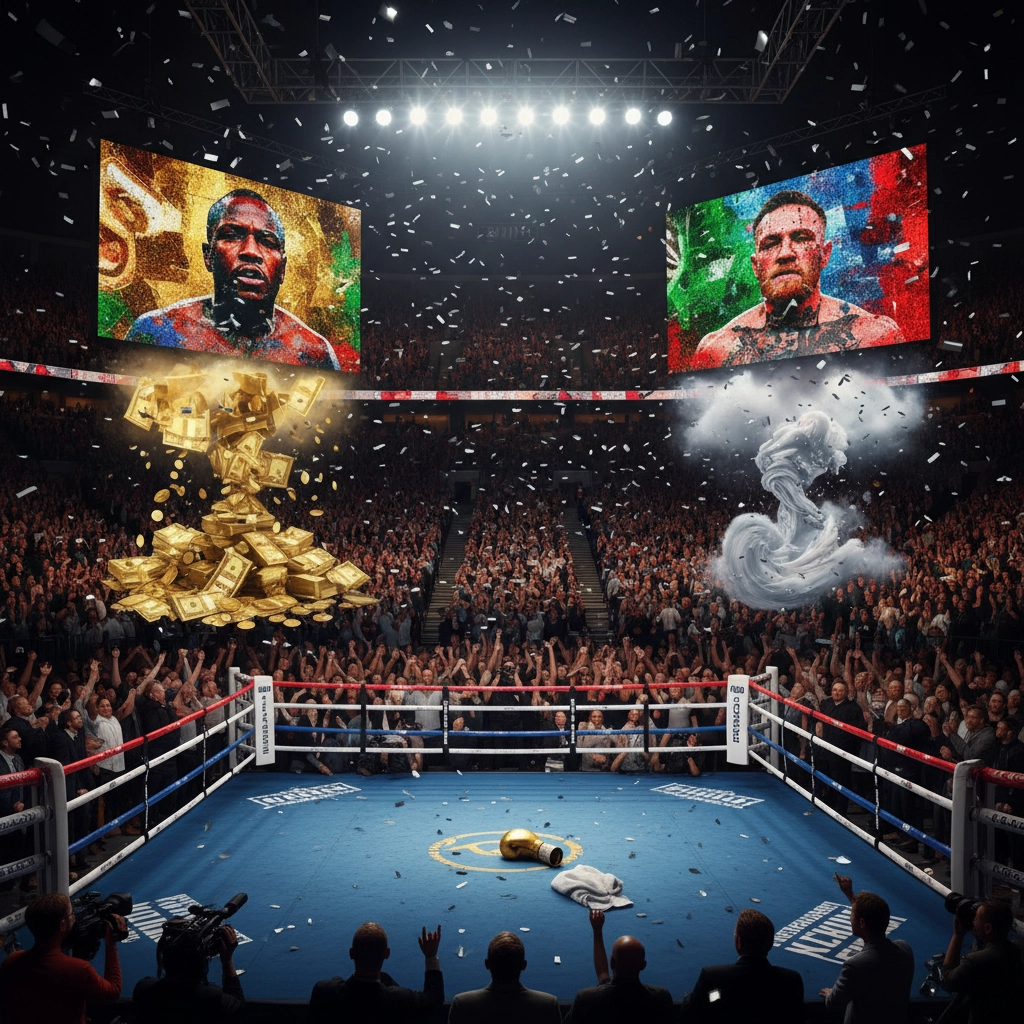
The tenth round encapsulated the tactical arc. After a sequence where Mayweather’s combinations found more purchase, the referee stopped the contest, ruling it a technical knockout. From a sporting perspective, the stoppage was consistent with how boxing officials prioritize fighter safety once clear dominance and accumulated damage are evident. From a business perspective, it preserved the undefeated record that had been a central narrative asset for Mayweather’s brand. For you as a viewer, the result felt inevitable in retrospect — the early drama yielded to the structural advantages of boxing technique and fight management.
Importantly, the in-ring story didn’t erase the spectacle. McGregor’s early success amplified perceptions of danger and unpredictability for several rounds, which drove the event’s entertainment value and prevented it from feeling like a foregone conclusion until the championship rounds. The sporting outcome and the televised drama together justified the underlying economic model: pay attention to the first dramatic acts, stay for the climactic enforcement of specialized skill.
Aftershock: brand trajectories, industry signals, and the blueprint for crossover events
The business fallout unfolded along two parallel tracks: immediate monetization and long-term brand positioning. Financially, the event delivered what promoters promised — massive gate receipts, lucrative international rights, and millions of pay-per-view buys — translating notoriety into near-immediate revenue. But revenue is only one axis of value. The reputational and strategic consequences shaped how both fighters and the wider industry moved forward.
For Mayweather, the win reinforced an established brand narrative — invincible, selective about his oppositions, and capable of monetizing marquee moments. The undefeated record (intact that night) amplified his negotiating leverage for future exhibitions and helped cement his status as a pay-per-view commodity rather than merely an athlete. He’d already turned fight nights into business events; this validated the model for exhibitions and one-off spectacles.
For McGregor, the loss didn’t cancel the commercial upside. He gained mainstream exposure that translated into broader audience recognition, increased sponsorship appeal, and a case study in the commercial upside of personality-driven sport. The defeat complicated his athletic narrative but did little to blunt his marketability: you encountered him in mainstream media and commercial campaigns more often than you had pre-fight. That divergence — athletic loss versus commercial gain — is one of the central paradoxes of modern celebrity sport.
Industry-wide, the match signaled several durable lessons. First, promoter attention shifted even more aggressively toward crossover cards when they could be credibly staged and packaged. Narrative sells; novelty sells. Second, sanctioning bodies and athletic commissions took notice of licensing, safety protocols, and competitive fairness — a reminder that spectacle needs regulatory scaffolding. Third, matchmakers and broadcasters recognized that the monetization of attention can outweigh traditional measures of sporting legitimacy. That has implications for fighter pay structures, event insurance, and how future bouts are contracted and televised.
For you watching combat sports markets, the takeaway is clear: the Mayweather–McGregor fight reshaped the playbook. It proved that carefully negotiated novelty, amplified by media mechanics and backed by elite names, produces outsized economic returns even when the sporting contest tilts toward the technically superior specialist. Promoters learned to treat narrative as an asset class, and athletes learned to treat crossover fights as career and brand experiments — sometimes lucrative, sometimes risky, but always influential in the evolving business of combat sports.

Legacy and what comes next
The Mayweather–McGregor spectacle did more than settle a cross-discipline curiosity; it reoriented incentives across promoters, broadcasters, and athletes. Expect the blueprint of high-profile, personality-led matchups to be refined rather than abandoned: better contractual protections, clearer athletic-commission oversight, and more sophisticated marketing plays that turn single events into multi-platform campaigns. At the same time, there’s a parallel conversation about competitive integrity and fighter safety that regulators and corners will need to address. For those interested in how commissions oversee such events, see the Nevada State Athletic Commission for guidance on licensing, medical protocols, and bout rulings: Nevada State Athletic Commission.
For athletes, the trade-offs are now explicit. A crossover bout can elevate a brand and produce immediate financial rewards, but it also exposes competitors to sport-specific limitations and reputational risk. For fans and media, the arithmetic is simpler: novelty and narrative drive attention, and attention drives commercial value. How stakeholders balance spectacle with sport will define the next wave of crossover contests and the regulatory standards that govern them.
Frequently Asked Questions
Did McGregor’s loss hurt his commercial appeal?
No. While the defeat affected his competitive record, commercially McGregor benefited from broader mainstream visibility, increased sponsorship interest, and a larger global audience—illustrating how marketability can be decoupled from a single sporting result.
Why was the fight stopped in the tenth round?
The referee stopped the bout as a technical knockout after Mayweather established clear dominance and McGregor showed signs of accumulated damage and declining responsiveness. In boxing, referees prioritize fighter safety and will halt contests when continued action is likely to cause unnecessary harm.
Will more crossover fights like this happen in the future?
Yes. Promoters and broadcasters have shown that crossover events can be highly lucrative when well-promoted and staffed with high-profile names. Future iterations will likely include tighter contractual language, enhanced medical oversight, and more nuanced matchmaking to balance spectacle with safety and credibility.