
Boxing Betting Odds Today Explained: Moneyline, Spreads & Totals
How boxing odds affect the way you place bets
When you look at a boxing card you’ll see a string of numbers beside each fighter. Those numbers — the odds — tell you two things: how likely sportsbooks think a fighter will win, and how much you can win if you place a bet. Understanding these figures is the first step toward making confident, informed wagers instead of guessing. This section gives you a practical, user-focused overview so you can start reading odds today.
Core types of boxing betting odds and what they mean for you
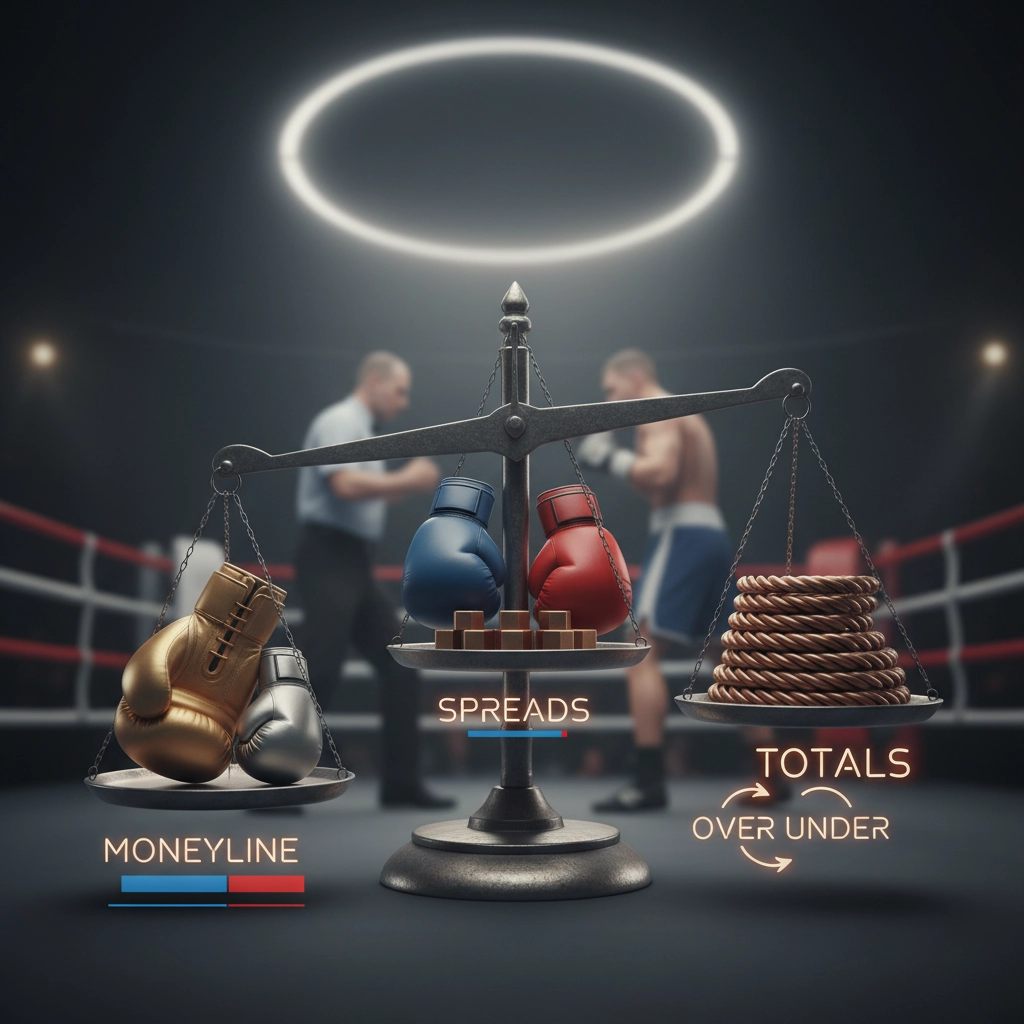
There are three primary ways you’ll see boxing contests priced: the moneyline, spreads (sometimes called set or puck lines in other sports), and totals (over/under). Each serves a different betting need, and knowing the distinction helps you choose bets that match your goals — whether you want a straightforward win, a hedge against a close fight, or a play on the number of rounds.
Moneyline: betting on who wins
The moneyline is the simplest and most common boxing bet: you pick which fighter will win the fight. Odds appear in American format (e.g., -200 or +150) more often in U.S. markets, though fractional and decimal formats exist elsewhere. Here’s how to read them:
- If a fighter is -200, you must wager $200 to win $100; the negative sign indicates the favorite.
- If a fighter is +150, a $100 bet would win $150; the positive sign indicates the underdog.
- Moneyline odds also imply probability. Convert -200 to implied probability with the formula: 200 / (200 + 100) = 66.7%.
Spread-style bets: trading margin and risk
Boxing spreads work differently than moneylines — they set a margin (often in rounds or method) that a favorite must cover. You might see bets like “fighter A -1.5 rounds,” meaning that for a bet on A to win, they must finish the fight earlier than the set threshold or win by a margin that covers the spread. Spreads balance action on both sides and often offer tighter odds closer to even money, allowing you to back favorites with protection or take value on underdogs when you expect a close fight.
Totals (Over/Under): betting the fight’s length
Totals let you wager on how long the fight will last. The line will be set in rounds (for example, Over 7.5 rounds). Betting the Over means you expect the fight to go longer than the line; betting the Under means you expect an early finish. Totals are useful when you have an edge reading styles — for instance, if both fighters have high knockout rates you might favor the Under because a stoppage is more likely.
Now that you know the basic types of boxing odds and what each is trying to measure, the next section will show step-by-step how to convert moneyline prices into implied probabilities and compare them with your own assessments to find value bets.

Step-by-step: converting moneyline odds into implied probability
Turning moneyline numbers into a probability you can work with is simple once you know the formulas. Use American odds as most U.S. sportsbooks display them:
- For negative odds (favorite), implied probability = |odds| / (|odds| + 100). Example: -200 → 200 / (200 + 100) = 0.667 → 66.7%.
- For positive odds (underdog), implied probability = 100 / (odds + 100). Example: +150 → 100 / (150 + 100) = 0.400 → 40.0%.
Those percentages tell you how the market prices each fighter, but expect the two sides to add to more than 100% — that excess is the sportsbook’s margin (vig). To compare the market to your own view, convert American odds to decimal odds first (negative: 1 + 100/|odds|; positive: 1 + odds/100). Decimal odds are useful for calculating payout and expected value later.
How to remove the vig and calculate true market probabilities
Because sportsbooks build in margin, the raw implied probabilities overstate the book’s total. To see the market’s “true” probabilities, normalize them by dividing each implied probability by the sum of all implied probabilities for that fight. Example:
- Fighter A -200 → implied 66.7%
- Fighter B +150 → implied 40.0%
- Sum = 106.7% → Normalize: A = 66.7 / 106.7 = 62.5%; B = 40.0 / 106.7 = 37.5%.
These normalized figures are the market’s fair odds after removing vig. When you assess a fighter’s chance to win, compare your probability against the normalized market probability to spot potential edges. If your assessment is higher than the normalized market probability, the bet may offer positive expected value (EV).
Quick EV formula (per $1 wager): EV = (your_probability decimal_odds) − 1. A positive number means a long-term profit expectation. Example: if Fighter A’s decimal odds are 1.50 and you think A has a 65% chance, EV = 0.65 1.50 − 1 = 0.975 − 1 = −0.025 (−2.5%): not profitable. If you assessed A at 70%, EV = 0.70 * 1.50 − 1 = 0.05 (5% ROI).
Practical ways to use this on a fight card
Put the math into practice with these habits:
- Line shop: small price differences across books change EV. A few points on moneyline can flip a negative EV to positive.
- Use props and totals as value candidates: if your fighter model suggests a high knockout rate but the total is set high, an Under on rounds or a KO prop can offer better payout relative to your edge.
- Watch market movement and news: late scratches, weight issues, or injury reports move probabilities. If you can act before the market fully adjusts, you capture value.
- Size bets to edge and variance: larger edges deserve larger stakes, but use a staking plan (Kelly or fixed-percentage) to manage bankroll risk.
These routines—converting odds, removing vig, calculating EV, and disciplined execution—turn market prices into actionable bets rather than guesses. The next part will show worked examples on real fight cards and how to size stakes using a simple Kelly approach.
Putting the system into practice
Now that you can read moneylines, convert odds to probabilities, strip out the vig, and calculate expected value, focus on disciplined execution. Start small: test your assessment process on a few low-stakes bets, track results, and refine your probability model. Use multiple books to line shop, monitor news that shifts prices, and prefer markets (moneyline, spreads, totals, props) where your specific edge is strongest.
- Keep a clear record: date, fight, odds, stake, your estimated probability, and outcome—this is how you learn and spot leaks in your process.
- Manage risk: adopt a staking strategy (fixed unit or fractional Kelly) and avoid chasing losses after variance swings.
- Continue learning: read opponent styles, camp reports, and post-fight data to improve future probability estimates. A short primer on the Kelly Criterion primer can help with sizing decisions if you want a mathematically grounded approach.
Approach each card as an information problem: convert market prices into probabilities, compare them to your model, and only act when you find positive EV scaled to your bankroll tolerance. Over time, consistent process and record-keeping matter more than any single insight.
Frequently Asked Questions
How do I convert American moneyline odds into implied probability?
For negative odds (favorite) use: |odds| / (|odds| + 100). Example: -200 → 200 / (200 + 100) = 66.7%. For positive odds (underdog) use: 100 / (odds + 100). Example: +150 → 100 / (150 + 100) = 40.0%.
What is the sportsbook ‘vig’ and how do I remove it?
The vig (or juice) is the bookmaker’s margin that causes the sum of implied probabilities to exceed 100%. Remove it by normalizing each implied probability: divide each fighter’s implied probability by the total of both implied probabilities. The result shows the market’s “true” probabilities after removing vig.
How should I size bets—use Kelly or a simpler plan?
Kelly maximizes long-term growth but can be volatile; many bettors use a fractional Kelly (e.g., 1/4 or 1/2 Kelly) or a fixed-unit system for simplicity. The right choice depends on your bankroll, risk tolerance, and confidence in your probability estimates. Start conservative, track performance, and only increase stake sizing once your process proves reliable.