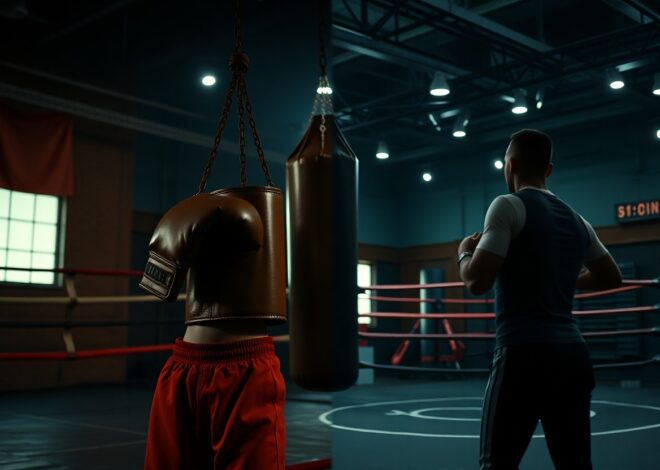
Footwork, Head Movement, And Balance: The Pillars Of Traditional Boxing
Movement governs range, timing and control: precise footwork sets distance and angles, head movement minimizes impact and counters attacks, and rock-solid balance generates power and quick recovery; neglecting these risks serious injury or tactical collapse, while mastering them produces dominant defense and efficient offense-the foundation of traditional boxing technique taught to every disciplined fighter.
The Importance of Footwork
Footwork controls distance, timing and the angles that make punches land or miss. Elite boxers like Floyd Mayweather and Vasiliy Lomachenko use slight pivots and lateral steps-often 45-degree angles-to convert defense into offense. Good footwork improves ring control and setup for combinations, while poor positioning leaves a fighter wide open to counters and off-balance. Practise distance management and small adjustments (10-30 cm) between punches.
Fundamental Techniques
Maintain a stance roughly shoulder-width with knees bent 20-30 degrees and weight on the balls of the feet; this allows immediate pivots and explosive steps. Use the step-and-slide method-step with the lead or rear foot, then slide the trailing foot-avoiding crossing feet or overreaching. Pivot on the ball of the lead foot up to 45 degrees to create angles, and keep hands tight to preserve balance.
Developing Agility and Speed
Train foot speed with ladder drills (3-5 sets of 20-30 seconds), short shuttle sprints (5 × 10-20 m) and plyometrics like box jumps (3 × 6-8). Shadowbox for 10-15 minutes focusing solely on movement and rhythm, and alternate drills with 30-60 seconds rest to prioritize explosiveness. Emphasize reaction work: partner cues or light flashes and step within 0.4-0.6 seconds to simulate fight timing.
Progress over 4-6 weeks with 3 sessions weekly of 20-30 minutes; log 10 m shuffle times and aim for a consistent reduction (a typical target is ~0.2-0.5 s). Mix reactive drills with strength work-2-3 sets of single-leg hops-to build sport-specific power. Watch fatigue: excessive volume degrades balance and increases injury risk; keep intense bouts under 60 seconds for each drill.
Mastering Head Movement
Efficient head movement separates defensive specialists from predictable fighters: pro camps often allocate 10-20 minutes per session to slipping drills, double-end bag work and mirror repetitions to engrain timing. Study fighters like Pernell Whitaker and Floyd Mayweather for subtle rotations and shoulder rolls that convert defense into counters. Train with measured tempo-3-minute rounds, 2-4 defensive repetitions per offensive sequence-to build reflexes and balance while keeping the chin protected with tight posture and minimal telegraphing.
Types of Head Movement
Different patterns serve distinct purposes: lateral slips avoid straights, the bob and weave absorbs hooks, rolls deflect power, and short ducks remove the target while preserving angle for counters. Use partner jabbing drills for slips and heavy-bag weaving for rhythm; integrate the shoulder roll to funnel shots to the ribs. This helps prescribe drills and counter responses under pressure.
- Slip
- Bob and Weave
- Shoulder Roll
- Duck
- Parry
| Movement | Purpose / Drill |
|---|---|
| Slip | Avoid straight punches – partner jab, 3×2-minute sets |
| Bob & Weave | Sustain hooks – heavy-bag weaving, 3×2-minute rounds |
| Shoulder Roll | Deflect power – mitt work, 4×3-minute focus rounds |
| Duck | Create counters underneath – slip-to-counter combo drills |
Implementing Head Movement in Defense
Start defense by drilling single concepts: 5 minutes of slip-to-counter repetitions, 2 minutes on the double-end for timing, then 3 light sparring rounds emphasizing movement over punching. Emphasize keeping the eyes on the opponent while the head moves; avoid overextending the chin forward and practice returning to neutral stance within one beat to maintain balance and counter readiness.
Progress by chaining movements into sequences-slip left, step off, and fire a 1-2; or bob, weave, and pivot to the outside for a hook counter. Use tempo variations (slow control, then sudden 80-90% speed) to condition reflexes; film sessions to correct telegraphing and quantify improvement (track successful evasions per round). Prioritize drills that simulate fatigue so head movement survives late-round pressure and reduces the risk of an exposed chin or overcommitment, enabling safer counters and sustained defensive efficiency.
Establishing Balance
Balance underpins every exchange in the ring: maintaining a neutral stance-roughly 50/50 to 60/40 weight distribution depending on whether you press or retreat-lets you generate power, recover, and pivot without overcommitting. Hold static stance drills for 30-60 seconds, then add movement to test it; loss of balance opens you to counters and increases the risk of being rocked or dropped, so prioritize controlled weight shifts and quick re-centering during sparring.
The Role of Balance in Boxing
Good balance converts leg and hip force into punch velocity and protects against counters: when a fighter keeps knees bent and core braced they retain angular control for pivots and sprawls. For example, elite boxers sustain balance to land multi-punch combinations while still being ready to evade-poor balance often equals missed power and increased susceptibility to knockout shots.
Techniques to Improve Balance
Train balance with targeted drills: single-leg holds (30-45s x3 per leg), heel-toe walks, BOSU or wobble-pad shadowboxing, ankle mobility exercises, and lateral plyometric bounds (3 x 8-10). Integrate core bracing and proprioceptive work 2-3 times weekly and progress from static to dynamic drills to transfer stability into live movement and punching mechanics.
Progress logically: start with bilateral stance holds (30s x3), advance to single-leg eyes-open then eyes-closed (20-30s x3), add perturbations like medicine-ball tosses (3 x 20) and unstable surfaces, then move to sport-specific drills-staggered-stance shadowboxing and pad rounds focusing on balance during entries and exits. Follow a 10-15 minute routine 3x/week to reduce ankle injuries and improve punch transfer efficiency.
The Interplay of Footwork, Head Movement, and Balance
When footwork, head movement and balance synchronize, an opponent’s timing collapses and openings expand. Footwork creates angles and distance, head movement hides the chin and forces misses, while balanced weight transfer lets you convert slips into counters with maximum power. In short exchanges (typical exchanges last 2-4 seconds), elite fighters use micro-steps, 45° pivots and 100-200 ms head feints to control tempo and avoid being hit.
How They Complement Each Other
Footwork sets the geometry-step left to create a 45° attack lane-while head movement reduces effective target area, and balance makes the resulting punch deliverable. For example, a jab to draw a guard, a pivot to the rear foot and an outside slip creates a 1-2 counter with increased power and reduced risk. Poor balance, conversely, turns correct angles into dangerous exposures by leaving the chin unguarded.
Drills to Enhance All Three Skills
Combine ladder runs (10-15 s bursts) with immediate slip sequences: run the ladder, perform 12 inside/out slips, pivot 45° and throw two counters; repeat for 3 rounds. Add medicine-ball tosses while shuffling to train reactive balance and core transfer. Shadowbox 4 rounds of 3 minutes in front of a mirror focusing on tight head movement, micro-steps and rapid weight recovery.
Progress via specific sets and loads: begin with 3 sets of ladder + 12 slips, advance to 6 sets over 4 weeks, and keep rests to ~60 s to mimic fight tempo. Use a 2-4 kg medicine ball for 10 throws per set, intersperse single-leg balance holds (30 s) between rounds, and track hip rotation and weight distribution with video for efficient power transfer.
Common Mistakes in Footwork, Head Movement, and Balance
Too often subtle flaws-like stepping straight back, crossing the feet, or overreaching while punching-compound into openings opponents exploit. Amateur and pro coaches note that keeping weight beyond a 70/30 split on the front leg reduces recovery speed and invites counters; conversely, flat-footed movement kills mobility. Drill choices matter: replace long, slow shadow rounds with varied tempos and short explosive sets to correct timing and preserve balance under fatigue.
Identifying Pitfalls
Missed cues are predictable: head bobs that drop on the jab, chasing the opponent instead of controlling angles, and pivoting on the toe instead of the ball of the foot. Video review at 60-120 fps reveals these faults fast-often a 2-3 second window shows repeated telegraphs. Prioritize fixing patterns that produce repeated counters, especially crossing the feet and leaning away from the power hand.
Strategies to Overcome Mistakes
Use targeted drills: ladder and cone work for foot placement, slip-line and double-end bag for timing, and single-leg balance holds for 30-60 seconds to build proprioception. Structure sessions as 3 sets of 60s drills, 2-3 times weekly, then integrate into light sparring rounds. Apply resistance bands to simulate ring pressure and force proper weight distribution-consistent, measurable practice beats generic repetition.
Progression matters: begin slow focusing on form, then increase tempo and add contact. Record sessions and track metrics like missed counters per round or successful pivots out of exchanges. Coaches often prescribe a 4-6 week block emphasizing one deficit-e.g., pivoting-before moving to combined drills; this focused cycle produces tangible gains in balance and defensive consistency.
Advanced Strategies for Competitive Boxing
Employ layered tactics: combine distance control, cadence disruption, and selective feinting to force reaction patterns. Train in 3-minute intervals with 60-80% high-intensity work and 40-60% technical rounds over a 6-8 week camp to see measurable gains. Use drills that reduce reaction windows to ~200-250 ms and practice entries/exits within 0.3-0.5 seconds to sharpen timely counters that can end rounds or fights.
- Distance manipulation through step-and-slide footwork.
- Cadence and rhythm changes to break timing.
- Angle creation via pivots and lateral attacks.
- Sparring scenarios: control, counter, and power rounds.
- Data-driven tweaks using punch-output and reaction metrics.
Strategy vs. Drill
| Distance Control | Partner tether drill: maintain 1-1.5m gap, close on 1-2 step feints, retreat on 2-step exit. |
| Angle Creation | Pivot-and-fire: 10 pivots per set, follow with 2-power shots from new angle. |
| Cadence Manipulation | Metronome rounds: alternate 30s slow, 30s explosive for 6 rounds to train rhythm shifts. |
Applying Skills in Sparring
Rotate 3 technical rounds (50-60% intensity) with 2 situational rounds (70-80%) each session to consolidate footwork and head movement into live exchanges. Implement specific objectives per round-one for entry timing, one for countering the jab, one for angle creation-and track success rates (e.g., land 6-8 intentional counters per situational round). Use video review weekly to convert mistakes into corrective drills.
Adapting Techniques to Opponents
Assess stance, reach (measure in inches), and preferred attack lanes within the first round; if an opponent has a +3-6″ reach, prioritize inside work and short hooks, whereas a shorter, pressure fighter demands lateral pivots and uppercut counters. Emphasize exploiting openings and neutralizing power shots through spacing and timed clinches to reset momentum.
Use video breakdowns and punch-data (e.g., punch count per round, punch accuracy %) to build an opponent profile over rounds 1-3, then adjust. For example, switch to southpaw-feinting or tighten guard when the opponent unloads three-punch flurries between the 30-45 second mark; implement a two-round tactical plan and test it under sparring pressure before committing in competition.
To wrap up
Conclusively, mastering footwork, head movement, and balance forms the technical backbone of traditional boxing; they shape defense, generate power, and control range and timing. Consistent drilling and situational practice integrate these elements into instinctive responses, enabling effective offense and durable defense. Coaches and fighters should prioritize progressive, deliberate repetition to preserve longevity and refine tactical decision-making.
FAQ
Q: How should a beginner develop proper footwork in traditional boxing?
A: Start by locking in a balanced stance: feet shoulder-width, lead foot angled slightly inward, weight distributed mainly on the balls of the feet with a slight bend in the knees. Practice the three core movements-step, slide, pivot-slowly at first, keeping the rear heel lifted when moving forward and the lead heel when retreating. Drill shadowboxing focusing solely on foot placement, use cones or tape marks to train straight-line and lateral movement, and include ladder drills for quickness. Emphasize small, efficient steps rather than large lunges; controlled movement preserves balance and allows faster counters. Progress to partner drills and supervised light sparring where the only goal is to maintain stance and move off the center line, then add punches once footwork is automatic.
Q: How does head movement integrate with footwork and balance to avoid punches?
A: Head movement-slips, rolls, ducks, and weaves-works as the defensive partner to your feet. When you slip, move your head off the line while stepping slightly to the outside with the lead foot or pivoting on the rear foot so you’re not static. Rolling beneath a punch should be paired with a short step or hip rotation to maintain a stable base for counters. Keep the chin tucked, eyes level with the opponent’s shoulders, and the torso angled so weight stays centered over your feet. Train integration through slow shadow sessions that combine a step + slip + counter, heavy bag drills where you slip then immediately return fire, and partner mitt work emphasizing coordinated foot/head escapes. The aim is to create defensive movement that preserves balance and places you in a ready position to attack.
Q: What drills and progressions best build balance and coordination for these pillars?
A: Begin with static balance exercises: single-leg stands, slow weight shifts in stance, and calf-to-toe raises to improve proprioception. Move to dynamic progressions: stance transitions (switching lead/back foot while maintaining posture), line drills (step-slide down and back a marked line), and ladder footwork for rhythm and quickness. Add complexity by layering punches and head movement-shadowboxing with deliberate slips and pivots, double-end bag for timing, and light partner drills that force reactive steps. Include periodic stability training (single-leg Romanian deadlifts, lateral lunges) to strengthen the supporting muscles. Structure sessions so 20-30% of training focuses on dedicated footwork/head-movement drills, with the remainder applying those skills into technical pad work and controlled sparring to consolidate coordination under pressure.