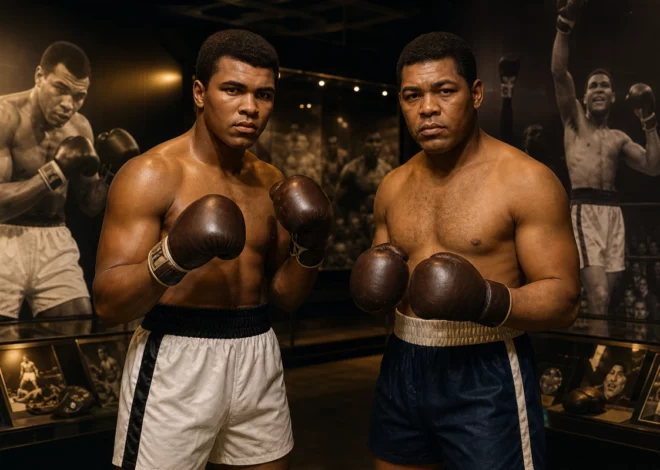
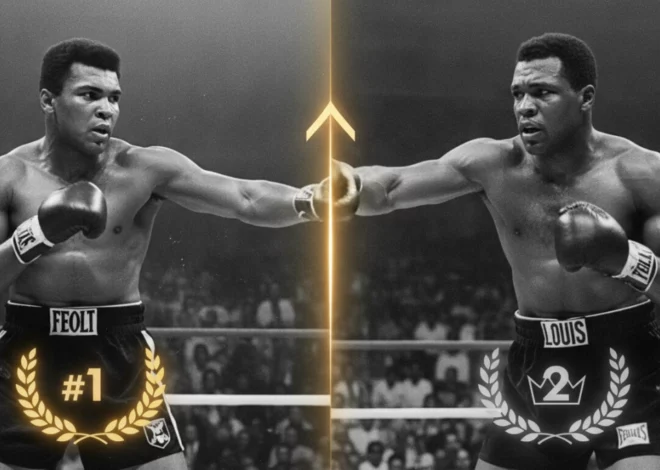
Muhammad Ali vs Joe Louis — Imagining the Ultimate Heavyweight Clash
When eras collide: placing Muhammad Ali and Joe Louis in historical perspective
When you imagine Muhammad Ali and Joe Louis meeting in the ring, you’re connecting two distinct chapters of heavyweight history. Joe Louis dominated the late 1930s and 1940s, becoming a symbol of consistency and power during a turbulent era. Muhammad Ali (born Cassius Clay) redefined the sport in the 1960s and 1970s with speed, fluidity, and psychological warfare. Placing them side by side requires more than comparing records — you must account for changes in training, tactics, social dynamics, and the rules that governed their primes.
As you study both fighters, think about how context shaped their approaches. Louis was the archetype of the classical pugilist: disciplined footwork, compact defense, and devastating, measured punching. Ali, by contrast, used reach, reflexes, and improvisation, often turning the fight into a chess match you watched as much for style as for outcome. Understanding these foundations helps you imagine not just who had the better punch, but how each would exploit opportunities and vulnerabilities.
Key historical differences you should note
- Era-specific training: Louis’s camp emphasized fundamentals, sparring volume, and position-based drills; Ali benefited from more modern conditioning and strategic movement work.
- Ring tempo and round structure: Both fought 15-round championship bouts in their primes, but pacing philosophies differed — Louis often finished fights early, Ali could conserve energy and accelerate late.
- Social and psychological factors: Louis carried the burden of representation in a segregated America; Ali brought outspoken charisma and a mind-game approach that could unsettle opponents before a glove touched glove.
What their early careers and signature attributes tell you about a hypothetical matchup
To imagine the clash realistically, you should examine formative fights that reveal how each man solved problems in the ring. Louis’s early title run and defenses showed an ability to break down durable opponents with a blend of timing and power. Ali’s early victories showcased speed, lateral movement, and an aptitude for avoiding sustained damage while landing high-volume punches.
Comparative traits that would shape the fight
- Physical profile: Louis combined muscular compactness with a low center of gravity; Ali used longer reach and exceptional mobility to keep opponents off-balance.
- Offensive strategy: Louis favored straight, economy-based punching sequences intended to finish; Ali mixed jabs, feints, and angles to accumulate points and create openings.
- Defensive approach: Louis employed a tight guard and precise counters; Ali relied on reflexes and movement—ducking, rolling, and pivoting away from pressure.
With these foundations in mind — the historical context, their early-career problem-solving, and the core traits each fighter brings — you’re ready to move into a round-by-round tactical comparison to see how punches, footwork, and ring IQ would determine momentum in an imagined Ali–Louis encounter.
Round-by-round tactical breakdown: how momentum might swing
Picture the opening bell: Ali would almost certainly set the tempo immediately, using his jab and lateral movement to probe and frustrate. The first three rounds would be a chess match in motion — Ali circling, occasionally stopping on the toes to snap the jab and test Louis’s timing; Louis threading compressed, economically delivered counters, watching for the moment a straight power shot can be timed clean. Expect Louis to assume the role of measured predator, cutting the angles and not overextending, while Ali tries to turn the center of the ring into a tracking exercise for the champion.
By rounds four through eight the fight’s character becomes clearer. If Louis closes distance effectively, he can turn exchanges into short-distance geometry — short hooks and hard uppercuts aimed to sap Ali’s legs and curb his lateral escape. Those are the rounds where Louis’s textbook fundamentals and single-minded power sequences do the most damage. Ali’s best counter in this phase is to keep the ring wide, feint to draw counters, and pepper with the long jab to discourage Louis from planting and throwing two-handed power.
The later middle rounds (nine to twelve) are where endurance and adaptation decide the narrative. Ali famously accelerated late in fights; if he’s managed to avoid being rocked by a clean, heavy blow, he can use reflex and volume to turn a deficit into momentum. Louis’s preference for finishing early would push him to press, but sustained pressure across many late rounds requires energy. If Louis has already landed telling shots to the body and legs, his bursts will be more damaging and likely force Ali into stationary exchanges — a dangerous place for the younger boxer.
In rounds thirteen to fifteen the margin for error narrows. A perfectly timed Louis combination can still end the night — he was both efficient and relentless when he smelled finishing blood. Conversely, Ali’s late-round speed, accumulated punches, and ring smarts create scoring opportunities and openings for a sudden decisive strike. Most realistically, the fight shifts between phases: Ali uses movement to evade, Louis corners to punish; if neither achieves a knockout, judges must weigh Ali’s superior ring generalship and activity against Louis’s power-led, high-impact shots.
Pivotal X-factors that would tilt the scales
Beyond styles and round-by-round tactics, a handful of variables would be decisive.
- Timing and distance control: Louis’s power is most dangerous when he can plant his feet and square up; Ali’s priority is to deny that platform. Whoever controls pocket entry will win critical exchanges.
- Body work vs. mobility: Louis’s ability to punish the body would be a deliberate strategy to slow Ali’s legs. If Louis sustains a campaign to the ribs and midsection, Ali’s lateral escape routes shrink.
- Psychological warfare: Ali’s taunts and rhythm-breaking banter are more than theatrics; they disrupt timing. But Louis’s stoic focus and methodical discipline could neutralize mind games if he refuses to engage emotionally.
- Durability under big shots: Ali showed resilience against heavy hitters; Louis rarely needed a prolonged accumulation to finish. A single moment of vulnerability would change the fight instantly.
- Referee and fight tempo: How the referee manages clinches and inside work affects whether Louis can sustain close-range punishment or whether Ali gets repeated separations to reset the ring.
Put together, these tactical layers suggest a contest of contrasting virtues: Louis’s efficient, fight-ending power against Ali’s adaptive movement and ringcraft. It’s not only who lands more blows, but which kind of blows land at what time — and which man can impose his preferred tempo for long enough to exploit the other’s weakness.
After the bell: why this imagined clash still resonates
Debating who would prevail between Muhammad Ali and Joe Louis isn’t about producing a definitive answer; it’s about tracing the contours of two eras, two distinct skill sets, and two towering cultural figures. These “what if” matchups sharpen your appreciation for the sport’s technical evolution and the personal stories that shaped it. They also remind us that boxing is as much a mirror of its times as it is a contest of fists—each champion carried more than a record into the ring.
If you want to explore their lives beyond hypotheticals, consider reading a detailed profile like the Muhammad Ali biography, then revisit classic Louis fights to see how different philosophies translate under pressure. Ultimately, the conversation itself—comparing styles, tactics, and legacies—keeps both legacies alive and invites new generations to study, learn, and imagine.