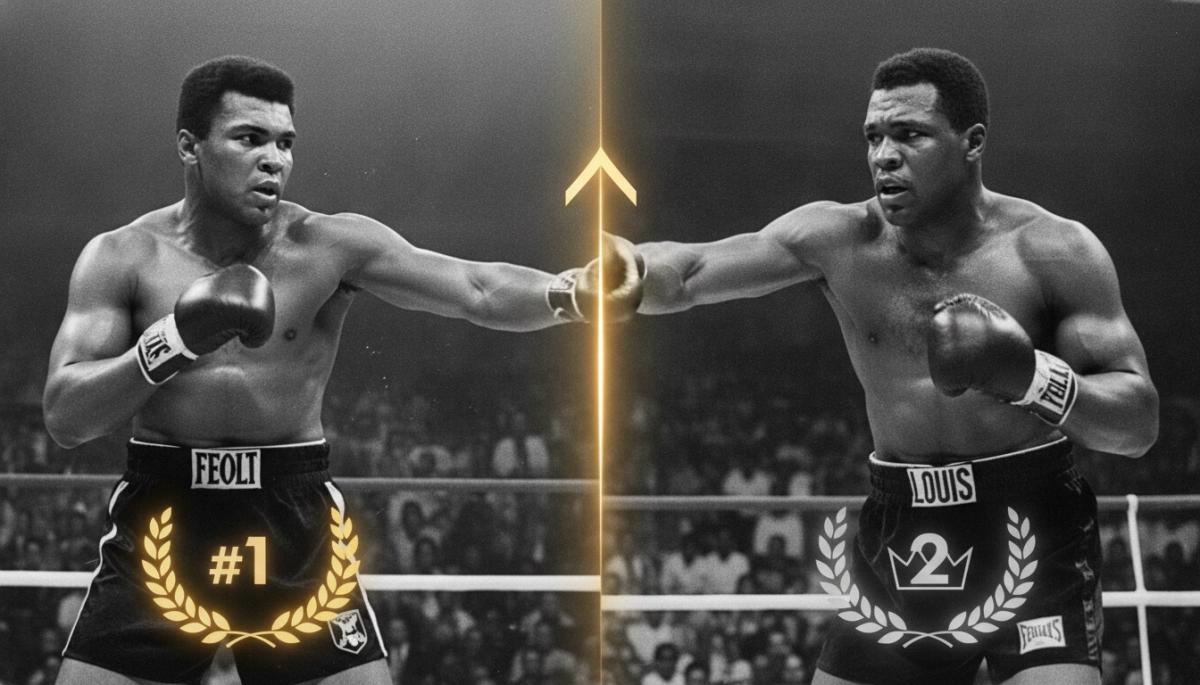
Greatest Heavyweight Champions: Muhammad Ali vs Joe Louis Ranked
When you evaluate two eras of heavyweight dominance
You’re about to compare two boxers who defined different eras of the heavyweight division. Joe Louis, the “Brown Bomber,” dominated the ring in the 1930s and 1940s with a long, methodical reign. Muhammad Ali, initially Cassius Clay, rewrote the playbook in the 1960s and 1970s with speed, charisma, and political courage. To rank them fairly, you need to understand how each man rose to prominence, what they accomplished early in their careers, and how their styles and contexts influenced their legacies. This section sets that foundation.
What you should know about Louis’s early ascent
Joe Louis turned professional in 1934 and quickly became a force. By 1937 he had captured the heavyweight title and then held it for a record-long period. When you look at his early years, focus on consistency and the way he neutralized opponents rather than relying on flashy tactics.
- Rapid climb: Louis moved from prospect to champion in just a few years, demonstrating technical skill and devastating punching power.
- Defensive efficiency: You should note his compact defense and economy of motion—he conserved energy and struck with intent.
- Key early wins: His victories over contenders of the late 1930s established him as the benchmark of the division.
How Ali’s early promise signaled a different kind of champion
Ali’s early career follows a different arc. As an Olympic gold medalist in 1960, he entered the pro ranks with speed and confidence. Where Louis built dominance through steadiness, Ali used unorthodox movement, mental gamesmanship, and refusal to conform to expectations.
- Olympic pedigree: Winning gold gave you a clear indicator of Ali’s skill and international appeal from the outset.
- Speed and footwork: Early in his career you can see the attributes that would make him exceptional—quick jab, lateral movement, and rapid combinations.
- Promotional savvy: Even before becoming champion, Ali cultivated a public persona that magnified his impact on and off the canvas.
Comparing early records and the competition you’ll weigh
When you compare records, pay attention to the context: Louis fought in an era when the heavyweight pool included many journeymen and fewer global stars, while Ali faced a more internationally diverse and televised field. Basic metrics you should note now include career records, knockout rates, and title defenses. For Louis, long title retention and high knockout percentage are central. For Ali, notable early wins, speed, and ring IQ stand out.
With this foundation in place—how they rose, what made their styles distinct, and the early achievements you’ll use as yardsticks—you’ll be ready to dive into their championship peaks, signature fights, and the arguments used to rank them against one another.
Championship peaks: Louis’s iron grip versus Ali’s peaks and comebacks
Now you compare their championship primes on the facts that matter: duration, consistency, and the quality of the opposition at the time. Joe Louis’s peak is best understood as sustained dominion. Once he took the belt in 1937 he held it for over a decade, defending it against a steady stream of top contenders with a blend of power, precision, and economic movement. That sustained run is the sort of dominance you can measure in defenses, stoppages, and the absence of serious stylistic vulnerabilities.
Muhammad Ali’s championship peaks look different. He had explosive, unmistakable primes—early-1960s speed and later-1970s ringcraft—but they were interrupted. You should note two things for Ali: first, his athletic and tactical apexes (the young Cassius Clay’s speed and the wily Ali who beat Foreman); second, his resilience in returning to championship form after a forced hiatus. Where Louis built an unbroken tower of defenses, Ali’s greatness is more episodic: raw brilliance, a controversial exile, then reinvention.
- Consistency vs. reinvention: Louis’s era rewards uninterrupted excellence; Ali’s rewards adaptability and the ability to beat new generations of elite opponents.
- Peak metrics to weigh: length of title reign and number of defenses (Louis) against peak-level wins across eras and comeback championships (Ali).
- Endurance and durability: Louis’s prime suggests a machine-like efficiency; Ali’s prime showcases strategic evolution and psychological warfare.
Signature fights that shaped how you remember them
To rank these two, look closely at the fights that crystallized their reputations. For Joe Louis, the most symbolic is his rematch with Max Schmeling in 1938. That fight didn’t just restore a title—it had global political overtones, and Louis’s first-round knockout became a defining image of American sporting dominance. Other key bouts—like his methodical handling of Billy Conn—showcase how Louis neutralized styles that threatened him.
Ali’s landmark fights are more numerous and varied. You’ll turn to his upset of Sonny Liston in 1964 as the moment he announced himself; to the Fight of the Century versus Joe Frazier (1971) and the Thrilla in Manila (1975) as tests of heart and will; and to the Rumble in the Jungle (1974) as an ingenious tactical masterpiece where he used rope-a-dope to topple a younger, harder-hitting George Foreman. Each of those matches adds a different shade to Ali’s legend—bravado, endurance, politics, and strategy.
- Symbolic weight: Louis’s Schmeling rematch and Ali’s Rumble/Thrilla/Fight of the Century are more than wins; they’re cultural moments.
- Variety of challenges: Louis repeatedly neutralized fundamental threats; Ali overcame diverse stylistic and generational challenges.
- What you should watch for: knockout timing, tactical adjustments mid-fight, and how each man handled adversity when the bout turned against him.
How non-ring factors shift the ranking conversation
Finally, you should factor context beyond pure skill: politics, war, and exile altered both careers in ways that affect how you rank them. Louis boxed in an era shadowed by global conflict and racial tensions; his victories carried societal resonance and provided a symbol of hope. Ali’s principled stand against the Vietnam War cost him peak years, but it also widened his impact and complicated comparisons based solely on in-ring resumes.
When you weigh Louis’s uninterrupted dominance against Ali’s interrupted but trans-era triumphs, remember that greatness can be measured in longevity, peak performance, and cultural consequence. Those are the lenses you’ll use next when ranking them head-to-head.
How to judge them for yourself
If you want to form your own ranking, use a clear set of filters rather than gut feeling alone. Apply these criteria to both fighters and weigh what matters most to you—numbers, artistry, or cultural footprint.
- Era adjustment: Consider the depth and style of competition available in each boxer’s time.
- Peak dominance vs. adaptability: Do you value an unbroken reign or the ability to reinvent and beat multiple generations?
- Signature wins: Give weight to fights that tested them against the best and revealed their defining traits.
- Ringcraft and style: Evaluate technical skill, defense, power, and strategic intelligence.
- Cultural and historical impact: Account for contributions that extended beyond the ring and changed the sport’s meaning.
The debate that endures
Ultimately, ranking Muhammad Ali and Joe Louis is as much a reflection of your values as it is of their records. Some will place the premium on Louis’s sustained machine-like supremacy; others will favor Ali’s transcendent peaks and cultural resonance. That disagreement is part of what keeps their legacies alive—each argument reveals as much about how you define greatness as it does about the fighters themselves. For more on their careers and formal recognitions, visit the International Boxing Hall of Fame.