
Compare Boxing Betting Odds Today: Find the Best Lines
Why comparing boxing odds matters for your bankroll and edge
You probably know that small differences in boxing odds add up quickly. When you shop multiple sportsbooks and pick the best line, you increase your expected value and reduce the impact of the bookmaker’s margin. Comparing odds isn’t just for professional bettors; it’s a practical step you can take before every bet to improve long-term results.
Boxing is particularly sensitive to line differences because match outcomes are binary (win/lose) and often priced with large favorites or underdogs. A half-point change or a slightly better moneyline can alter the profitability of your stake, especially when you place parlays or apply staking plans. By routinely comparing lines, you keep your cost of betting low and your potential returns higher.
The tangible benefits you get from line shopping
- Higher returns on identical stakes when you take the best available moneyline.
- Reduced cumulative loss from vig (the sportsbook commission) by choosing books with tighter margins.
- Greater flexibility to exploit arbitrage and value bets when multiple books disagree.
- More confidence in your decisions because you can see market consensus and outliers.
How boxing betting lines are created and why they move
To compare odds effectively, you need to know how lines originate and evolve. Sportsbooks set opening lines based on a mix of power rankings, historical performance, public sentiment, and internal models. From there, lines move as money comes in, sharp bettors place large stakes, or breaking news affects fighter availability and weight-cutting reports. When you watch line movement, you’re essentially observing other bettors’ information being priced in.
Common odds formats and what they mean for your stake
- Moneyline: The simplest form for boxing. A favorite might be -250 (you must bet $250 to win $100) and an underdog +200 (you win $200 on a $100 bet). Always compare moneylines across books to find the best payout.
- Decimal and fractional: These are alternate formats (popular in different regions) that represent the same value; convert them if needed to compare accurately.
- Prop and round betting: Small differences in props or round markets can offer extra value if you specialize, so check those lines too.
Key reasons a line moves and how you should react
- Sharp action: Large wagers by experienced bettors often move lines; following this can reveal value but move quickly.
- Public money: Heavy public betting can skew lines, creating value on the contrarian side.
- Injury or weight news: Late changes in fighter status can create rapid shifts—act fast or wait for sharper pricing.
- Book limits and liability: If a sportsbook wants less exposure on a favorite, they’ll adjust the price to balance action.
Having this context helps you interpret differences between sportsbooks instead of assuming one is simply “better.” Next, you’ll learn practical methods and tools to compare live boxing odds across multiple sportsbooks so you can lock in the best available line.
Tools and platforms to compare live boxing odds
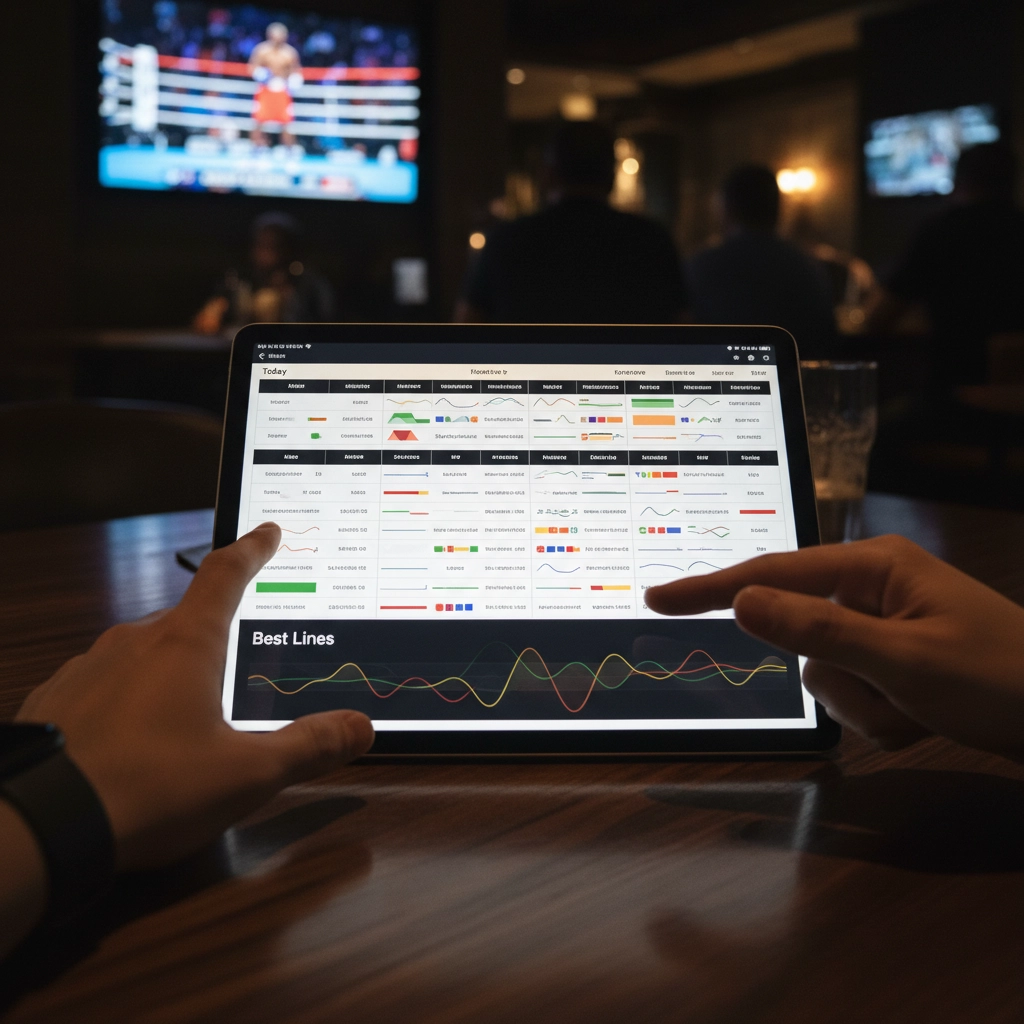
To consistently find the best lines you need tools that consolidate markets and alert you to meaningful gaps. Start with reputable odds aggregators and comparison sites that track multiple books in real time. Services such as odds comparison sites and aggregator apps display moneylines, round markets and props side-by-side so you can pick the best price without toggling dozens of bookmaker tabs.
- Odds aggregators: These show price snapshots and often include line movement graphs. They’re excellent for pre-fight shopping and for spotting when a book has drifted or shortened relative to the market.
- Arbitrage and value-finding software: Paid tools (arb finders, value scanners) scan across books to flag guaranteed-arb opportunities or statistically valuable discrepancies. Use these if you want to systematically exploit large mismatches, but be mindful of stake limits and void risk.
- Betting exchanges: Exchanges (where available) often offer better execution on underdogs and let you lay positions. They can be a practical alternative when books limit your stakes or have wide vig.
- Bookmaker apps and webhooks: Keep native apps for the books where you hold accounts; odds can appear and be hit faster on an operator’s own platform than on an aggregator. Enable push alerts for line changes and confirmations.
- APIs and browser tools: If you’re technical, use odds APIs or browser extensions to build a custom dashboard. Even a simple spreadsheet fed by manual checks can help you compare prices and track each book’s usual vig.
Note on latency: not all tools update simultaneously. Aggregators can be a few seconds behind a sportsbook for fast in-play swings, so when timing is critical, rely on apps where you hold accounts and use the aggregator to confirm wider context.
Practical workflow to lock in the best line pre-fight and in-play
Having tools is only half the battle — you need a clear process to use them efficiently. Build a routine that minimizes friction and avoids emotional chasing.
- Open multiple accounts and verify them: Maintain accounts at several reputable books and an exchange. Complete KYC and fund limits in advance so you can act quickly; account verification delays are a common reason bettors miss good lines.
- Set a watchlist and alerts: Add upcoming fights to a watchlist and enable price-movement alerts. That way you’ll be notified when a favorite shortens or an underdog spikes, rather than constantly refreshing screens.
- Compare markets before placing a stake: Quickly check moneyline, rounds and key props across your books. If two or more books offer materially better odds, place the bet there even if it takes an extra minute — the edge compounds over time.
- Pre-fight timing: For breaking news (injuries, weight issues), pause and re-check multiple sources. For typical line drift, early value can be available on underdogs while favorites often shorten as public money arrives; plan your entry based on your read, not impulse.
- In-play execution: Use apps on your fastest device for live betting. If you rely on an aggregator, confirm the price on the bookmaker’s app before clicking. Consider partial or laddered fills for large stakes to avoid partial acceptance or limits.
- Record keeping and stake discipline: Log the odds you took and the book used. Track how often an operator offers the best line and adjust where you place larger bets. Stick to your staking plan so occasional missed lines don’t push you to overbet chasing losses.
Follow this workflow consistently and you’ll turn line-shopping from a sporadic habit into a repeatable edge that protects your bankroll and boosts long-term returns.

Common mistakes to avoid
- Chasing a slightly better line after a loss—this erodes staking discipline and increases risk.
- Relying solely on an aggregator during fast in-play swings; latency can cost you the price you saw.
- Failing to verify accounts and fund them ahead of time, which leads to missed opportunities when lines shift.
- Ignoring book limits and bet acceptance patterns—some books consistently restrict winners or large stakes.
Putting line shopping into practice
Make line shopping a routine: set up accounts, automate alerts, and treat each change as data rather than a prompt to overreact. Start small when testing a new tool or strategy, log every bet and the book you used, and adjust where you place heavier action based on real results. For a reliable cross-check of prices and movement, use a reputable odds aggregator such as OddsChecker and confirm execution on the sportsbook app before staking. Staying disciplined and methodical will turn small price advantages into meaningful long-term gains.
Frequently Asked Questions
How many sportsbooks should I have accounts with to effectively shop lines?
A practical target is 4–7 reputable sportsbooks plus an exchange where available. That range gives coverage for most price discrepancies without becoming unmanageable; prioritize books that regularly offer the best lines for the fights you follow.
Are arbitrage opportunities common in boxing and are they safe to use?
Arbs in boxing appear occasionally but are time-sensitive and often small. They can be profitable if executed quickly and with accounts large enough to cover the required stakes, but risks include stake limits, bet voids, and account restrictions—so proceed carefully and test at low stakes first.
What’s the fastest way to react to sudden line moves before a fight?
Have funded, verified accounts and bookmaker apps with push alerts enabled. Use the aggregator for context, but confirm the price and place the bet on the operator’s app to reduce latency and avoid missing the execution window.