Joe Louis Brown Bomber: Career Highlights and Impact on Boxing
Why Joe Louis matters when you study boxing history
When you look at the development of modern heavyweight boxing, Joe Louis stands out not just for wins and knockouts but for the way he shifted expectations about what a champion could represent. Nicknamed the “Brown Bomber,” Louis boxed during a turbulent era of the 1930s and 1940s. As you read, you’ll see how his athletic achievements intersected with social and cultural change, and why his reign is often treated as a turning point for the sport in the United States.
You should view Louis’s achievements on two levels: the technical — his punching power, timing, and methodical style — and the symbolic — how his success challenged racial barriers at a time when segregation and prejudice shaped everyday life. Understanding this dual effect gives you a fuller picture of why his era is still studied and taught in boxing histories and American cultural histories alike.
From small-town origins to Detroit gyms: the beginnings you need to know
Joe Louis Barrow was born in 1914 and grew up in a working-class environment that pushed him toward hard work and discipline. If you follow his trajectory, you’ll notice how geography and community mattered: moving to Detroit placed him in a vibrant boxing scene where you could learn in local gymrooms and earn quick notoriety through amateur bouts. Early on, Louis built a reputation for composure, a compact fighting stance, and a capacity to deliver decisive power without theatrics — traits that would define his professional identity.
- Early amateur success laid the foundation for a pro career; his technique evolved quickly under experienced trainers.
- He displayed an unusually calm ring demeanor, which you can trace to his methodical training and focus on fundamentals.
- By the mid-1930s he was already seen as a serious contender because of consistent wins and an ability to adapt to different styles.
Turning professional and the fights that set the stage for a title run
When Louis turned professional in 1934 you begin to notice a sharper march toward the heavyweight crown. You should pay attention to a few key milestones that accelerated his rise: a string of convincing victories over established heavyweights, a growing national profile, and a strategic management team that positioned him for a title shot. In 1937 he defeated the reigning champion to claim the world heavyweight title, beginning a reign that would reshape the division.
As you digest these early chapters of Louis’s story, keep in mind how his ring performance combined with broader public perceptions to elevate him from athlete to national figure. What followed after his initial title win — the defenses, the rematches, and the blockbuster fights that defined his legacy — is where you’ll see the full scope of his impact. In the next section, you’ll examine his championship years, the defining bouts with major rivals, and how those performances cemented his status in boxing history.
Dominance in the ring: title defenses and landmark fights
Joe Louis’s championship years are best understood as a sustained campaign rather than a handful of highlight reels. After taking the title in 1937, he defended it with a consistency and efficiency rare in any era: 25 successful defenses against a who’s who of the heavyweight division. That sequence wasn’t merely about piling up wins; it was a demonstration of how to govern a division — neutralize contenders, adapt to styles, and finish fights without unnecessary theatrics.
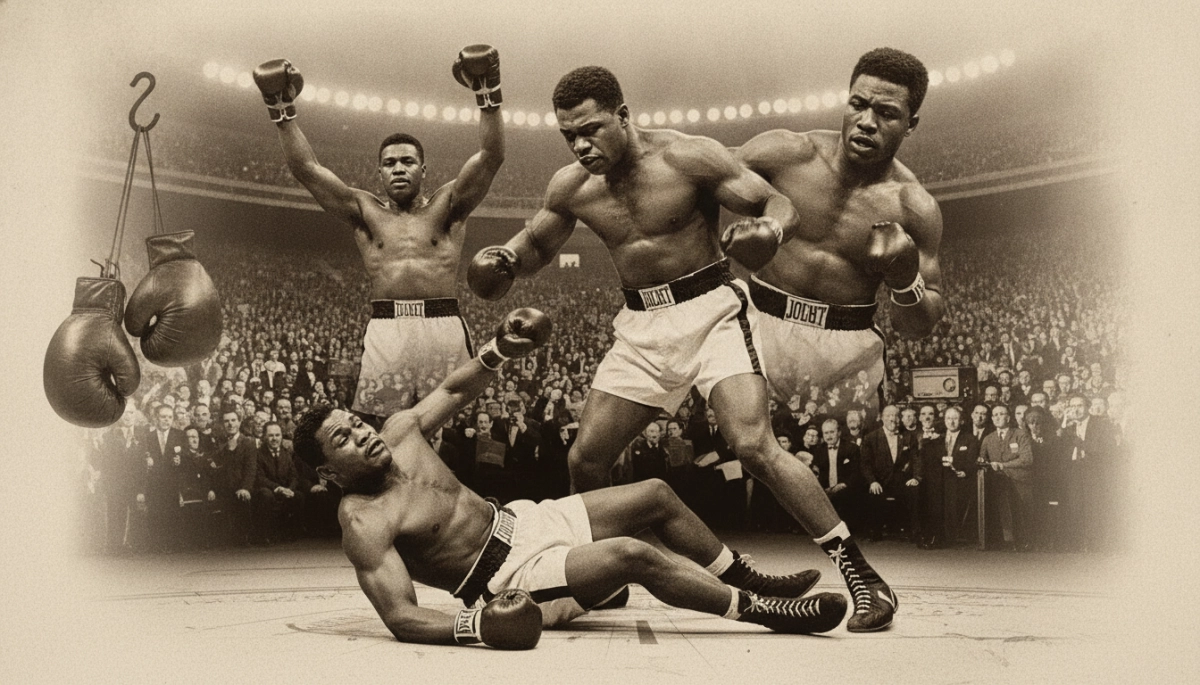
A few bouts stand out for both sporting drama and wider resonance. The 1938 rematch with Max Schmeling at Yankee Stadium remains one of the most iconic moments in boxing history. Schmeling had handed Louis his only professional loss two years earlier; the rematch became loaded with geopolitical subtext. Louis settled the score decisively — a first-round knockout — and the image of that swift, brutal finish reverberated far beyond sport. Another classic was the 1941 clash with Billy Conn. Conn, a lighter, faster boxer, outboxed Louis for much of the fight and even flirted with an upset, but Louis’s power and persistence told late: he scored a dramatic 13th-round knockout that has entered boxing lore as a lesson in endurance and timing.
The later years introduced new hurdles. In 1947 Jersey Joe Walcott shocked the world with a split-decision win over Louis, ending his long run as champion. Louis came back a year later and reclaimed the title with a first-round knockout, showing the same capacity for decisive action that characterized his prime. Collectively, these defenses and rematches established Louis not only as the best boxer of his period but as a standard-bearer for what a heavyweight champion could be — durable, strategic, and exceptionally composed under pressure.
Technique and temperament: why the “Brown Bomber” was so difficult to beat
If you study Louis’s style, two themes recur: compact efficiency and relentless timing. He rarely relied on flash. Instead, his fundamentals were near-flawless — a tight, economical stance that minimized openings, a powerful, well-timed straight right, and a jab used more to set rhythm and measure distance than to seek glory. Louis could fight long, measured rounds to wear an opponent down or turn to sudden, concentrated bursts of power when openings appeared.
A crucial part of his effectiveness was footwork and ring control. Louis had an uncanny sense for cutting off the ring and forcing exchanges on his terms; opponents who tried to box at a distance found themselves corralled and worn down. He paired this with exceptional mental discipline — calm under pressure, methodical in attack, and rarely prone to emotional lapses that cost other fighters rounds.
The tactical blueprint Louis left behind informed generations: emphasis on conditioning, strategic ring generalship, and marrying power to precision. Trainers and fighters who followed studied not just his victories but how he won them — quietly, efficiently, and with an almost surgical use of force. That synthesis of technique and temperament is a big part of why his reign still serves as a reference point when boxing historians talk about the anatomy of a dominant champion.
Life after the ring and recognition
After his competitive peak, Joe Louis remained a public figure who experienced both admiration and hardship. During World War II he served as a morale booster, participating in exhibitions and public service that tied his image to national sacrifice. Later decades brought financial and health challenges, but also renewed appreciation: historians, boxing communities, and civic institutions have repeatedly honored his contributions to sport and society.
- He continued to influence boxing through exhibitions, public appearances, and the example he set for ringcraft and professionalism.
- Boxing organizations and museums have enshrined his legacy; his career remains a frequent subject of study in sports history.
- Monuments, biographies, and commemorative events keep the conversation about his athletic and cultural importance alive.
Enduring legacy
Joe Louis’s life and career remain a touchstone for how sport can reflect and shape social currents. Beyond the record books, his example speaks to discipline, quiet dignity, and the complicated ways athletes intersect with public life. For readers who want to explore his story in greater depth, reputable biographies and museum resources provide context and detail; a useful starting point is the profile at Britannica — Joe Louis.
His impact endures where technique meets meaning: fighters study his fundamentals, historians trace his role in American culture, and fans remember the moments that captured more than a sporting outcome. That layered legacy is why Joe Louis continues to matter to anyone interested in the sport, its history, and the broader stories sport can tell about a nation.