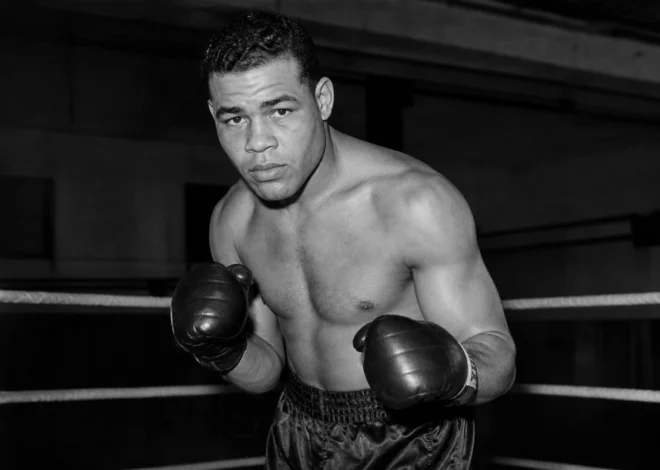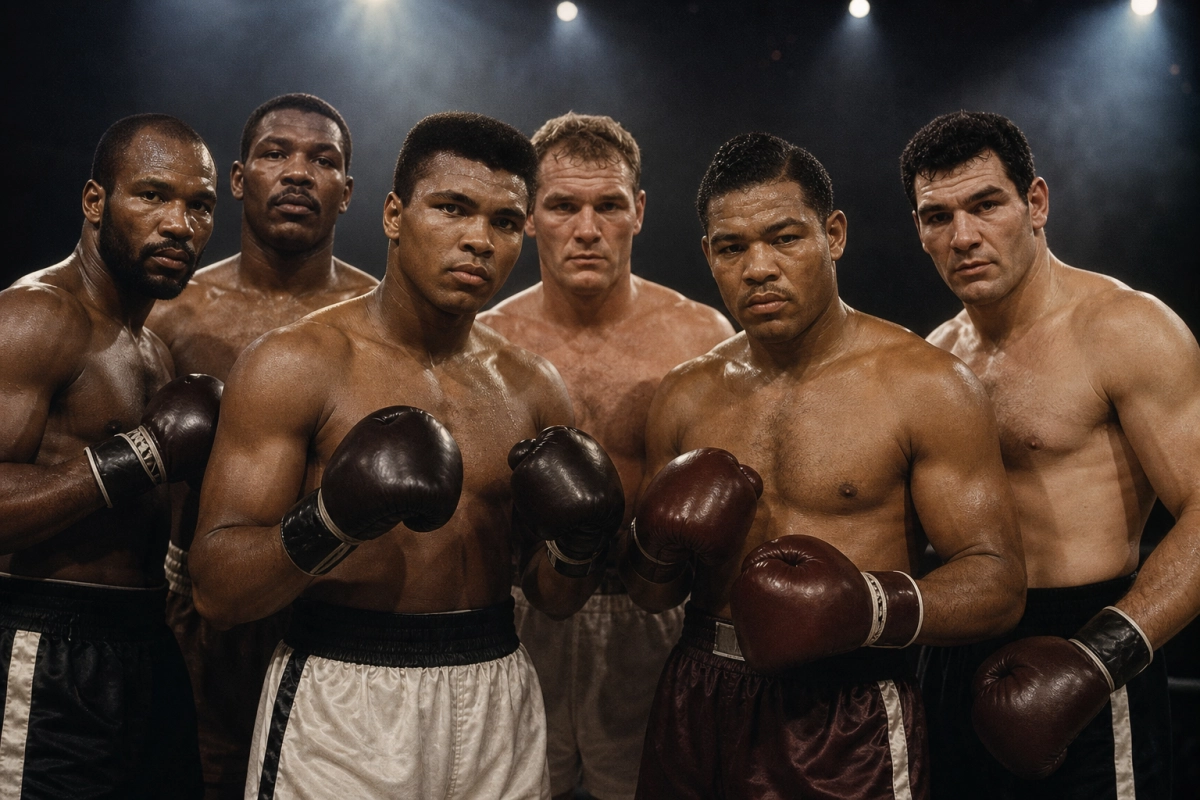
Muhammad Ali, Joe Louis, and the Greatest Heavyweight Champions of All Time
Why the Early Years of Ali and Louis Define Modern Heavyweight Boxing
You may think of heavyweight champions in terms of their championship reigns and iconic bouts, but the foundations of greatness are laid much earlier. Understanding Muhammad Ali’s and Joe Louis’s formative years helps you see how they transformed the sport — in style, in public perception, and in the mechanics of heavyweight boxing itself. Their backgrounds, early setbacks, and the boxing landscape they entered are essential to appreciating why so many fans and historians place them among the greatest.
How to read a champion’s early arc
When you study a fighter’s rise, look for three interlocking elements: technical development, notable early wins, and the social or cultural context that amplified their impact. For Ali and Louis, those elements converged in ways that made their later achievements inevitable. You’ll notice patterns — a combination of raw talent refined by disciplined training, plus a set of key opponents who tested and revealed each boxer’s character and style.
Muhammad Ali’s emergence: speed, voice, and the Cassius Clay years
You first encounter Ali as Cassius Clay, a young, quick-footed amateur who stunned observers with speed that seemed impossible for a heavyweight. His Olympic gold in 1960 was a preview of the swagger and skill to come, but his professional beginnings were equally revealing: he moved differently, used feints and angles, and relied on reflexes and timing more than brute force.
Early style and signature development
Ali’s early pro fights show you how he built a unique combination of defensive mobility and psychological warfare. You can trace his voice and public persona to these years — he began crafting rhyme-based taunts, predicted outcomes, and used the media to shape narratives long before it became commonplace. Those elements became as much a part of his competitive advantage as his jab.
- 1960 Olympic light heavyweight gold — first major international success.
- Rapid pro rise with victories over key contenders, establishing him as a top contender by mid-1960s.
- Distinctive footwork and jab-led strategy that disrupted traditional heavyweight power models.
Joe Louis’s breakthrough: the Brown Bomber and the making of a champion
You’ll find Joe Louis’s early story rooted in a different era: the 1930s, when boxing offered one of the few paths to national fame for Black athletes. Louis combined devastating punching with an unmatched focus on fundamentals. Where Ali dazzled with movement, Louis imposed a relentless, efficient pressure that ended fights on his terms.
Foundations of Louis’s dominance
Louis’s amateur and early pro years were characterized by discipline and consistent improvement. He honed a compact, straight-right power punch and developed ring generalship that allowed him to control pace and distance. Those skills translated into long title reigns because he rarely left fights to chance.
- Early string of knockouts that established his reputation as a finisher.
- Technical refinement under astute trainers who emphasized balance and economy of motion.
- Ability to adapt tactics based on opponent weaknesses rather than relying solely on power.
Having examined how Ali and Louis built the technical and personal tools that propelled them to stardom, you’re now ready to look at the pivotal championship fights and public moments that cemented their places among the greatest heavyweights — and how those moments reshaped boxing and culture alike.
Pivotal title fights that turned skill into legend
Greatness becomes indisputable when it’s proven on the biggest stages. For Ali and Louis, a handful of championship nights crystallized their styles, forced them to adapt, and created the myths that endure.
Muhammad Ali’s early title win over Sonny Liston (February 25, 1964) announced a new kind of heavyweight: a fighter who could outmaneuver brute force. The later rematch — the controversial knockout and the famous “phantom punch” (May 25, 1965) — only deepened the mythology. Ali’s trilogy with Joe Frazier (the “Fight of the Century,” March 8, 1971; the rematches culminating in the “Thrilla in Manila,” October 1, 1975) and his tactical masterpiece against George Foreman in Zaire (the “Rumble in the Jungle,” October 30, 1974) did more than settle rivalries. They displayed Ali’s full arc: raw speed and showmanship tempered by grit, strategy, and a willingness to take punishment when the stakes demanded it.
Joe Louis’s championship narrative follows a different, equally decisive arc. He claimed the title from James J. Braddock on June 22, 1937 and then established an era of consistency — the record-setting 25 successful defenses that followed are a technical testament to his dominance. The 1938 rematch with Max Schmeling (June 22, 1938) remains a defining night: a single-round knockout that avenged an earlier upset and carried symbolic weight beyond boxing. The 1941 bout with Billy Conn, where Conn nearly upset Louis before a 13th-round stoppage, revealed Louis’s ability to turn a tactical mismatch into a finishing lesson; it also demonstrated his staying power under pressure.
- Ali’s marquee fights showcased a blend of athleticism, psychological warfare, and strategic reinvention.
- Louis’s string of defenses emphasized technical efficiency, devastating power, and a rare consistency across more than a decade.
When the ring met history: public moments that reshaped sport and society
Both men transcended sport by becoming symbols in public debates far larger than boxing. Their most famous fights were frequently interpreted as moral or political statements, amplifying their legacies.
Ali’s conversion to Islam, vocal opposition to the Vietnam War, and refusal of conscription in 1967 turned him into a polarizing national figure. Stripped of his title and forced out of competitive boxing during his prime, he returned to reclaim the crown — a comeback narrative that redefined resilience in sports. His activism and charisma altered how athletes could use fame to influence politics and culture.
Joe Louis’s public role was framed differently but was no less significant. His victory over Schmeling was seized as a repudiation of Nazi racial ideology by many Americans, and Louis’s wartime exhibitions and bond drives made him a unifying figure during World War II. Yet his story also exposed the limits of acceptance; despite patriotic service and global fame, Louis confronted persistent racism and post-career financial and personal struggles that revealed the precarious position of Black athletes in mid-century America.
Read together, these moments show how championship boxing became a theater for broader social tensions. Ali and Louis won not only belts but also a place in national memory — their fights read as chapters in histories of race, politics, and identity as much as in the record books.
Enduring influence on fighters and the sport
Beyond records and highlight reels, Ali and Louis altered expectations for what a heavyweight could be — technically, culturally, and morally. Their approaches to training, ringcraft, and public engagement continue to show up in the habits of modern champions: footwork and reflexes prized alongside power; careful choreography of public persona; and an awareness that the ring can amplify social messages. Studying their careers offers practical lessons for fighters and fans alike about adaptation, preparation, and the broader responsibilities of prominence.
- Technique: Emphasis on movement, timing, and economy of motion as pathways to control fights.
- Preparation: Consistent discipline and tactical adaptability that made longevity possible.
- Cultural reach: Using the platform of boxing to shape public conversations beyond sport.
Legacy in the ring and beyond
The measure of Ali’s and Louis’s greatness still plays out whenever a new contender steps into the heavyweight spotlight. Their names invite comparison not merely because of titles won but because they set enduring standards for what champions can be: athletes, symbols, and storytellers. As boxing evolves, their examples remain touchstones — reminders that excellence is built over time, that courage can take many forms, and that the impact of a champion often extends far beyond the final bell.
For a deeper look at their careers and continuing influence, the International Boxing Hall of Fame maintains extensive biographies and archival material that help place these fighters in a broader sporting and social context: International Boxing Hall of Fame.