Muhammad Ali Biography — How He Changed Boxing and Culture Forever
How Muhammad Ali Redefined Athletic Greatness and Public Voice
You’re about to follow the first chapters of the life of Muhammad Ali, a man whose impact stretched far beyond the ropes. To understand why Ali matters today, you need to trace how a shy Louisville kid became a brash, incandescent champion who changed expectations about what a boxer could be — in skill, speech, and social presence.
From Louisville Roots to Olympic Gold: Early life and discovery
When you look back at Ali’s beginnings, you’ll see a mixture of ordinary childhood detail and sudden opportunity. Born Cassius Marcellus Clay Jr. in 1942, he grew up in segregated Louisville, Kentucky. You’ll notice how a stolen bicycle led to the moment that set his life in motion: a police officer advised the 12-year-old Clay to learn to fight, and he began training at a local gym under Joe Martin.
That early training revealed a natural athleticism and quickness that separated Clay from other young boxers. By 18, he had dominated the amateur ranks, and at the 1960 Rome Olympics he won a light heavyweight gold medal. The Olympic victory gave you an early glimpse of the charisma and confidence that would define his public persona: he moved differently, and he spoke differently.
Turning professional and the rise of a distinctive fighting style
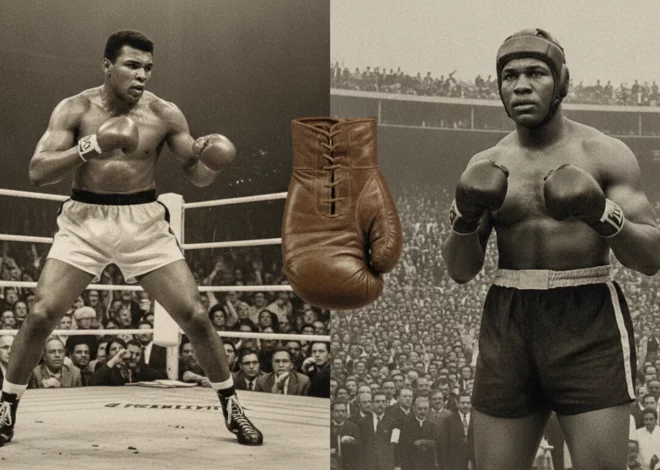
As you follow Clay into the professional ranks, you’ll see how he evolved a style that overturned conventional wisdom about heavyweight boxing. Instead of the lumbering, power-focused style typical of heavyweights, he used speed, footwork, and angles to avoid punches and control distance. Trainers and opponents had to adjust to his “float like a butterfly, sting like a bee” approach — a phrase you’ll associate with his creativity in the ring and his marketing of himself outside it.
- Early pro record: rapid accumulation of wins that showcased speed over brute force.
- Signature tactics: lateral movement, jab variety, and psychological gamesmanship.
- Public persona: clever trash-talk and rhyme-based predictions that drew attention beyond sports pages.
By 1964, Clay was prepared for the biggest challenge of his young career: a title fight against Sonny Liston. When he defeated Liston in a stunning upset, you witnessed not just a change in the championship ledger but the birth of a cultural phenomenon. After the fight he announced his conversion to Islam and adopted the name Muhammad Ali — a personal decision that would also become a public lightning rod.
At this stage, you can already see two parallel transformations: the technical reshaping of heavyweight boxing and the emergence of a sports figure who used personality and faith to challenge public expectations. In the next section, you’ll examine how Ali’s championship reign, political choices, and courtroom battles amplified his influence and forced America to confront larger questions about race, religion, and dissent.
Conscience in the Spotlight: The Draft, Conviction, and Exile
When you watch Ali’s life in this middle act, one of the defining turns isn’t a punch but a decision. In 1967, at the height of his fame, Ali refused induction into the U.S. Army on the grounds of his religious beliefs and opposition to the Vietnam War. That refusal wasn’t a private act — it was public, theological, and unapologetically confrontational. The result was immediate and severe: he was convicted of draft evasion, stripped of his heavyweight title, and barred from boxing for years while his appeals wound through the courts.
What you should notice is how this legal and moral standoff recast Ali. He traded the safety of celebrity compliance for the peril of principle. Supporters saw a brave conscientious objector; critics called him unpatriotic. He faced a five-year prison sentence and a fine, but he remained free on appeal. The case ultimately reached the Supreme Court, which in 1971 reversed his conviction. By that time, however, Ali had lost nearly four prime years of his athletic life — an exile that would cost him physically and professionally but cemented his role as a symbol of dissent and religious freedom.
The Comeback: Fights That Rewrote Boxing’s Narrative
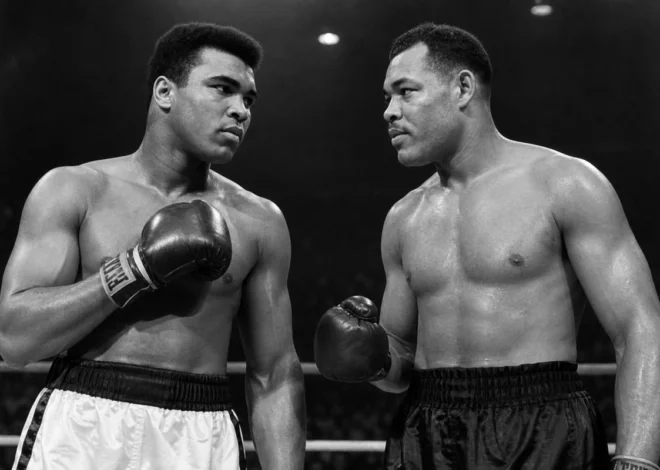
After the ban was lifted, you watched Ali return to a sport that had moved on but couldn’t silence him. He fought through a grueling stretch of battles that read like a catalog of boxing mythology. In 1971 he met Joe Frazier in the “Fight of the Century” — a clash of styles and politics that Ali lost but which affirmed his willingness to face consequence and challenge. Then came the most dramatic two chapters: the 1974 “Rumble in the Jungle” against George Foreman in Zaire and the 1975 “Thrilla in Manila” — both fights tests of strategy, will, and showmanship.
Against Foreman, Ali perfected the rope-a-dope, leaning back, absorbing punches, and letting Foreman exhaust himself before finishing him late to regain the heavyweight championship. Against Frazier, Ali pushed both men to the brink in a brutal, near-three-hour attrition that ended with Frazier’s corner stopping the fight. These bouts did more than change records; they changed what you expected from a comeback. Ali returned not merely as an athlete regaining status but as a storyteller reshaping the sport’s drama, economics, and global reach.
Beyond the Ring: Culture, Religion, and Global Resonance
As you consider Ali after the fights, you see a figure who had become larger than any single headline. His conversion to Islam and association with the Nation of Islam complicated how Americans saw him, but it also amplified conversations about race, identity, and religion. He gave voice to Black pride at a moment when such visibility was risky; he used rhyme, ritual, and rhetoric to redefine celebrity as a vehicle for cultural critique.
Internationally, Ali was one of the first athletes to become a genuine global ambassador of culture. His fights drew diplomats and musicians, his persona influenced fashion and language, and his willingness to speak against war and racial injustice inspired activists across continents. Even as time brought health troubles, the era you’ve been tracing shows how a boxer came to embody a broader struggle for dignity, turning athletic stardom into a platform for social change.
Later years and honors
Ali retired from boxing in 1981. In 1984 he was diagnosed with Parkinson’s syndrome, a condition that increasingly limited his public appearances but did not silence his presence. Even as his voice and mobility faded, he remained a global ambassador: meeting with world leaders, supporting charitable causes, and lending his star power to humanitarian efforts. In recognition of his contributions beyond sport he received many honors, including the Presidential Medal of Freedom in 2005. Ali died in 2016, but his influence continued through foundations, museums, and educational programs dedicated to his life and values.
The Lasting Echo of Muhammad Ali
Muhammad Ali’s life resists neat moral cataloging; he was at once an artist of athleticism, a provocateur, a man of faith, and a public conscience who invited both admiration and controversy. What endures is not a tidy lesson but a challenge: to consider how courage, conviction, and creativity can reshape institutions and public conversation. Athletes, activists, and artists who speak with purpose today do so with Ali’s example in the background — a reminder that influence often arrives wrapped in contradiction.
Institutions that preserve and explore his story keep that conversation alive, encouraging new generations to wrestle with the same questions Ali raised about identity, duty, and the price of standing apart. For more on the ongoing work to honor his legacy, see the Muhammad Ali Center.