Mayweather vs McGregor: How the Biggest Combat Sports Event in History Was Built
A Fight That Transcended Boxing and Rewrote the Record Books
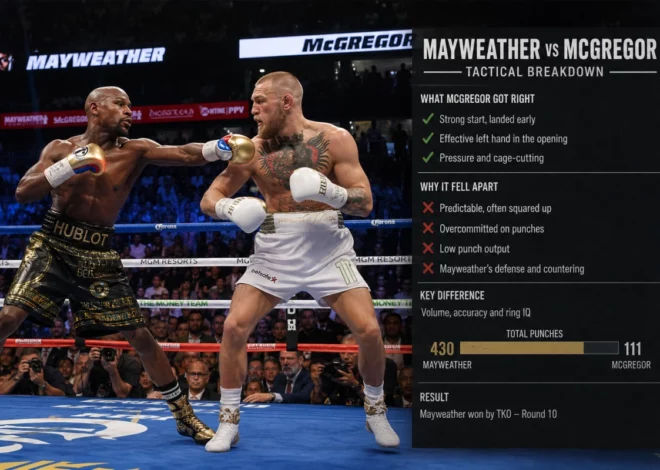
On August 26, 2017, the T-Mobile Arena in Las Vegas hosted a contest that defied easy categorization. Floyd Mayweather Jr., widely regarded as one of the greatest defensive boxers in history, stepped into the ring against Conor McGregor, a two-division UFC champion with zero professional boxing experience. The result shattered pay-per-view records, generated revenues that legacy boxing promoters had never imagined possible, and commanded the attention of millions who had never watched a boxing match in their lives.
This was not a unification bout. It was not a contest between two elite boxers with comparable résumés. And yet, by nearly every financial measure that matters in combat sports, it became the most lucrative event the industry had ever produced. Understanding why requires looking beyond the ring — at the promotional machinery, the cultural collision, and the specific moment in sports media history that made the fight feel genuinely unmissable.
Two Audiences, One Event: The Cross-Sport Phenomenon That Drove Demand
The commercial foundation of Mayweather vs McGregor rested on a simple but powerful dynamic: the fight united two separate and passionate fan bases who rarely overlapped. Mayweather’s undefeated record of 49-0 was not just a number — it was a brand. His previous mega-fights, particularly against Manny Pacquiao in 2015, had proven his name alone could move pay-per-view numbers into the millions.
McGregor brought something entirely different. As the face of the UFC’s explosive global growth, he had built a fanbase that skewed younger, louder, and heavily engaged on social media. His personality — brash, quotable, and relentlessly self-promotional — had made him a mainstream celebrity well beyond MMA circles. For many of his followers, watching him fight Mayweather was less about technical boxing analysis and more about loyalty, identity, and the possibility of witnessing something historic.
That combination created a rare commercial opportunity. Promoters were effectively running two parallel campaigns that fed each other. Boxing fans tuned in to watch Mayweather protect his legacy. MMA fans tuned in to support McGregor and believe, however improbably, in the upset. Sports bettors, casual observers, and pop culture audiences joined simply because it was everywhere.
How Social Media Amplified the Build-Up
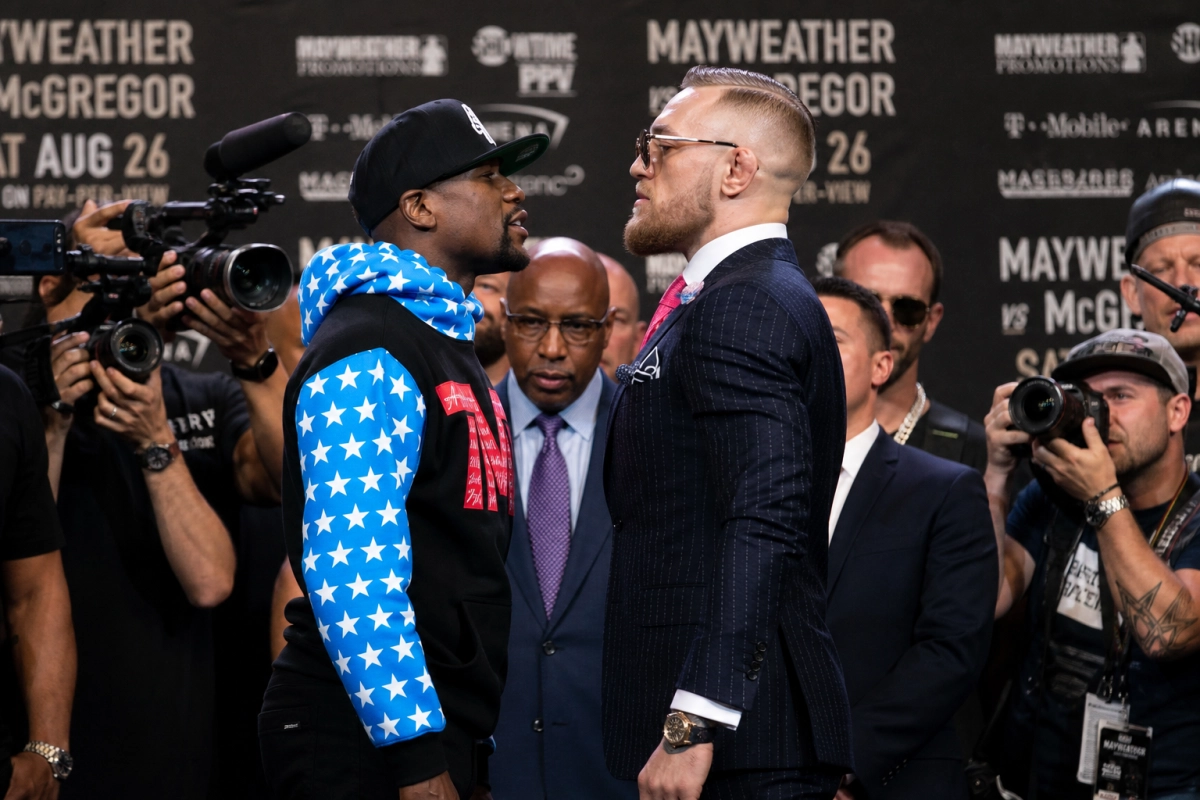
The pre-fight media tour across the United States, United Kingdom, and Canada became an event in itself. Press conferences went viral across platforms, generating tens of millions of views within hours. McGregor’s theatrical confrontations with Mayweather were engineered for maximum shareability, and both camps understood precisely what they were doing — every soundbite and manufactured moment of tension served one function: keeping the fight at the center of global conversation for weeks at a time.
The question of whether McGregor could genuinely compete with Mayweather almost became secondary to the cultural event surrounding the fight. That distinction proved critical to how large the financial numbers would eventually grow.
The Pay-Per-View Numbers and What They Actually Meant
The fight generated approximately 4.3 million pay-per-view buys in the United States alone, with international numbers pushing the global total significantly higher. At a price point of up to $99.95 through domestic providers, the revenue from home viewers dwarfed most previous boxing events — including Mayweather vs Pacquiao, which had itself broken records just two years earlier.
Those numbers carried particular weight because they arrived when the pay-per-view model was under real pressure. Streaming fragmentation, piracy, and shifting audience behavior had led many analysts to question whether the traditional PPV model still had the ceiling it once did. Mayweather vs McGregor provided a definitive answer: when an event is sufficiently embedded in mainstream culture, the appetite remains enormous. Price resistance largely dissolves when audiences feel they cannot afford to miss something.
International broadcasting deals added another substantial revenue layer. Broadcasters across the United Kingdom, Ireland, Australia, and key markets in Asia and Latin America paid significant licensing fees, recognizing that McGregor’s fanbase had strong geographic reach beyond North America. This global rights structure meant promoters were monetizing the same night across multiple streams simultaneously — a financial architecture that traditional boxing matchmaking rarely managed to build so comprehensively.
Gate Revenue and the T-Mobile Arena
The live gate added further weight to the event’s record-setting profile. Ticket prices ranged from several hundred dollars for the least prominent seats to tens of thousands ringside, with secondary market prices consistently exceeding face value as fight night approached. Gate revenue reportedly surpassed $55 million, making it one of the highest-grossing live sporting events ever staged in Las Vegas. Hotel occupancy, restaurant revenue, and casino traffic all spiked in the surrounding days — amplifying the economic impact well beyond the arena itself.
Fighter Purses and the Business of Splitting an Unprecedented Pot
Mayweather’s disclosed earnings placed him around $100 million from his guaranteed purse alone, with estimates of his total compensation — accounting for his promotional stake and ancillary revenue — reaching considerably higher. It was a payday consistent with his carefully constructed brand identity as a fighter who measured his career in financial terms as much as competitive ones.
McGregor’s position was equally remarkable. Entering a sport he had never competed in professionally, against arguably the greatest defensive boxer of his generation, he nonetheless commanded a purse reported at approximately $30 million guaranteed, with additional promotional earnings pushing his total substantially beyond that. His previous UFC paydays had operated at a fraction of that scale. The fight demonstrated in the starkest financial terms what crossing into boxing’s commercial ecosystem could mean for a combat sports athlete with the right mainstream profile.
The earnings disparity reflected the broader power dynamics of the negotiation. Mayweather Promotions co-promoted the event alongside Showtime, giving him direct participation in the broader revenue pool rather than merely a fighter’s share. Both men nonetheless left the building with earnings that reinforced the fight’s central commercial argument — that the right match, in the right moment, is worth far more than the sum of its competitive parts.
The Media Machine That Turned a Boxing Match Into a Cultural Moment
Showtime’s involvement brought the full weight of a premium cable network’s production and marketing capabilities to the project. The “All Access” documentary series gave both fighters extended platforms to develop their personas and sharpen the story being sold — not to fight fans specifically, but to anyone with a passing interest in sports, celebrity, or competition. UFC’s parent company, WME-IMG, brought its own entertainment industry infrastructure to McGregor’s side. He was not being marketed purely as a fighter — he was positioned as a cultural figure whose presence in any arena was worth paying to watch.
Even the fight’s timing was commercially deliberate. A late August date avoided direct conflict with the NFL’s opening weeks, maximized Las Vegas’s late-summer tourism window, and gave the promotional campaign the full benefit of a summer news cycle hungry for compelling sports narratives. Every element was chosen with clear awareness of the commercial ecosystem in which the event was operating.
Why the Numbers Will Likely Never Be Replicated in the Same Way
The record revenues were not simply a product of two famous athletes sharing a ring. They were the product of a specific convergence — of personalities, timing, media evolution, and cross-sport tension — that is genuinely difficult to replicate. The fight existed at a precise intersection: a boxing legend at the end of his career, an MMA star at the height of his mainstream visibility, and a pay-per-view model that still commanded sufficient consumer trust to deliver nine-figure returns.
The broader combat sports industry spent the years that followed attempting to understand which elements of that formula were transferable. The importance of personality-driven marketing, cross-platform social media promotion, and targeting multiple audience demographics simultaneously have all been absorbed into the promotional playbook. What cannot be manufactured is the cultural electricity that surrounded McGregor’s crossover moment, or the totemic significance of Mayweather’s undefeated record as the thing being staked. The fight also benefited from a novelty that any sequel would inevitably struggle to match — the question of whether McGregor could compete with Mayweather could only be asked once with full commercial force.
For the combat sports industry, that night in Las Vegas did not just set a record — it defined what the ceiling of the business actually looks like when every variable aligns. The numbers may eventually be surpassed, but the conditions that produced them belong to that specific moment in time, and the story of how they were built remains one of the most instructive case studies in the history of sports commerce.