Greatest Heavyweight Champions: Why Muhammad Ali and Joe Louis Stand Out
Why Ali and Louis Still Define Heavyweight Greatness
You may already know Muhammad Ali and Joe Louis by name, but to appreciate why historians and fans place them at the top of heavyweight lists, you need to look beyond titles and punch statistics. Both men transcended boxing in ways that reshaped the sport’s competitive standards, cultural role, and global appeal. In this section you’ll get a clear framing of their significance: the historical context they entered, the challenges they faced, and the early signals of greatness that set them apart from contemporaries.
The eras they entered and why context matters
When you study heavyweight champions, context is everything. Joe Louis rose to prominence in the 1930s and 1940s, a time when the United States was confronting the Great Depression and then World War II. His steady, crushing style and dignified public persona offered a measure of stability and pride to many Americans. Muhammad Ali emerged in the 1960s and 1970s amid civil rights struggles, antiwar protests, and a rapidly changing media environment. Ali’s flamboyant rhetoric, agile footwork, and willingness to challenge social norms made him a polarizing and magnetic figure.
Understanding these historical backdrops helps you see why each champion mattered beyond the ring: Louis became a symbol of national strength and racial progress for many, while Ali became a symbol of defiance, self-determination, and global celebrity.
Early development: how their upbringings shaped their boxing identities
Both fighters arrived at boxing with formative experiences that shaped their approaches and public images. If you look at their early lives, patterns emerge that explain their resilience and competitive instincts:
- Joe Louis grew up in rural Alabama before moving North. You’ll notice how his early discipline and quiet determination translated into a methodical, power-first fighting style that prioritized efficiency and knockouts.
- Muhammad Ali (born Cassius Clay) was raised in Louisville, Kentucky. His early training emphasized speed, agility, and showmanship; that combination produced a ring style that relied on movement, timing, and psychological warfare.
- Both men were shaped by racial realities of their times. You’ll see how Louis handled expectations with restrained dignity, while Ali adopted bold rhetoric and public positioning that directly confronted societal issues.
First signs of dominance: records and early milestones
Before they were household names, each man put up early results that signaled an exceptional career. Look at the milestones you should remember:
- Joe Louis: long reign as world heavyweight champion, numerous knockout victories, and a reputation for making difficult opponents look ordinary.
- Muhammad Ali: Olympic gold-medal success, rapid ascent through professional ranks, and early wins that showcased his unique tactical blend of speed and strategy.
These early indicators—contextual significance, formative backgrounds, and milestone achievements—explain why you should study Ali and Louis together as contrasting yet complementary pillars of heavyweight history. Next, you’ll examine their most defining fights, technical differences in the ring, and how each man’s legacy evolved outside boxing.
Defining Fights: Moments That Cemented Their Reputations
To see why Ali and Louis are still touchstones, look at a handful of fights that crystallized what they were capable of and what they meant to the public. For Joe Louis, the defining moment was the 1938 rematch with Max Schmeling. Louis had lost to Schmeling in 1936, but the 1938 fight was different: he dismantled Schmeling in the first round, delivering a single, decisive right hand. That outcome did more than restore a personal record; it carried symbolic weight at a fraught moment in world history and transformed Louis into a unifying national figure. Beyond Schmeling, Louis’s streak of 25 successful title defenses against a steady stream of top contenders — consistently efficient, often by knockout — defined an era of dominance rarely matched.
Ali’s defining fights were often dramatic narratives as much as technical showings. His upset of Sonny Liston in 1964 announced him to the world; the two bouts with Liston framed the emergence of a brash young champion. The Frazier trilogy (especially the 1971 “Fight of the Century”) and the 1974 “Rumble in the Jungle” against George Foreman reframed what a heavyweight could do tactically and psychologically. In Kinshasa, Ali’s rope-a-dope — absorbing early punishment to exploit an overaggressive Foreman later — showcased strategic ingenuity and courage under pressure. Thrilla in Manila further burnished his legend for willpower and endurance.
Contrasting Styles: Technique, Strategy, and Ring IQ
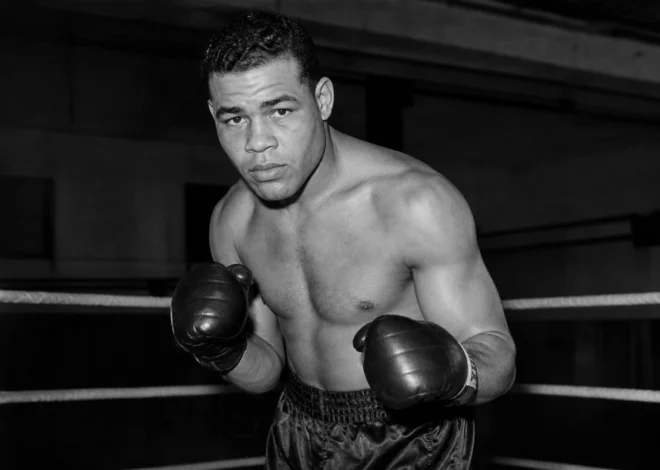
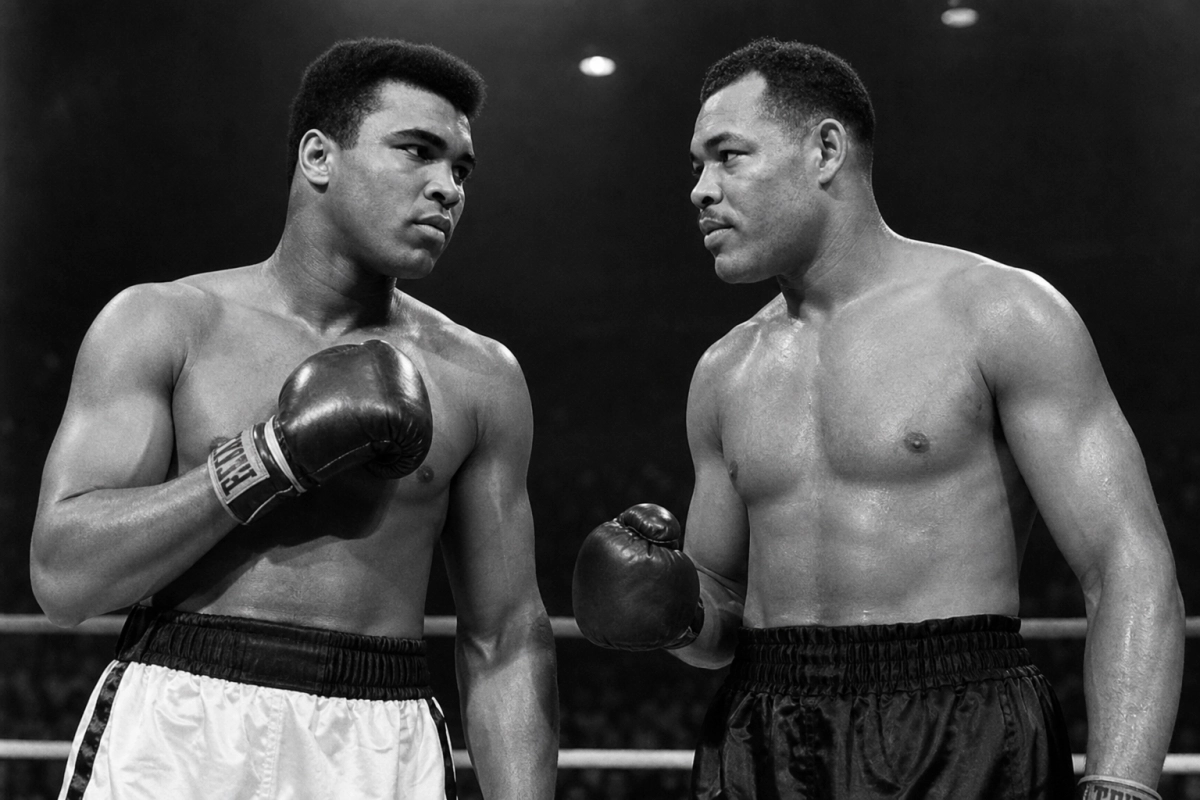
Technically, Louis and Ali represent two poles of heavyweight excellence. Joe Louis was the epitome of textbook efficiency: compact stance, devastating straight right, mastery of distance and timing, and an insistence on wearing opponents down with accurate power punching. He rarely wasted movement, and his combinations were designed to finish fights quickly and cleanly. Watch Louis and you see economy of motion and clinical calculation.
Muhammad Ali’s toolkit was almost the opposite in visible form: extraordinary footwork, lateral mobility, and a fundamentally defensive-first philosophy that converted defense into offense. Ali used feints, taunts, and pace variation as weapons — psychological as much as physical. His ability to control ring geography and force opponents into mistakes was central to his ring IQ. Where Louis relied on finishing power, Ali relied on timing, endurance, and the capacity to alter tactics mid-fight.
Both men demonstrated adaptability. Louis could be patient and methodical when early knockouts were unavailable; Ali could be ruthless with combinations when movement alone wouldn’t suffice. The contrast is instructive: greatness in the heavyweight division need not look the same.
Beyond the Ring: How Their Legacies Evolved Outside Boxing
Outside the ropes, their stories diverged yet remained equally influential. Joe Louis became a symbol of national unity and a quiet ambassador for racial progress during a fragile period in American history. He enlisted in war bond drives and served in the Army during World War II; his comportment and victories helped chip away at stereotypes. Still, Louis faced exploitation, financial mismanagement, and unequal treatment by boxing promoters and government tax policy — a cautionary tale about how athletes were compensated and protected.
Muhammad Ali’s extracurricular impact was more overt and confrontational. His conversion to Islam, his refusal to be drafted into Vietnam, and his outspoken civil-rights stances transformed him into an international emblem of political courage and controversy. Ali broadened the notion of what an athlete could be: activist, celebrity, and cultural icon. Both men left legacies that reshaped public expectations of champions — as fighters in the ring and as figures of social consequence beyond it.
Enduring Lessons from Two Champions
Ali and Louis are more than names in a record book; they are living examples of how athletes can shape the culture and conscience of their times. Their careers teach you about the power of discipline, the costs and possibilities of public visibility, and how excellence in sport can become a vehicle for broader change. These are practical takeaways for anyone who follows boxing, studies sports history, or considers the relationship between fame and responsibility.
Principles that outlast wins and losses
- Character matters: consistency, preparation, and demeanor often define how a champion is remembered as much as titles do.
- Context shapes meaning: athletic achievements resonate differently depending on social and historical moments.
- Adaptability endures: the ability to evolve—technically, mentally, and publicly—is central to lasting influence.
If you want to explore authoritative biographical material and contemporary analysis, start with reputable sources that place each fighter in historical perspective. For a reliable, succinct overview of Muhammad Ali’s life and impact, see Muhammad Ali biography at Britannica.
In the end, studying Ali and Louis isn’t just about deciding who was the better boxer. It’s about recognizing how two very different lives and approaches created models of greatness that continue to inform athletes, promoters, and fans. Their stories remind you that the heavyweight title is measured not only in rounds and knockouts, but in the lasting impressions left on sport and society.