Joe Louis Biography and Brown Bomber Legacy: A Deep Dive
Why Joe Louis’s Story Still Resonates for You
You approach Joe Louis’s life expecting a sports biography, but you quickly find a story that intersects race, migration, and American identity. Known to the world as the “Brown Bomber,” Louis became more than a champion inside the ring: he became a symbol during a turbulent era. As you read the early chapters of his life, you’ll start to see how personal hardship, geographic migration, and early mentors shaped the fighter who would dominate heavyweight boxing for more than a decade.
Roots and Family: From Rural Alabama to Northern Cities
You should know the basics of Louis’s upbringing to appreciate the obstacles he overcame. Born Joseph Louis Barrow in 1914 in rural Alabama, he grew up in a family of limited means during the Jim Crow era. Like many African American families of the period, his family joined the Great Migration northward in search of better opportunities. That move altered the course of his life.
- You’ll notice how the move to an industrial city exposed him to new work and recreation options—jobs in factories or on assembly lines, and community recreation centers where boxing programs were available.
- Economic pressure and family responsibilities pushed Louis into early labor, which sharpened his work ethic and resilience—qualities that translated into his training style.
- The urban environment also meant exposure to local gyms, trainers, and competitive amateur circuits where he could test and refine his skills.
Discovering Boxing: First Gloves and Early Mentors
When you trace Louis’s first steps into boxing, you’ll find a mix of chance and mentorship. As a young man in the city, he encountered boxing programs and local trainers who recognized his natural power and calm demeanor. Those early coaches taught him fundamentals—footwork, punching mechanics, and the discipline required for a professional career.
In these formative years, Louis accumulated experience through countless local fights and sparring sessions that were less about headlines and more about learning. You can imagine him in modest gyms, developing the single-punch power and deliberate movement that later became his trademark. Early successes in amateur competition provided momentum, convincing him and his handlers that a professional path was within reach.
Key elements that shaped his early boxing identity
- Physical gifts: natural reach, power, and the ability to absorb punishment.
- Mental traits: a composed temperament and focus under pressure.
- Support network: trainers, fellow fighters, and managers who provided opportunities despite racial barriers of the era.
By the end of this period, you can see how Louis was no longer just a promising amateur—he was poised for a professional breakthrough. In the next section, you’ll follow how those early lessons translated into a rapid professional rise and the creation of the “Brown Bomber” persona on the national stage.
Rapid Professional Rise: From Knockout Streak to World Title
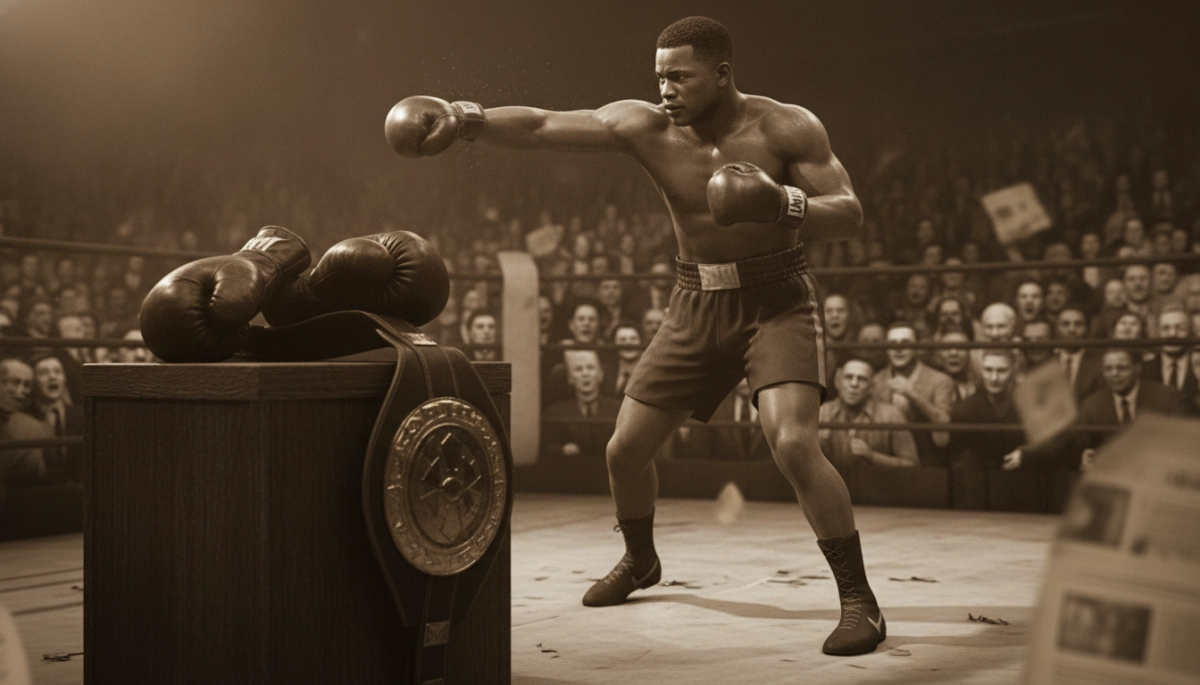
You follow Louis into the professional ranks and quickly notice the pattern that made him impossible to ignore: efficiency and power matched to an unusually disciplined game plan. Turning pro in the mid-1930s, he did not rely on flash—he methodically dismantled opponents, often with a single, decisive punch. His trainer refined a simple but lethal approach: a tight, snapping jab to control distance, paired with a compact, explosive right hand that finished fights. That combination produced a steady procession of knockouts and built national attention.
As you trace those early months and years, you see how that reputation opened doors. High-profile matchups arrived sooner than they might for another fighter; promoters and managers realized Louis was not merely another hopeful but a contender who could sell tickets and newsreel reels. The breakthrough came in 1937 when he challenged the reigning heavyweight champion. Against James J. Braddock, Louis demonstrated everything his ascent had promised—technical poise, staggering power, and composure under pressure. He claimed the title and, in doing so, announced the beginning of an era.
What follows is a period of sustained dominance. Louis defended the crown repeatedly, often facing opponents with longer pedigrees or more experience. You should notice not only the headline knockouts but the strategic choices behind them: measured starts, patient body work to sap an opponent’s chin, and a refusal to gamble unnecessarily. Those qualities produced a then-unprecedented string of title defenses—seasoned challengers fell one after another, and what was once raw potential became undeniable legacy. By the end of this phase, Louis had become the benchmark for heavyweight excellence in technique and results.
The Brown Bomber Persona: Media, Symbolism, and National Impact
When you consider Louis as a public figure, remember that “Brown Bomber” was more than a nickname; it was a crafted persona that carried political and cultural weight. The press and promoters packaged him as the ideally stoic, dignified champion—cool under pressure, humble outside the ring—and that image made him palatable to large swaths of American audiences during a period of intense racial division. You see this in newsreels, radio commentaries, and wartime publicity: Louis portrayed as a unifying hero who fought not only for a title but, symbolically, for the nation.
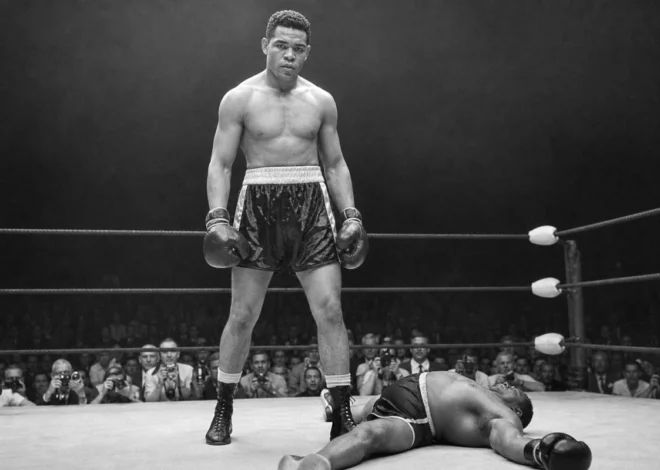
This image was tested and amplified by two defining episodes. First, his loss and subsequent rematch with the German fighter Max Schmeling. The earlier defeat exposed vulnerabilities and humanized him; the rematch—an emphatic first-round knockout—was seized by many as a repudiation of racist ideologies abroad. Second, Louis’s wartime service and exhibition fights reinforced his national stature. In uniform, he performed for troops, promoted war-bond drives, and became a living emblem of American resolve.
At the same time, you should note the tension beneath the iconography. Louis’s carefully managed public face often masked the realities of segregation and the compromises expected of black celebrities at the time. He was celebrated as a national symbol while still contending with limits on freedom, unequal treatment, and the heavy commercial interests that profited from his labor. That tension between heroism and the constraints of the era is central to understanding how and why the Brown Bomber mattered beyond the ring.
Later Years and Complex Legacy
After his prime, Joe Louis struggled with the same complicated mix of fame and vulnerability that had shadowed much of his life. He continued to appear in exhibition bouts and public events, but chronic health issues, financial problems, and the long-term effects of a brutal career took their toll. Legal battles with the Internal Revenue Service and declining earnings eroded the stability he had once enjoyed. He withdrew from public life at times, then resurfaced as fans and historians renewed interest in his achievements.
Louis died in 1981, but the debates about how to remember him did not end with his passing. Historians, biographers, and sportswriters continue to examine both his extraordinary accomplishments in the ring and the social forces that shaped his public role. His name remains a reference point in discussions of race, celebrity, labor, and national identity in 20th-century America.
Enduring Echoes
What lingers about Joe Louis is not only the image of a devastating right hand but the unresolved questions his life forces us to ask: how a nation elevates a person as a symbol while simultaneously denying them full dignity; how fame can provide protection and yet mask precarity; and how athletic achievement can carry political meaning beyond any athlete’s intent. Those tensions are part of his legacy and part of why his story continues to invite attention.
If you want a reliable starting point for further reading, consider a concise reference like Joe Louis biography at Britannica, and then explore archival collections, documentaries, and full-length biographies that dig deeper into both the fights and the life outside the ring.