Muhammad Ali Biography: Early Life, Titles, and Lasting Influence
Why Muhammad Ali’s beginnings changed boxing and culture
You may know Muhammad Ali as one of the greatest heavyweights in history, but his impact started long before the world-famous fights. Understanding Ali’s early life helps you see how a shy Louisville boy became an outspoken champion who challenged race, religion, and war-time politics. This section traces the personal and social forces that shaped his character and set the stage for the rings where he would make history.
Growing up in Louisville: family, faith, and the first gloves
You should picture the segregated streets of 1940s–1950s Louisville, Kentucky, to understand Ali’s early environment. Born Cassius Marcellus Clay Jr. in 1942, he grew up in a working-class Black family. His father worked multiple jobs to support the household, and his mother emphasized discipline and dignity. These dynamics taught Ali resilience and self-belief—traits that later defined both his fighting style and public persona.
When you hear the story of how young Cassius began boxing, note the mix of chance and determination. At 12, he reported a stolen bicycle to a police officer who also coached boxing. Told he could learn to fight, he entered the gym—and found not only skill development but an identity outlet. Boxing offered structure, direction, and a stage on which his natural charisma could grow.
Amateur accomplishments that signaled a future champion
As you trace Ali’s amateur path, several achievements stand out as turning points. He developed an unorthodox style—light on his feet, fast with jabs—and combined it with confidence and trash-talking even in his teens. By the time he turned 18, he had compiled an impressive amateur record that included multiple national titles.
- National Golden Gloves winner: a key domestic milestone that marked him among the best young fighters in the U.S.
- U.S. Amateur Championships: consistent top finishes that confirmed his technical progress and competitive mindset.
- 1960 Olympic gold medal in Rome (light heavyweight): the international victory that introduced him to a global audience and foreshadowed professional success.
When you consider these accomplishments, remember they were more than trophies: they were proof that Ali’s combination of speed, reflexes, and psychological tactics could succeed against varied opponents and under the pressure of major events.
Early professional steps and the first title challenge
Turning professional after the Olympics, Ali faced a new world of longer fights, promoters, and the business of boxing. You should focus on how he adapted—polishing stamina, refining combinations, and using persona as part of his competitive toolkit. Within a few years, he was competing at the highest level, culminating in his first major title victory that began his ascent into global prominence.
Next, you will examine the bouts, controversies, and the pivotal fights that earned Ali his heavyweight championships and solidified his influence both inside and outside the ring.
The upset that crowned him—and the name that reshaped his image
When you study Ali’s rise, the February 25, 1964 fight against Sonny Liston is a hinge moment. You should picture the 22-year-old Cassius Clay entering Miami Beach as an underdog against the feared, seemingly invincible Liston. Clay’s speed, footwork, and fearless trash-talk unnerved Liston; after six rounds the champion did not return for the seventh, and Clay was suddenly the world heavyweight champion. But the ring victory was only half the story.
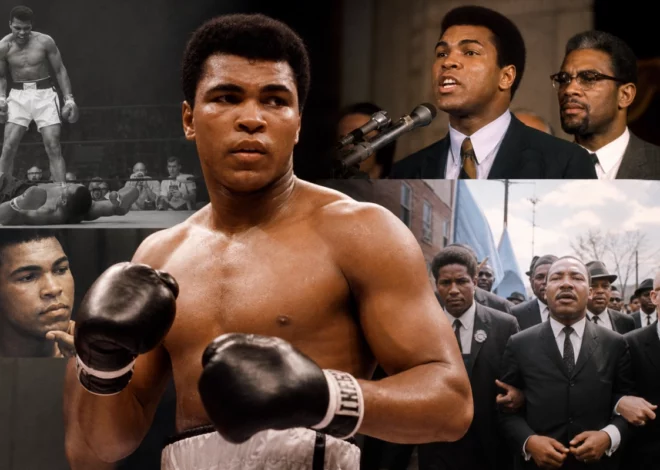
Within days he announced his conversion to the Nation of Islam and adopted the name Muhammad Ali. That decision shifted public perception dramatically: he was no longer just a flashy young boxer but a visible figure tied to religious and racial politics. For many Black Americans Ali’s public conversion signified pride and self-definition; for many others it provoked confusion and hostility. Still, you should understand that the combination of an improbable title win and a bold new identity turned Ali into a cultural symbol whose significance extended far beyond the ropes.
Conscience in conflict: draft refusal, exile, and the costs of conviction
By 1966 Ali’s public statements against the Vietnam War and his alignment with the Nation of Islam brought him into direct conflict with the U.S. government. In 1967 he refused induction into the armed forces, citing religious objections and his opposition to the war. The consequences were immediate and severe: he was convicted of draft evasion, stripped of his boxing licenses and heavyweight titles, and barred from competing during what would have been peak athletic years.
You should note what this exile meant. Ali sacrificed three prime years in the ring and endured vilification in much of the mainstream press. Yet his stance also amplified his moral stature among opponents of the war and civil-rights activists. When the Supreme Court overturned his conviction in 1971, Ali returned to boxing legally—but the time lost and the battles fought outside the ring became as integral to his legacy as any championship.
Fight nights that forged legend: Frazier, Foreman, and the tests of character
When he returned, Ali did not simply reclaim titles—he transformed setbacks into narrative. His 1971 clash with Joe Frazier at Madison Square Garden, billed as the “Fight of the Century,” handed him the first professional loss of his career and underscored that his absence from the ring had real costs. Yet Ali showed resilience. A shocking defeat by Ken Norton in 1973 and two fierce rematches with Frazier (including the brutal 1975 “Thrilla in Manila”) tested both his body and will.
Perhaps most instructive was the 1974 “Rumble in the Jungle” against George Foreman in Kinshasa. Facing a younger, harder-hitting champion, Ali used rope-a-dope—a tactical masterstroke of feigned exhaustion and counterattack—to tire Foreman and win by knockout in the eighth round. These bouts displayed more than technique: they illustrated Ali’s strategic intelligence, psychological warfare, and capacity to convert adversity into spectacle and statement. When you map these fights together, you see a fighter who became a global icon by blending athletic brilliance with fearless conviction, forever reshaping how athletes could influence sport and society.
Enduring impact and reflection
Muhammad Ali’s life is less a closed chapter than an ongoing conversation about courage, identity, and the social responsibilities of public figures. His choices—inside the ring and out—created patterns others would follow: athletes who speak on politics, performers who shape public discourse, and individuals who remake their own narratives. That influence is diffuse and continuing, showing up in sport, art, law, and everyday conversations about conscience and fame.
The example he left
- Reimagining the athlete’s role: Ali helped normalize the idea that top competitors can be vocal moral actors, not just entertainers.
- Style and strategy: His footwork, timing, and psychological gamesmanship remain studied by boxers and trainers.
- Cultural symbolism: Ali’s public transformations broadened what representation and self-definition could look like for marginalized communities.
- Humanitarian and civic legacy: Foundations, museums, and programs inspired by his life keep central themes—service, dignity, perseverance—alive for new generations.
His story resists tidy labels; it compels you to weigh athletic greatness against moral stakes and to consider how one person’s conviction can reshape a sport and a society. To explore his life further, visit the Muhammad Ali Center, which preserves his legacy through exhibitions, education, and community programs.